Why a Second Source of Income Is Essential in Today’s Economy
2nd source of income ideas are no longer just a “nice to have”—they’re becoming essential for financial security. According to the American Psychological Association, money stress impacts Americans’ health nationwide, affecting both lower-income households and the wealthy. With inflation recently hitting 4.7% in India and 40-year highs in the United States, your primary income may not keep pace with rising costs.
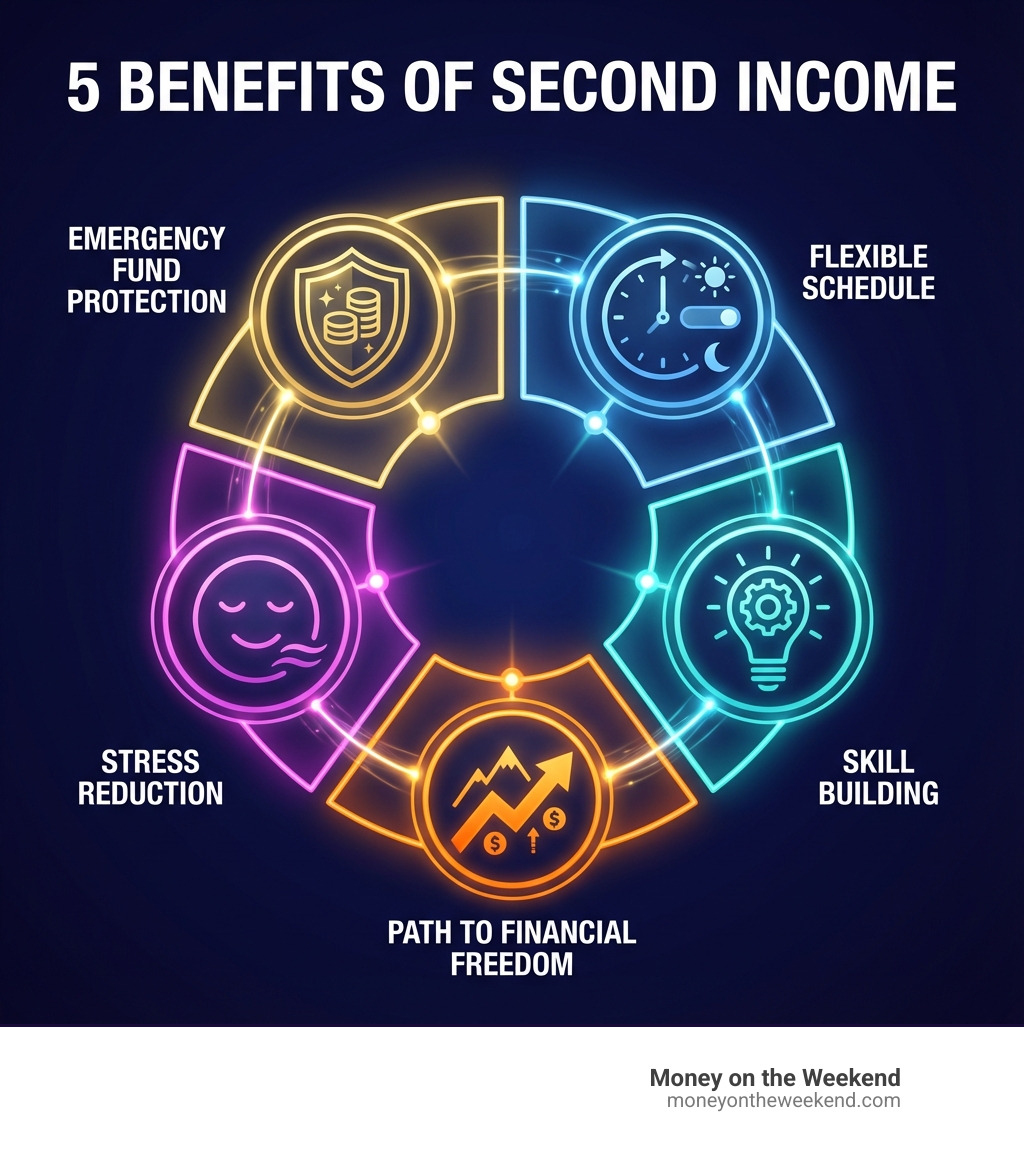
Here are the top 5 reasons to start a second income stream:
- Financial cushion – Build an emergency fund faster or pay off debt
- Flexibility – Work on your own schedule, whether that’s 5 hours or 20 hours per week
- Skill development – Gain entrepreneurial experience and explore new interests
- Path to freedom – Potentially replace your full-time income over time
- Reduced stress – Less worry about unexpected expenses or job loss
The good news? Starting a second income stream has never been easier. The rise of digital platforms, the gig economy, and automation technology means you can begin with minimal upfront investment—sometimes with just your existing skills and a laptop.
The key difference to understand: Active income requires you to trade time for money (like driving for Uber or freelance writing), while passive income involves upfront work that generates ongoing earnings (like creating an online course or renting property). Most people start with active income to fund passive income projects.
Whether you want to save for a down payment, build generational wealth, or simply have more breathing room in your budget, this guide will show you practical, proven ways to generate that crucial second income stream.
Relevant articles related to 2nd source of income ideas:
How to Choose Your Ideal Second Income Stream

Before diving into the myriad of 2nd source of income ideas, it’s crucial to find the right fit for you. This isn’t just about picking the highest-paying option; it’s about finding something sustainable, enjoyable, and aligned with your life. We recommend a thoughtful self-assessment process:
1. Self-Assessment: Skills, Interests, and Time Commitment
What do you genuinely enjoy doing? What are you good at? What skills have you developed over the years, either professionally or as hobbies? If you’re a great writer but despise the act of writing, freelance writing might lead to burnout. However, if you love the topic, maintaining a blog with ads and sponsorships could be more sustainable.
Consider your existing skills, hobbies, experiences, and education. If you’re struggling to pinpoint your strengths, ask close friends and family what they perceive as your best qualities. You can even take an online test, such as the HIGH5Test or StrengthsFinder 2.0, to get a clearer picture of your innate talents and interests.
Equally important is understanding your available time. Are you looking to dedicate 5-10 hours a week, or do you have more flexibility? Some 2nd source of income ideas require more upfront time investment than others, so be realistic about what you can commit without sacrificing your well-being. The beauty of extra income is the ability to dedicate as much or as little time as desired.
2. Financial Goals
Why do you want this extra income? Having a clear “why” will fuel your motivation and help you choose the right path. Are you saving for a down payment on a house, a dream vacation, or aiming to pay off debt? Perhaps you want to build a retirement fund or simply have more cash for spending.
Once you know your goal, quantify it. For instance, if you want to save an additional $5,000 this year for a down payment, you’ll need an extra $417 per month. This specific target will help you evaluate different 2nd source of income ideas based on their potential earnings.
3. Risk Tolerance
Every investment of time or money carries some degree of risk. Are you comfortable with higher-risk, potentially higher-reward ventures like startup investments or day trading, or do you prefer more stable, lower-return options like high-yield savings accounts? Understanding your personal risk tolerance will guide you towards suitable options, ensuring your journey to a second income stream is exciting, not anxiety-inducing.
For more insights into kickstarting your entrepreneurial journey, check out our guide on More info about starting a business.
Low-Barrier 2nd Source of Income Ideas for Beginners
For those just starting, the gig economy and quick cash opportunities offer excellent low-barrier 2nd source of income ideas. These options typically require minimal upfront investment, leverage existing skills or assets you already own, and provide immense flexibility, making them perfect for beginners.

Tap into the Sharing & Gig Economy
The sharing and gig economy has revolutionized how we can earn supplemental income. It allows us to monetize our time, vehicles, or even our love for pets.
- Pet Sitting & Dog Walking: If you’re an animal lover, this is a fun way to earn. You can offer to walk dogs on a weekly basis or pet-sit when neighbors go on vacation. Websites like Rover can connect you with clients in your area. Pet owners are often willing to pay well for reliable care, and it’s a great way to get some exercise!
- Food & Grocery Delivery: With the rise of on-demand services, delivering food (Grubhub, DoorDash, Uber Eats) or groceries (Instacart, Shipt) is a flexible option. Shipt, for example, claims you can make between $16 and $27 an hour. You use your own vehicle and set your own hours, fitting work around your primary schedule.
- Ridesharing: If you enjoy cruising around and meeting new people, joining services like Uber or Lyft can be a lucrative side gig. The flexibility to choose your own hours is a major perk, allowing you to maximize earnings during peak times.
- House Sitting: When people go on vacation, they often need someone to look after their home and pets. Services like TrustedHousesitters allow you to get paid for collecting mail, watering plants, mowing lawns, and looking over properties.
- Task-Based Gigs: Are you handy around the house or good at running errands? Platforms like Taskrabbit or Handy connect you with people who need help with odd jobs, from assembling furniture to hanging shelves. It’s a straightforward way to monetize practical skills.
Monetize Your Opinions and Unused Items
You might be surprised by how many ways you can earn money from things you already have or activities you already do.
- Online Surveys: Market research companies are eager for consumer insights and will pay you for your opinions. Sign up with legitimate websites like Survey Junkie, Swagbucks, or MyPoints to earn cash for each survey you complete. While individual surveys might not pay much, they can add up over time, especially if you do them while watching TV.
- Website Testing: Companies also pay for user feedback on their websites and apps. Sites like UserTesting or Userfeel pay you to review websites and share your experience, ensuring their platforms are user-friendly.
- Selling Used Items: Your clutter could be someone else’s treasure! Gather unneeded belongings—old clothes, home appliances, sports gear, electronics—and sell them on platforms like Facebook Marketplace, eBay, Craigslist, Poshmark, or ThredUp. This is a quick way to declutter and inject some cash into your wallet.
For even more ideas on how to generate income from the comfort of your home, explore our guide on More info about making money online.
Popular & High-Earning Second Income Ideas
Once you’ve tested the waters with low-barrier options, you might be ready for 2nd source of income ideas that offer greater scalability and potentially higher earnings. These often involve leveraging your expertise, building digital assets, or making strategic investments, creating a pathway to significant financial growth. For example, it’s entirely possible to build a six-figure side business while still working a day job. We’ve even seen it ourselves; our ebook, “100 Days of Growth,” generated more income than our full-time jobs!
Leverage Your Skills with Online Freelance Services
Your professional skills are valuable assets that can translate into lucrative freelance opportunities.
- Freelance Writing & Editing: If you have a knack for words, businesses constantly need content. From blog posts and articles to marketing copy and technical writing, the demand is high. Platforms like Upwork, Fiverr, and ProBlogger offer a steady stream of gigs. If you’re more into correcting words than writing them, editing and proofreading are also in high demand.
- Graphic Design & Web Development: For the creatively inclined or tech-savvy, graphic design (logos, branding, marketing materials) and web development (website creation, coding, maintenance) are highly sought-after skills. Sites like Fiverr, Upwork, and 99designs connect freelancers with clients.
- Virtual Assistance: As businesses grow, they often need help with administrative tasks, social media management, email organization, and customer service. Virtual assistants provide these services remotely, offering flexibility for both parties.
- Online Tutoring: Share your knowledge by tutoring students online. Whether it’s academic subjects like math and science, test preparation, or even a specialized skill, platforms like Tutor.com, Studypool, or VIPKid (for teaching English) provide the infrastructure to connect with students worldwide. VIPKid, for instance, requires a four-year degree and teaching experience, but handles all lesson plans.
To learn more about maximizing your potential in the digital workspace, check out our insights on Online Freelance Services.
Build Digital Assets: The Ultimate 2nd Source of Income Ideas
Digital assets are perhaps the closest you can get to truly passive income. You invest significant upfront effort to create something once, and it can generate revenue for years to come with minimal ongoing maintenance.
- Blogging: Starting a blog on a topic you’re passionate about can be a rewarding long-term strategy. Monetize through advertising (e.g., Google AdSense, which pays an average of $18 per 1,000 ad views), affiliate marketing, sponsored posts, or selling your own digital products. Established blogs can generate upward of $30,000 per month. Dive deeper into this with our guide on Passive Income: Blogging.
- Affiliate Marketing: This involves promoting other companies’ products or services and earning a commission on sales made through your unique referral link. Commissions can range from 3% to 7%, but for platforms like Shopify, affiliates can earn $58 for every paid plan signup. It’s a fantastic way to earn without creating your own products. Get started with our Affiliate Marketing Complete Guide.
- Create an Online Course: If you have specialized knowledge, package it into an online course. Platforms like Teachable or Udemy make it easy to create and sell your course modules. The average online course earns about $3,000, with top earners diversifying into coaching and other digital products.
- Write an Ebook: Whether it’s fiction, a how-to guide, or a workbook, self-publishing an ebook through platforms like Amazon Kindle Direct can generate royalties with each download. While the field is crowded (Kindle has over 4 million titles), a well-written, niche book can stand out. Just remember, Amazon takes 30% of sales.
- Start a YouTube Channel: With 2.7 billion people worldwide using YouTube monthly, it’s a massive platform for monetization. You can earn through ad revenue (averaging $18 per 1,000 views), sponsorships, and selling merchandise. It requires a lot of upfront work but can lead to significant passive income over time.
Invest in E-commerce and Real Estate: More 2nd Source of Income Ideas
These categories often require more capital or a different kind of operational effort but can offer substantial returns and passive potential.
- Dropshipping: This e-commerce model allows you to sell products online without holding any inventory. When a customer places an order, you forward it to a third-party supplier who ships it directly. The average dropshipper earns around $41,000 per year, though income can vary significantly month-to-month based on consumer trends. Shopify is a popular platform for setting up a dropshipping store.
- Print-on-Demand (POD): Similar to dropshipping, POD lets you create custom designs for products like t-shirts, mugs, or phone cases. The product is only created and shipped when an order is placed, eliminating inventory costs. Successful POD sellers can earn between $1,500 and $10,000 monthly.
- Renting a Spare Room (House Hacking): If you have an extra bedroom, renting it out can significantly offset your mortgage or rent. Platforms like Airbnb or RotatingRoom (which caters to medical students seeking short-term stays) make it easy. The average annual earnings for an Airbnb host in the US are around $14,000.
- Renting Your Car/Equipment: Your idle assets can earn money! Services like Turo allow you to rent out your car. A Reddit discussion among Turo users suggests it’s possible to make several hundred dollars per month. Similarly, specialized equipment like cameras can be rented on sites like Cameralends, and adventure gear like bikes or snowboards on Spinlister.
For inspiration on starting your own venture, check out 10 Businesses You Can Start on a Budget in 2024.
Managing and Scaling Your Second Income
Starting a second income stream is just the beginning. To truly succeed and avoid burnout, effective management and strategic scaling are key. The success of many entrepreneurs who built profitable businesses while working full-time is a testament to careful planning and execution.
Time Management & Burnout Prevention: The biggest challenge when adding a second income stream is often managing your time. We recommend starting with 5-10 hours a week and gradually increasing as you get comfortable. Consistency is more important than intensity in the beginning. Use productivity tools like Notion or Trello to plan tasks, and schedule dedicated time blocks for your side hustle. Crucially, remember to avoid burnout by resting and not overbooking yourself. Your main job, health, and relationships come first!
Legal Structures: As your 2nd source of income ideas grow, consider formalizing your business. There are several business structures to choose from (e.g., sole proprietorship, LLC), each with different legal and tax implications. Researching these options or consulting a professional can help protect your personal assets and streamline operations.
Scaling Strategies: Once your side hustle is generating consistent income, look for ways to scale. This might involve:
- Automation: Can you automate repetitive tasks using software or virtual assistants?
- Delegation: Can you hire someone part-time to handle customer service or specific tasks?
- Diversification: Once one stream is stable, use its earnings to invest in other passive income projects. Start with one solid income stream, build confidence, and then diversify.
- Product/Service Expansion: Can you offer complementary products or services? For example, an ebook author might create an online course.
Common Mistakes to Avoid:
- Not Treating It Like a Business: Even a small side hustle needs a plan, goals, and a serious approach.
- Ignoring Taxes: This is a big one, which we’ll cover next.
- Choosing Something You Hate: As we mentioned, passion fuels consistency. Don’t pick a side hustle just for the money if you dread doing it.
- Fear of Failure: Not every idea will be a home run, and that’s okay. Learn from setbacks and pivot.
- Not Marketing Yourself: Even the best product or service won’t sell if no one knows about it.
Understanding Tax Implications
Earning a second income means you’re likely entering self-employment taxes. In the US, if you earn $400 or more from part-time or gig work, the IRS requires you to file a tax return and pay taxes on that income. This includes income from platforms like Uber, Etsy, or freelance work.
You’ll generally be responsible for paying self-employment taxes, which cover Social Security and Medicare contributions. This rate is typically 15.3% on your net earnings. The good news is that you can often deduct legitimate business expenses, which reduces your taxable income. Keep meticulous records of all income and expenses, and consider setting aside a portion of your earnings (e.g., 20-30%) for taxes. For more detailed information, consult the IRS requirements for gig work.
Here’s a quick comparison of active vs. passive income management:
| Feature | Active Income Management | Passive Income Management |
|---|---|---|
| Time Input | High, direct exchange for money | High upfront, low ongoing |
| Scalability | Limited by personal time, can scale by hiring staff | High, can generate income without direct involvement |
| Responsibility | Direct, hands-on management | Indirect, oversight, or automated |
| Initial Effort | Moderate to high to get started and acquire clients | Very high to create asset or establish system |
| Risk Profile | Income tied to active participation | Income tied to asset performance or system functionality |
| Examples | Freelance writing, ridesharing, tutoring | Ebook sales, online courses, rental property, dividend stocks |
Frequently Asked Questions about Second Incomes
What is the difference between active and passive income?
The core difference lies in the ongoing effort required. Active income is what most of us earn from a job—you trade your time, skills, or labor directly for money. If you stop working, the income stops. Examples include working a 9-to-5, freelance writing, or driving for a ride-share service.
Passive income, on the other hand, involves an initial investment of time, money, or effort to create an asset or system that then generates ongoing earnings with minimal further active participation. The IRS defines passive income as regular earnings from a source other than an employer or contractor, such as rental property or a business in which one does not actively participate (like book royalties or stock dividends). While it sounds like “money for nothing,” it almost always requires significant upfront work, and sometimes some additional labor along the way. Most people start with active income streams and gradually build passive ones over time. For more, refer to the IRS definition of passive income.
How much time do I need to commit to a side hustle?
The beauty of 2nd source of income ideas is their flexibility. You can start with as little as 5-10 hours a week, focusing on evenings or weekends. The key is consistency. Even a few dedicated hours can build a meaningful income stream over time. As your side hustle grows and becomes more profitable, you might choose to dedicate more time or look for ways to automate and scale, reducing your direct time commitment. Your time commitment should always be balanced with your primary job and personal life to prevent burnout.
What are the most common mistakes to avoid?
When pursuing 2nd source of income ideas, it’s easy to stumble. Here are some common pitfalls we’ve observed:
- Not Treating It Like a Business: Even if it’s a “side” hustle, it’s still a business. It needs a plan, goals, marketing, and proper financial tracking to succeed. Don’t wing it!
- Ignoring Taxes: Many beginners overlook the tax implications until it’s too late. As mentioned, self-employment taxes and proper expense tracking are crucial.
- Choosing Something You Hate: If you pick a side hustle solely for the money but hate the work, you’re setting yourself up for procrastination, frustration, and burnout. Align your hustle with your interests and strengths for long-term success.
- Fear of Failure: Not every idea will be a runaway success, and that’s perfectly normal. Accept experimentation, learn from what doesn’t work, and be willing to pivot.
- Not Marketing Yourself: You can have the best product or service, but if no one knows about it, you won’t make money. Invest time in learning basic marketing strategies, especially online promotion.
Conclusion
Starting on the journey of generating a 2nd source of income ideas is a powerful step towards financial empowerment. It’s about more than just extra cash; it’s about building a safety net, gaining flexibility, developing new skills, and ultimately, paving your way to financial freedom. From low-barrier gig economy tasks to building lucrative digital assets and strategic investments, the opportunities are vast and accessible.
We’ve explored how to choose the right path, given you a wealth of practical ideas, and equipped you with insights on managing and scaling your efforts. The journey to financial freedom is a marathon, not a sprint. Start small, stay consistent, learn from your experiences, and keep refining your approach.
Ready to take the first step and start building your financial future? Explore our resources and begin your Passive Income stream today. We’re here to guide you every step of the way.