
Why YouTube Short Video Monetization Matters for Your Income Goals
YouTube short video monetization offers a path to earning from bite-sized content, but it works differently than traditional videos. Since YouTube’s Shorts ad-revenue sharing model launched in February 2023, millions of creators have begun earning from their short-form videos.
Here’s what you need to know:
- Two ways to qualify: Access fan funding with 500 subscribers + 3 million Shorts views (or 3,000 watch hours), or open up full ad revenue sharing with 1,000 subscribers + 10 million Shorts views (or 4,000 watch hours).
- Revenue split: Creators keep 45% of their allocated ad revenue, while YouTube takes 55%.
- Realistic earnings: Expect between $0.01 to $0.07 per 1,000 views (RPM), meaning 1 million views typically earns $10-$120.
- Beyond ads: Brand deals, affiliate marketing, and fan funding often earn more than ad revenue alone.
The truth is, you won’t get rich from Shorts ad revenue alone. One creator earned just $99.87 for 3.1 million views—about $32 per million views. Another gained 1.5 million subscribers with 90 Shorts and made $1,200 from 22 million views, but ad revenue was less than 10% of their total income.
However, Shorts can be incredibly valuable. They bring 2.5 times more engagement than long-form videos and help you grow your audience fast. Many successful creators use Shorts as a funnel—building subscribers quickly, then monetizing through brand partnerships, merchandise, or driving traffic to higher-paying long-form content.
This guide covers how Shorts monetization works, qualification requirements, realistic earnings, and how to maximize your income beyond ads.
Step 1: Opening up Monetization – Are You Eligible?
Before you can monetize Shorts, your channel must meet the eligibility requirements for the YouTube Partner Program (YPP), which is how YouTube rewards creators for their content. The first crucial step is to ensure your channel is eligible.
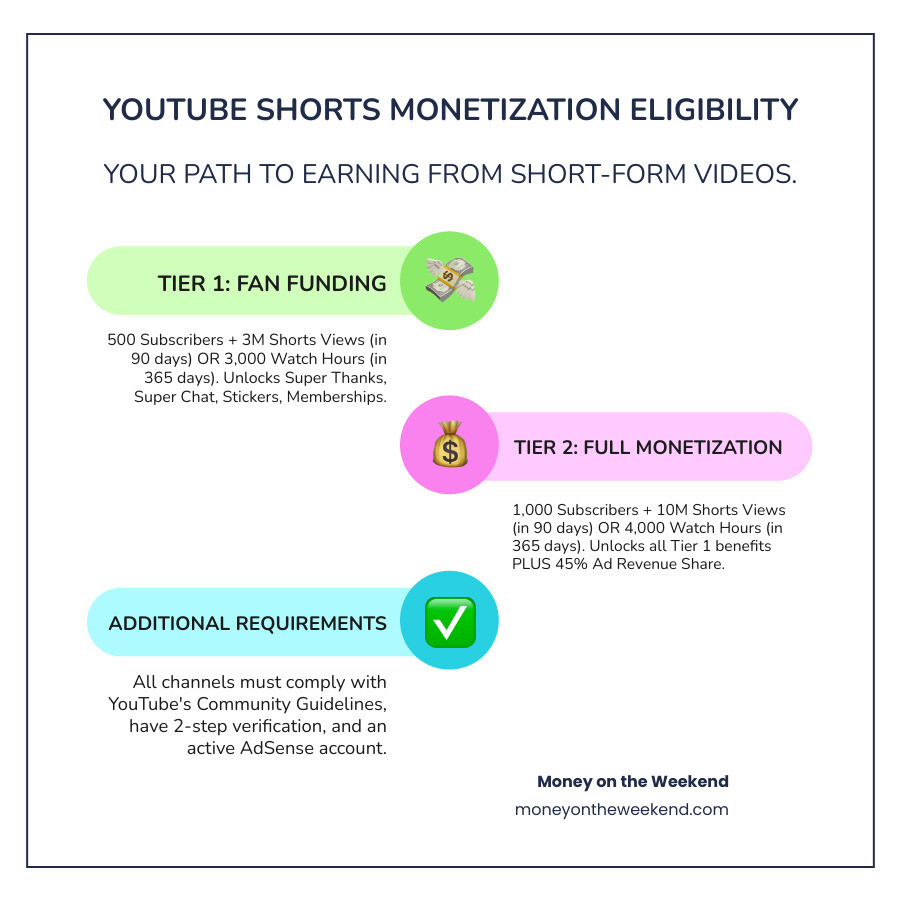
Beyond subscriber and view counts, your channel must also:
- Follow all YouTube channel monetization policies.
- Be located in a country where the program is available.
- Have no active Community Guidelines strikes.
- Have two-step verification turned on for security.
- Have advanced features enabled for your channel.
- Link an active Google AdSense account to your channel.
Meeting these requirements is vital. Our guide on What happens when you get 1000 subscribers on YouTube? can help you understand the milestones.

The Two Tiers of YPP Eligibility
YouTube has introduced two YPP tiers, making it more accessible for creators to start earning through YouTube short video monetization.
-
Fan Funding Access (Entry-Level YPP): This tier allows you to monetize through direct audience support. To qualify, we need:
- 500 subscribers
- 3 public videos uploaded in the last 90 days
- Either 3,000 valid public watch hours on long-form content in the last 365 days OR 3 million valid public Shorts views in the last 90 days.
This tier open ups fan-funding tools like YouTube memberships, Super Chat, Super Stickers, and Super Thanks. It’s a fantastic way to build a strong community and generate income directly from your most engaged fans.
-
Full Monetization (Ad Revenue + Fan Funding): This is the traditional YPP tier that grants access to ad revenue sharing, in addition to all fan-funding options. To qualify, we need:
- 1,000 subscribers
- Either 4,000 valid public watch hours on long-form content in the last 365 days OR 10 million valid public Shorts views in the last 90 days.
Once these criteria are met, we can earn from ads in the Shorts Feed and benefit from YouTube Premium revenue sharing, alongside all fan-funding features. For a comprehensive overview, check out The YouTube Partner Program.
How to Apply and Accept the Monetization Modules
Once eligible, apply to the YPP. Here’s a quick rundown:
- Sign in to YouTube Studio: This is our creator hub.
- Steer to the ‘Earn’ tab: On the left-hand menu, find the ‘Earn’ section.
- Review and Accept Terms: Accept the ‘Base Terms’ for the YouTube Partner Program.
- Accept the Shorts Monetization Module: This separate module enables your channel to earn from Shorts Feed ads and YouTube Premium.
It’s crucial to accept the Shorts Monetization Module as soon as you’re eligible. Revenue sharing only begins from the date you accept these terms; prior views won’t generate ad revenue. This administrative step is a vital part of your Content Creation journey.
How the YouTube Short Video Monetization Model Really Works
Understanding YouTube short video monetization is key to setting realistic expectations. Unlike long-form videos, Shorts use a unique pooled revenue system designed for the Shorts Feed and its frequent use of music.
The 4-Step Revenue Sharing Process Explained
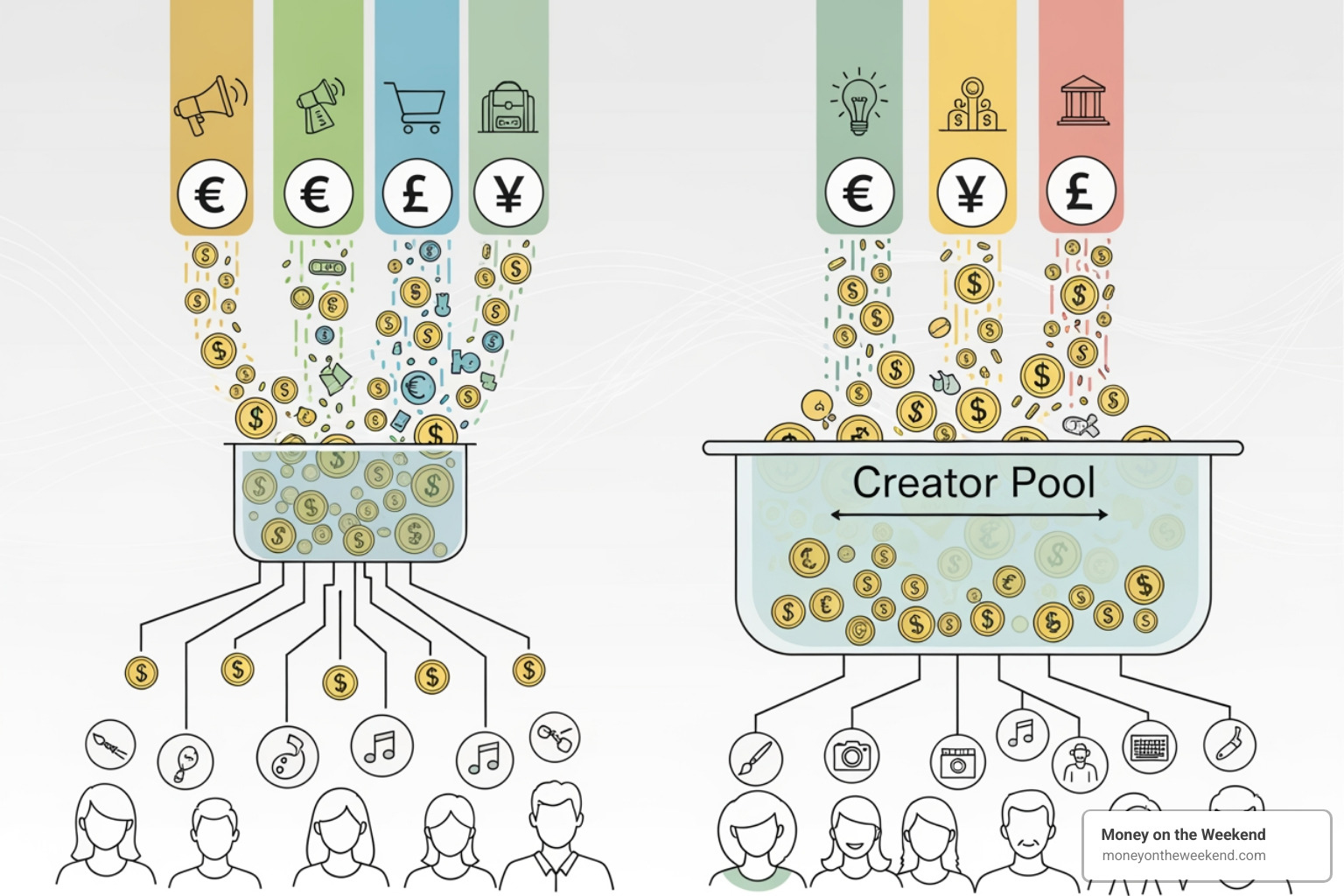
Let’s break down the Shorts ad revenue sharing model:
- Pool Shorts Feed Ad Revenue: YouTube gathers all revenue from ads shown between Shorts into a communal pot each month. This means ads aren’t tied to a single video but to the overall feed experience.
- Calculate the Creator Pool: From this total, YouTube deducts music licensing costs. The remainder forms the “Creator Pool,” which is the money allocated to creators.
- Allocate the Creator Pool: The Creator Pool is allocated to monetizing creators based on their share of total eligible Shorts views. If your channel gets 1% of all views, you are allocated 1% of the Creator Pool.
- Apply Revenue Share: From your allocated portion of the Creator Pool, you keep 45%, and YouTube retains 55%. This 45% share is consistent, regardless of music use.
In addition, monetizing creators receive 45% of the net revenue from YouTube Premium that is allocated to Shorts, based on their share of subscription Shorts views.
The Impact of Music and Copyright on Your Earnings
Music is integral to many Shorts, but it impacts the YouTube short video monetization process. When a Short uses copyrighted music, a portion of its associated revenue goes to music publishers before the Creator Pool is calculated.
- One music track: If a Short features one music track, approximately half of the revenue associated with its views is allocated to the Creator Pool, and the other half covers music licensing.
- Two or more music tracks: If a Short uses two or more tracks, a larger portion (e.g., two-thirds) of the revenue might go towards music licensing, with less allocated to the Creator Pool.
While music reduces the Creator Pool’s size, your 45% share of your allocated portion remains constant. You simply get 45% of a smaller initial amount.
Beyond music, adhering to Copyright rules is paramount. Ineligible content for monetization includes:
- Non-original Shorts: Unedited clips from movies, TV shows, or other creators’ content without significant original commentary.
- Reused content: Content repurposed from other sources without adding new value.
- Artificial views: Views generated by bots or other fraudulent means.
- Content inconsistent with advertiser-friendly guidelines.
Shorts over one minute long with claimed content are often blocked and ineligible for monetization.
Shorts vs. Long-Form Videos: A Realistic Earnings Comparison
When we talk about YouTube short video monetization, it’s crucial to compare its earning potential with traditional long-form videos. The reality is, they are vastly different.
| Feature | YouTube Shorts | Long-Form YouTube Videos |
|---|---|---|
| Average RPM | $0.01 – $0.07 (typically around $0.05) | $1 – $30 (typically around $3) |
| Creator Share | 45% of allocated Creator Pool revenue | 55% of ad revenue directly from video |
| Earning $100 | Requires 1-2 million views | Requires 30,000 – 100,000 views (highly variable) |
| Primary Use | Rapid audience growth, findability, funnel to other content/monetization, engagement | Direct ad revenue, in-depth content, building authority, Passive Income |
The average RPM for Shorts is much lower than for long-form videos. A long-form video might earn $3 per 1,000 views, while a Short earns just $0.05. This means you need far more Shorts views to earn the same amount. For example, one creator earned only $91 from 10 million Shorts views.
This doesn’t mean Shorts aren’t valuable. They are incredible for gaining subscribers and boosting channel visibility. Jenny Hoyos gained over 1.5 million subscribers with 90 Shorts. While she earned $1,200 from 22 million Shorts views, ad revenue was less than 10% of her total earnings. This shows Shorts are a powerful growth engine, not a primary income source from ads. They drive traffic to long-form content, which has higher ad revenue and better Passive Income opportunities.
Maximizing Your Earnings: From Ad Revenue to Brand Deals
While direct ad revenue from YouTube short video monetization is modest, Shorts are a powerful tool for audience growth when part of a broader strategy. This growth opens doors to more lucrative ways to Earn Money. For inspiration, explore YouTube Channel Ideas that leverage Shorts.
Best practices for youtube short video monetization
To make the most of our Shorts, we need to employ specific strategies:
- Consistent Content Creation: The Shorts algorithm loves consistency. Uploading frequently can significantly increase your chances of going viral.
- Leverage Trending Sounds and Themes: Using trending audio, challenges, or themes can boost findability in the Shorts Feed.
- Craft Catchy Titles and Thumbnails: A compelling title and a strong thumbnail (or a captivating first few seconds) are crucial.
- High-Retention Editing: Hook viewers immediately and keep them watching. Use edits, engaging visuals, and a clear narrative.
- Include a Clear Call to Action (CTA): Encourage likes, comments, shares, and tell viewers to subscribe or check out your main channel.
- Drive Traffic to Long-Form Content: Use Shorts as a teaser for your main videos to funnel engaged viewers to content with higher ad RPMs.
Beyond Ads: Alternative Ways to Monetize Your Shorts
The real magic of YouTube short video monetization often lies in the indirect income streams it enables. The massive reach and engagement Shorts provide are invaluable for building a diverse income portfolio.
Here are some alternative monetization methods:
- Brand Sponsorships and Paid Partnerships: This is often the most lucrative path. Brands want creators with high engagement, and you don’t need millions of subscribers—a strong niche audience is key. Learn more about how much do sponsors pay YouTubers?.
- Affiliate Marketing: Promote relevant products in your Shorts and include affiliate links in your description or pinned comment to earn a commission on sales.
- Selling Merchandise: Once you have a loyal audience, create and sell branded merchandise. Shorts are a great way to showcase your products.
- YouTube Memberships: If you qualify for the entry-level YPP, you can offer exclusive perks to fans through YouTube memberships.
- Super Thanks, Super Chat, and Super Stickers: These fan-funding tools allow your audience to support you directly. Super Thanks can be enabled on individual Shorts.
Tracking Your Performance in YouTube Analytics
To maximize earnings from YouTube short video monetization, use YouTube Analytics to track your Shorts’ performance and gain invaluable insights.
Here are the key metrics to track:
- Shorts Feed Ad Revenue: Your direct earnings from ads in the Shorts Feed.
- RPM (Revenue Per Mille): While low for Shorts, tracking RPM helps you understand monetization efficiency and identify trends.
- Views vs. Subscribers Gained: Track how many new subscribers each Short brings in.
- Audience Retention: High retention signals engaging content, which the algorithm favors.
- Identifying Top-Performing Content: Analyze which Shorts get the most views and engagement to replicate that success.
Content Policies and Key Considerations
For successful YouTube short video monetization, adhering to YouTube’s content policies is non-negotiable. Compliance is crucial for long-term success and consistent Monetization on YouTube.
Following the Rules: What Content is Ineligible for Monetization?
To be eligible, Shorts must follow YouTube’s Advertiser-Friendly Content Guidelines. Violations can lead to demonetization or channel strikes.
Here’s what generally makes content ineligible for YouTube short video monetization:
- Non-original Shorts: Re-uploading unedited clips from other creators, platforms, movies, or TV shows is not eligible. You must add significant value, such as original commentary, a new perspective, or creative editing.
- Artificial Views: Any views generated by bots, click farms, or other deceptive means are strictly prohibited and can lead to channel termination.
- Repetitious Content: Mass-produced or templated content that lacks unique value can be flagged as repetitious.
- Content Violating Community Guidelines: Content promoting hate speech, violence, harassment, or other harmful activities is prohibited.
- Copyright Infringement: Using copyrighted media without proper licensing or fair use can result in Content ID claims or strikes, making content ineligible for monetization.
YouTube wants to reward original, engaging, and safe content.
How YouTube Shorts Compares to Other Platforms
YouTube Shorts competes with platforms like TikTok and Instagram Reels. While the format is similar, Shorts has distinct advantages for monetization and integration.
- Pooled Revenue Model: Unlike inconsistent creator funds on other platforms, YouTube’s pooled model offers a more predictable (though lower per-view) ad revenue stream.
- Findability and Integration: Shorts are prominently featured on YouTube, boosting findability. Their deep integration allows you to drive traffic to higher-earning long-form content.
- Ecosystem Benefits: The YouTube ecosystem provides access to advanced analytics, copyright tools, and Google’s stable ad network, offering a comprehensive platform for growth.
While other platforms offer viral potential, YouTube Shorts provides a more integrated pathway to long-term channel growth and diversified income within an established creator economy.
Frequently Asked Questions about YouTube Short Video Monetization
Here are answers to common questions about YouTube short video monetization.
How much does YouTube pay for 1 million Shorts views?
The average RPM for YouTube Shorts is low, typically $0.01 to $0.07 per 1,000 views. This means 1 million Shorts views usually earns a creator between $10 and $120+.
For example, one monetized Short earned $99.87 for 3.1 million views (about $32 per 1M views), while another creator reported earning $500 for 11 million views.
Several factors influence this amount:
- Niche: Some niches attract higher-paying advertisers.
- Viewer Geography: Viewers from countries like the US and UK often generate higher ad revenue.
- Music Usage: Using copyrighted music reduces the overall revenue pool available to creators.
Direct ad revenue from 1 million Shorts views is considerably less than from a long-form video.
Do I need 1,000 subscribers to monetize Shorts?
Not for all monetization types. YouTube has two tiers:
- For Fan Funding Only: You need 500 subscribers (plus 3 public videos in 90 days and either 3,000 watch hours or 3 million Shorts views). This open ups Super Thanks, Super Chat, Super Stickers, and Channel Memberships.
- For Ad Revenue Sharing and Fan Funding: You need 1,000 subscribers (plus either 4,000 watch hours or 10 million Shorts views) to earn from ads.
So, you can earn from fans at 500 subscribers, but you need 1,000 for ad revenue.
How does using music in my Shorts affect my revenue?
Using copyrighted music impacts the Creator Pool, which is the money available to creators.
- Deduction from the Pool: When you use a licensed music track, a portion of the revenue associated with that Short’s views is used to cover music costs before the Creator Pool is calculated. This reduces the size of the overall pool.
- Your 45% Share Remains: Your 45% revenue share is applied after the Creator Pool is allocated. Your percentage share remains the same.
In short, your 45% cut is applied to a smaller pot of money. Using multiple tracks reduces the pot further. This is why some creators use royalty-free music or original audio to maximize their potential earnings.
Conclusion: Is It Worth It?
So, is YouTube short video monetization worth the effort? Yes, but with realistic expectations.
While direct ad revenue is lower than for long-form videos, the power of Shorts as a growth tool is undeniable. They help you gain subscribers, boost channel visibility, and drive engagement, making them an invaluable asset for building an audience.
At Money on the Weekend, we believe in empowering individuals to find financial freedom through online income generation. YouTube short video monetization, when viewed as part of a larger strategy, perfectly aligns with this mission. It’s not just about the pennies per view; it’s about leveraging the massive reach of Shorts to:
- Funnel viewers to higher-paying long-form content.
- Grow a community that will support us through fan funding.
- Attract lucrative brand deals and sponsorships.
- Promote our own products, services, or affiliate offers.
Yes, it’s worth it. Shorts are a powerful top-of-funnel tool that can accelerate your journey to building a thriving online presence and diversifying your income streams. Don’t underestimate their potential to kickstart your growth.
Ready to dive deeper into building a profitable YouTube channel? For a complete guide on building your channel for passive income, explore our Passive Income on YouTube pillar page. Let’s start our journey to Make Money Online and achieve financial freedom, one Short at a time!