Why Understanding YouTube’s Earning Policies Matters
Understanding YouTube policy to earn money is your ticket to turning views into dollars. If you’re wondering how to get paid by YouTube, here’s what you need to know:
Quick Answer: YouTube’s Earning Requirements
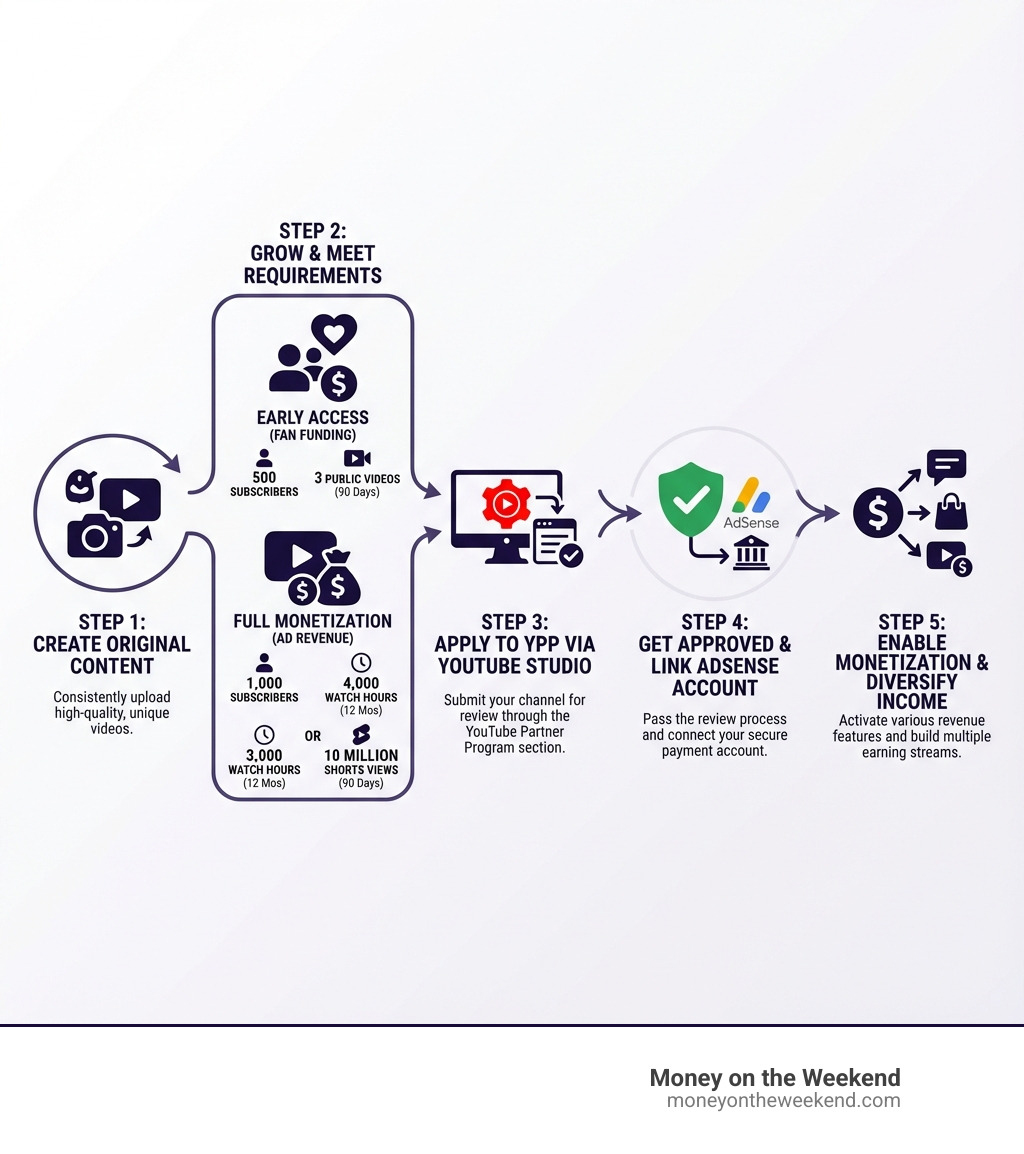
- Basic Access (Fan Funding): 500 subscribers + 3 public videos in 90 days + either 3,000 watch hours (12 months) OR 3 million Shorts views (90 days)
- Full Monetization (Ad Revenue): 1,000 subscribers + either 4,000 watch hours (12 months) OR 10 million Shorts views (90 days)
- Additional Requirements: Live in an eligible country, link an AdSense account, enable two-factor authentication, follow YouTube’s content policies
Between 2021 and 2023, YouTube paid creators over $70 billion. Real people earn real money by following the platform’s monetization policies.
However, many aspiring creators fail to earn because they don’t understand the rules of the YouTube Partner Program (YPP), the gateway to monetization. Success isn’t just about metrics; it’s about knowing what content YouTube and its advertisers will support.
YouTube recently expanded the YPP, giving creators earlier access to fan funding features like Super Chat and channel memberships. You can now earn with fewer subscribers, provided you follow the guidelines.
This guide breaks down the policies, requirements, and strategies you need to monetize your channel in 2025.
Youtube policy to earn money helpful reading:
Cracking the Code: The Official YouTube Policy to Earn Money
The YouTube Partner Program (YPP) is the official framework for earning money on the platform. YouTube has evolved its YouTube policy to earn money into a two-tier system, giving more creators a chance to start earning sooner.
To be considered for the YPP, your channel must be in good standing and adhere to all monetization policies, including Community Guidelines, Terms of Service, and copyright rules.
First, confirm you’re in an eligible region by checking the official YouTube country eligibility list. The YPP is available in over 120 countries, but it’s always wise to check.
You must also link an active AdSense account for payments and enable two-factor authentication on your Google account for security.
YPP Eligibility Tiers: A Side-by-Side Comparison
YouTube’s flexible approach offers different tiers that open up various earning features. This means you don’t have to hit the highest bar to start earning. Let’s break down the tiers:
| Requirement Category | Basic Access (Fan Funding) | Full Monetization (Ad Revenue) |
|---|---|---|
| Subscribers | 500 subscribers | 1,000 subscribers |
| Public Videos (last 90 days) | 3 public uploads | 3 public uploads (implied, but higher thresholds supersede) |
| Watch Hours (last 12 months) | 3,000 public watch hours | 4,000 public watch hours |
| OR Shorts Views (last 90 days) | 3 million public Shorts views | 10 million public Shorts views |
| Opened-up Monetization Features | Channel Memberships, Super Chat, Super Stickers, Super Thanks, YouTube Shopping (selling your own products) | All features from Basic Access, plus Ad Revenue (from long-form videos and Shorts), YouTube Premium revenue, YouTube Shopping (affiliate program with other brands) |
As you can see, the expanded YPP allows creators to start monetizing fan-funding features at a lower threshold. For a deeper dive into subscriber milestones, check out our guide on What Happens When You Get 1000 Subscribers on YouTube.
The Role of Google AdSense and Your Tax Obligations
Google AdSense is the bridge between your YouTube earnings and your bank account. Once in the YPP, you must link an AdSense account to get paid. Creating an AdSense account is a straightforward process. AdSense has a payment threshold, typically $100, which your earnings must reach before a payout is initiated.
All YouTube income is taxable, and you are responsible for your own tax obligations. While YouTube provides some tax forms (like the W-8BEN for non-US creators), you must consult a local tax professional for specific guidance on your tax liability.
Opening Up Your Income Streams: How You Get Paid
Once you’ve steered the eligibility requirements and joined the YPP, a world of earning opportunities opens up beyond just ads. YouTube offers diverse ways to monetize your content.
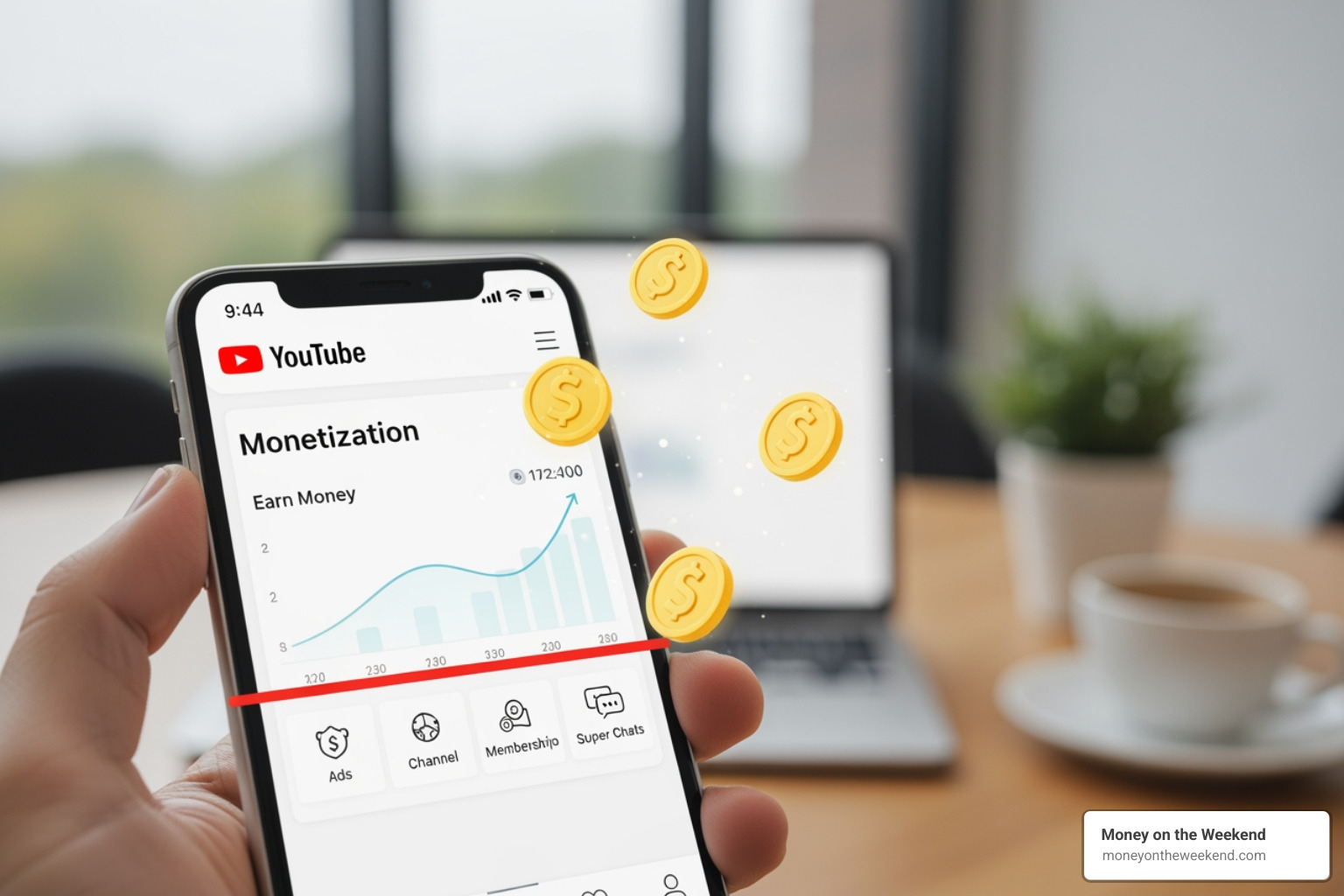
In your YouTube Studio, the “Earn” tab is your command center for activating features and tracking revenue.
Ad Revenue
When ads run on your videos, you earn a share of the revenue. For long-form videos, creators typically receive 55% of the ad revenue, with YouTube taking 45%. The model for Shorts is different but also involves revenue sharing.
YouTube Premium Revenue
YouTube shares a portion of its Premium subscription fees with creators based on how much Premium subscribers watch their content. Viewers get an ad-free experience, and you still get paid.
Fan Funding
This is where your loyal audience directly supports you:
- Super Chat & Super Stickers: During live streams, viewers can pay to highlight their messages or send animated images.
- Super Thanks: On regular videos, viewers can buy a special animation to highlight their comment.
- Channel Memberships: Offer exclusive perks (badges, custom emojis, member-only content) to viewers for a recurring monthly fee.
YouTube takes a 30% cut from these fan-funding features.
YouTube Shopping
This feature allows you to sell your own merchandise or products from other brands directly on your channel. You can tag products in videos or create a channel store. For more on earning potential, check out our YouTube Views to Money Calculator.
Navigating the YouTube Policy to Earn Money for Shorts
With over 70 billion daily views, YouTube Shorts offers a significant monetization opportunity. To qualify, you need to be in the YPP with 1,000 subscribers and 10 million public Shorts views in 90 days (or 4,000 watch hours).
Shorts ad revenue sharing works by pooling ad revenue from the Shorts Feed. A portion is allocated to a “Creator Pool” after accounting for music licensing. Creators then receive 45% of this pool, distributed based on their share of total Shorts views. While RPMs vary, creators report earning around $0.01 to $0.06 per 1,000 views.
Fan Funding and Shopping: Earlier Access to Earnings
A key update to YouTube’s policy is earlier YPP access for fan funding and shopping features. This allows you to build community support and income before meeting the higher ad revenue thresholds.
YouTube Shopping is especially powerful, letting you integrate an e-commerce store (like Shopify) with your channel. You can:
- Tag products for sale in your videos.
- Display a product shelf below your content.
- Showcase products during live streams.
By connecting your Shopify store to your YouTube channel, you can sync product listings and allow viewers to shop directly. For those without their own products, the YouTube Shopping affiliate program lets you tag products from other brands and earn a commission.
The Content Commandments: Staying Monetized
Staying monetized on YouTube requires an ongoing commitment to quality and compliance. Following YouTube’s “Content Commandments” is essential, as the platform prioritizes a safe environment for viewers, creators, and advertisers.
The core principle is original and authentic content. Your videos must be primarily your creation, adding unique value.
Original vs. Reused Content
YouTube’s policies on Inauthentic Content (low-effort, repetitive videos) and Reused Content (repurposing others’ work without significant original commentary or change) are common stumbling blocks. Simply compiling clips or adding a filter is not enough.

What’s allowed (with significant modification):
- Using clips for a critical review.
- A scene from a film with rewritten dialogue and a changed voiceover.
- Replays of a sports tournament with explanations of competitor moves.
- Reaction videos with substantial commentary on the original video.
- Edited footage from other creators where you add a storyline and commentary.
What’s generally not allowed:
- Clips of moments from a show edited together with little or no narrative.
- Short videos compiled from other social media websites without original commentary.
- Collections of songs from different artists (even with permission, unless you have specific commercial rights).
- Content uploaded many times by other creators.
- Promotion of other people’s content without substantive modifications.
- Content downloaded or copied from another online source without any substantive modifications.
The key is to add significant transformative value. For a full overview, read YouTube’s YouTube channel monetization policy.
Understanding the Core YouTube Policy to Earn Money: Advertiser-Friendliness
Your content must be “advertiser-friendly” to earn ad revenue. This is a critical YouTube policy to earn money, as brands need to feel comfortable associating with your videos.
YouTube’s Advertiser Friendly Content Guidelines outline content that may receive limited or no ads. This includes:
- Inappropriate language
- Violence
- Adult content
- Hateful content
- Controversial issues
- Harmful or dangerous acts
YouTube is strict about these guidelines. Creators can self-certify their content’s advertiser-friendliness, but YouTube’s systems and reviewers verify this. Consistent violations risk demonetization. Aim for content that is generally PG to PG-13.
Copyright, Community Guidelines, and Consequences
Ignoring YouTube’s fundamental rules can have severe consequences for your monetization.
Community Guidelines: These are the bedrock rules for behavior on the platform, covering everything from spam to hate speech. Violations can result in strikes, content removal, or channel termination. It’s vital to follow YouTube Community Guidelines.
Copyright: Using copyrighted material (music, video clips) without permission can result in a copyright strike. YouTube’s Content ID system automatically identifies and claims content for rights holders. Three copyright strikes can lead to channel termination.
Fair Use: This legal doctrine allows limited use of copyrighted material for purposes like commentary or criticism, but it is complex and interpreted narrowly, especially in a commercial context.
Consequences of Violations:
- Demonetization: Your videos or channel may lose the ability to earn ad revenue.
- Earnings Withholding: YouTube may withhold or offset earnings associated with policy violations.
- YPP Suspension: Your access to all monetization features can be suspended.
- Channel Termination: In severe cases, your entire channel can be terminated.
The Application Gauntlet: Getting Approved (and What to Do If You’re Not)
Once you meet the YPP eligibility requirements for either tier, you can apply directly in your YouTube Studio’s “Earn” tab. The application involves accepting the YPP terms and linking your AdSense account.
After applying, your channel enters a review queue that can take around 30 days. Human reviewers and automated systems will check your channel’s theme, most-viewed videos, newest content, and metadata to ensure it complies with all monetization policies.
YPP Rejection: The Re-application and Appeal Process
Getting a YPP application rejected can be disheartening, but it’s a learning opportunity.
Common Rejection Reasons: The most frequent reasons for rejection are:
- Reused Content: Your channel primarily uses content from other sources without significant original value.
- Inauthentic Content: Your content is repetitive or mass-produced.
- Policy Violations: Your channel has issues with Community Guidelines, copyright, or advertiser-friendliness.
If rejected, YouTube provides a reason. You must wait 30 days to reapply after a first rejection, and 90 days for subsequent ones. Use this time to fix the issues identified across your channel.
The Appeal Process: If you believe your channel was rejected in error, you may have 21 days to appeal the decision. This involves submitting a video explaining why your channel meets the YPP guidelines. The key is to learn from the rejection, make genuine improvements, and reapply. If you’re struggling, our guide on Help Starting a YouTube Channel can offer valuable insights.
Beyond AdSense: Diversifying Your YouTube Income
Relying solely on AdSense is risky due to fluctuating ad rates and demonetization policies. Smart creators diversify their income streams to build a more robust business. Exploring Passive Income strategies is essential for long-term stability.
Here are several powerful ways to earn money on YouTube beyond ad revenue:
-
Sponsorships and Brand Deals: Partner with brands for sponsored videos or integrated mentions. Payouts can range from hundreds to thousands of dollars per video. You can pitch brands directly or use platforms like YouTube’s BrandConnect. For more on this, read our guide on How Much Do Sponsors Pay YouTubers.
-
Affiliate Marketing: Earn commissions by promoting products with unique affiliate links in your video descriptions. Programs like Amazon Associates are great for beginners, and YouTube’s Shopping affiliate program simplifies tagging products in your videos. Dive deeper with our What is Affiliate Marketing guide.
-
Selling Your Own Products or Merchandise: Sell your own merchandise (t-shirts, digital products, courses) through your channel using YouTube Shopping, often integrated with e-commerce platforms like Shopify.
-
Crowdfunding: Use platforms like Patreon for ongoing support or Kickstarter for specific projects, offering exclusive perks to your audience in return for financial contributions.
-
Licensing Your Content: If a video goes viral, you can license it to media outlets through marketplaces like Jukin Media, allowing them to purchase rights to use your content.
By combining these strategies, you create multiple revenue streams, making your YouTube career more stable and profitable.
Frequently Asked Questions about YouTube’s Earning Policies
Here are answers to common questions about the YouTube policy to earn money:
How much does YouTube pay per 1,000 views?
There’s no fixed rate. Earnings are measured by RPM (Revenue Per Mille), which is what you earn per 1,000 views after YouTube’s cut. RPMs typically range from $2 to $25, with an average around $18 per 1,000 views (1.8¢ per view).
Your actual rate depends on several factors:
- Niche: Finance and tech niches often have higher RPMs.
- Audience Location: Viewers from countries with higher ad spend (like the US) generate more revenue.
- Ad Engagement: You get paid when viewers watch or click on ads.
- Video Length: Videos over 8 minutes can include mid-roll ads, increasing revenue potential.
Can I monetize my channel if I use music from other artists?
This is risky. Most commercial music is copyrighted, and using it will likely result in a Content ID claim (revenue goes to the copyright owner) or a copyright strike. To use music safely, you have a few options:
- YouTube Audio Library: A collection of free-to-use music and sound effects.
- Creator Music: A YouTube feature to license popular songs or agree to share revenue with the rights holder.
- Direct Licensing: Obtain explicit written permission from the copyright owner.
- Cover Songs: You may be able to share revenue on original recordings of cover songs if the publisher claims it via Content ID.
Always assume music is copyrighted unless you have explicit permission or use a YouTube-provided library.
How long do I have to meet the 4,000 watch hours requirement?
The 4,000 watch hours requirement is measured on a 12-month rolling period. This means YouTube looks at your channel’s performance over the most recent 365 days, not a calendar year. As new days pass, old days fall out of the calculation, so you must maintain your watch time.
Only public watch hours count. Time from private, unlisted, or deleted videos does not contribute. The same principle applies to the Shorts views requirement, which is measured over a rolling 90-day period.
Conclusion: Turn Your Passion into Profit
Understanding the YouTube policy to earn money is about opening up your full potential as a creator. By mastering the YPP requirements, AdSense, and various income streams like ads, fan funding, and Shorts, you build a foundation for success.
We’ve stressed the need for original, advertiser-friendly content that adheres to all Community Guidelines and copyright laws. Ignoring these rules risks demonetization and undoes your hard work.
Diversifying your income with sponsorships, affiliate marketing, and merchandise builds a more resilient and sustainable business.
At Money on the Weekend, we guide people toward financial freedom. YouTube is a powerful platform to turn your passion into profit. By respecting its policies, you are setting yourself up for long-term success.
Are you ready to build your audience, create compelling content, and start earning on your own terms? Start your YouTube passive income journey today!