
The Rise of the Freelance Economy: Your Gateway to Financial Freedom
An online freelance marketplace is a digital platform that connects businesses and individuals who need work done with independent professionals offering their services. Think of it as a virtual meeting place where companies post projects and freelancers compete to complete them—or where freelancers showcase their skills and clients come shopping.
These platforms come in all shapes and sizes, catering to different needs:
- Generalist platforms offer a wide range of services, from writing and design to programming and marketing.
- Niche platforms focus on specific industries or skill sets, like tech, creative arts, or legal services.
- Project-based sites are great for one-off tasks and gigs.
- Long-term contract platforms facilitate ongoing, hourly work.
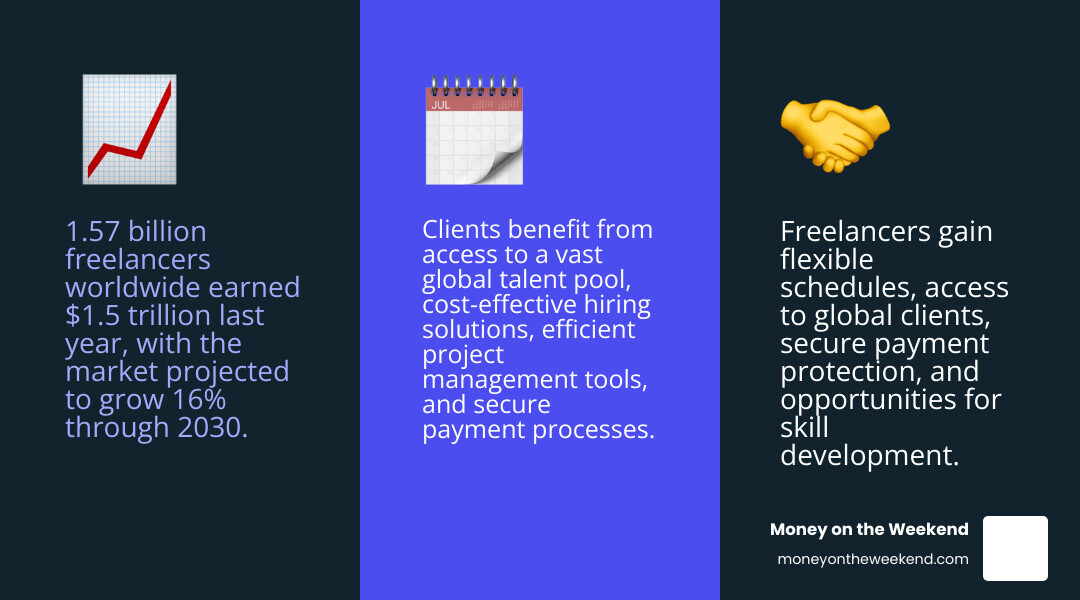
The freelance economy is exploding. Right now, freelancers make up about 46.6% of the global workforce—that’s 1.57 billion independent workers worldwide. Last year alone, they collectively earned over $1.5 trillion.
Whether you’re looking to escape the 9-to-5 grind or just need extra cash on the side, freelance marketplaces offer a low-risk way to start. You don’t need a business license, fancy website, or even much startup capital. Just your skills, a laptop, and an internet connection.
The timing couldn’t be better. The freelance platform market is expected to grow at around 16% annually through 2030. Companies are increasingly comfortable hiring remote talent, and platforms are getting smarter—many now use AI to match the right freelancer with the right job in seconds instead of days.
But here’s the challenge: not all platforms are created equal. Some charge hefty fees. Others are flooded with low-quality work. Some specialize in design, while others focus on writing or programming. Choosing the wrong one can mean wasted time, frustrating experiences, and missed opportunities.
This guide breaks down the best online freelance marketplaces for 2025, helping you find the perfect fit for your skills and goals.
Quick online freelance marketplace definitions:
Why Choose an Online Freelance Marketplace in 2025?
The landscape of work is rapidly evolving, and the online freelance marketplace stands at the forefront of this change. With the freelance platform market expected to grow at a Compound Annual Growth Rate (CAGR) of around 16% through 2030, it’s clear that these platforms are more than just a passing trend; they are becoming integral to how we work and build businesses.
For freelancers, these platforms offer unparalleled access to a global talent pool of clients, breaking down geographical barriers and allowing us to work with businesses from anywhere in the world. This means more opportunities, diverse projects, and the freedom to set our own schedules. For clients, it’s about finding specialized skills quickly and efficiently, often at a more cost-effective rate than traditional hiring.
Beyond just connecting people, modern freelance marketplaces provide robust features like payment protection, ensuring that once a job is done, we get paid. They also offer integrated project management tools, simplifying communication, file sharing, and progress tracking. If you’re considering how to Start a Business or grow an existing one, leveraging an online freelance marketplace can be a game-changer.
A significant driver of this growth and efficiency is the increasing integration of Artificial Intelligence (AI). AI in freelancing isn’t just a buzzword; it’s actively shaping the industry. Platforms are utilizing AI-powered search to match the right freelancer with the right job faster than ever before. We’re even seeing the emergence of AI agents, which can automate tasks like answering phones, making sales, and setting appointments, potentially costing less than building a website. This means AI is not only a tool for efficiency but also a new service category for freelancers to offer.
Pros and Cons vs. Direct Hiring
Deciding whether to use an online freelance marketplace or pursue direct hiring involves weighing several factors. Each approach has its unique advantages and disadvantages for both freelancers and clients.
Marketplace Pros:
- Security and Payment Protection: Most reputable platforms offer escrow services, holding funds until a project milestone is met or the project is completed, significantly reducing payment risks for freelancers. Clients also benefit from secure payment processing.
- Dispute Resolution: In case of disagreements, platforms often provide mediation or arbitration services, offering a structured way to resolve conflicts.
- Vast Talent Pool: Clients gain access to millions of freelancers worldwide, with diverse skill sets and experience levels. For freelancers, it means a continuous stream of potential clients and projects.
- Built-in Tools: Platforms typically include communication tools, time tracking (for hourly projects), file sharing, and project management dashboards, streamlining the workflow.
- Speed: On many platforms, freelancers can often start working on projects within 24 to 48 hours, a stark contrast to the lengthy process of recruiting full-time employees.
Marketplace Cons:
- Service Fees: This is often the biggest drawback. Many popular platforms charge freelancers a service fee, which can range from 10% to 20% of their earnings. Clients may also pay a small processing fee. However, some newer platforms are making waves by taking no commission from freelancers.
- Competition: With millions of freelancers, standing out can be challenging, especially for newcomers.
- Platform Rules: Freelancers and clients must adhere to the platform’s terms of service, which can sometimes feel restrictive.
Direct Hiring Pros:
- No Platform Fees: This is the primary financial advantage, as both parties keep 100% of the agreed-upon rate.
- Direct Relationships: It allows for building stronger, more personal relationships with clients or freelancers, fostering loyalty and a deeper understanding of needs.
- Flexibility: Greater freedom in contract terms, payment schedules, and communication methods.
Direct Hiring Cons:
- Finding Talent: Sourcing and vetting talent independently can be time-consuming and challenging, requiring extensive networking or advertising.
- Payment Risks: Without platform escrow, there’s a higher risk of payment disputes or non-payment for freelancers, and clients might worry about work not being delivered.
- No Built-in Support: Clients are responsible for all project management, legal, and dispute resolution processes.
The choice depends on your priorities: convenience, security, and access to a wide network versus cost savings and direct control.
Emerging Trends Shaping the Future of Freelancing
The online freelance marketplace is a dynamic space, constantly evolving with technological advancements and shifting work preferences. Here are some key trends we’re observing:
-
AI’s Expanding Role: As we discussed, AI is no longer just for matching. AI agents are set to be the “next big thing” for businesses in 2025, handling tasks from customer service to sales. This creates new opportunities for freelancers specializing in AI development, integration, and management. Some platforms are already promoting their AI services. AI-powered search, which can reduce search and selection from days to seconds, will only become more sophisticated, making talent finding hyper-efficient.
-
Rise of Niche and Specialized Platforms: While generalist platforms continue to thrive, there’s a growing demand for specialized marketplaces. These platforms focus on specific industries or skill sets, offering highly vetted talent and custom services. Some platforms, for example, accept only a small percentage of applicants to ensure they offer top-tier tech talent. Similarly, other platforms cater specifically to creative professionals in fields like graphic design or visual arts. This specialization ensures higher quality and more relevant matches for complex projects.
-
“Superteam” Formations and Flexible Consulting: Platforms are facilitating the formation of “superteams” – groups of highly skilled freelancers collaborating on larger projects. This allows freelancers to work together as a single, cohesive unit. This trend extends to flexible consulting models, where businesses can quickly onboard expert consultants for short-term, high-impact projects.
-
Emphasis on Transparency and Fairer Compensation Models: Some platforms are challenging traditional fee structures by offering zero-commission models. This trend towards greater transparency and ensuring freelancers keep more of their earnings is likely to gain traction, benefiting the independent workforce.
-
Focus on Soft Skills and Professional Development: As AI handles more routine tasks, human-centric skills like communication, collaboration, problem-solving, and emotional intelligence become even more critical. Platforms are increasingly offering resources and programs to help freelancers develop these skills, alongside technical expertise. For example, some platforms provide resources and events to help freelancers grow their careers and reward active participation with increased visibility.
-
Integration of Freelancing into Broader Business Ecosystems: Freelance platforms are becoming more intertwined with other business tools, from CRM and project management software to accounting solutions. This seamless integration helps freelancers manage their operations more effectively, making freelancing a more sustainable and viable long-term career path.
For us at Money on the Weekend, understanding these shifts is crucial. They not only inform how we pursue Passive Income and digital entrepreneurship but also guide us in identifying the most promising avenues for financial freedom in the evolving gig economy.
Top Online Freelance Marketplaces for Every Skillset
Choosing the right online freelance marketplace can feel like finding a needle in a haystack, given the sheer number of options. However, by understanding their unique strengths, fee structures, and target audiences, we can narrow down the perfect fit for our skills or hiring needs. Our goal is to empower you to excel in Online Freelance Services.
Here’s a look at the different types of platforms available:
Generalist Platforms: Your One-Stop-Shop
These are the giants of the freelance world, offering a vast array of job categories. Whether you’re a writer, developer, marketer, or virtual assistant, you’ll find opportunities here. They typically operate on either a project-based or hourly contract model. Some use a bidding system where freelancers submit proposals for projects, while others have a “gig-based” model where freelancers offer pre-packaged services at a set price. The sheer volume of users on these platforms means more opportunities, but also more competition.
Specialized Platforms: Finding Your Niche
If you have a highly specialized skill, a niche marketplace might be a better fit. These platforms cater to specific industries, such as technology, design, writing, or legal services. The key advantage here is a more targeted audience. Clients visiting these sites are specifically looking for experts in that field, which can lead to higher-quality projects and better pay. Some of these platforms are highly curated, accepting only a small percentage of applicants to maintain a high standard of talent. For creative professionals, there are also portfolio-based sites that allow you to showcase your work to attract potential clients. You can learn more about this in our guide, What are the Different Types of Digital Content Creators?.
Best Practices for Freelancers to Succeed
Succeeding on an online freelance marketplace is about more than just signing up and waiting for jobs to roll in. It requires a strategic, client-focused approach and a commitment to continuous improvement.
- Adopt a client-first mindset: Think like your ideal client. What problems are they trying to solve? Shape your services, proposals, and communication around delivering clear outcomes, not just tasks. When clients feel understood, they are far more likely to hire and rehire you.
- Commit to continuous learning: Platforms and client needs change fast. Set aside regular time each week to upgrade your skills through courses, tutorials, and practice projects. Staying current with tools like AI, automation, or new marketing tactics helps you charge more and stand out.
- Build a recognizable brand: Treat yourself like a one-person business. Use consistent colors, messaging, and tone across your profile, proposals, and portfolio. Specializing in a niche (for example, “email marketing for e-commerce brands” instead of generic “digital marketing”) makes you easier to remember and recommend.
- Master communication skills: Clear, proactive communication is one of the biggest trust-builders. Respond quickly, confirm your understanding of project details, and provide regular progress updates. This reduces misunderstandings and shows clients they can rely on you.
- Practice strong time management: Freelancing gives you freedom, but also responsibility. Use calendars, to-do lists, or project management tools to plan your week, block focus time, and avoid last-minute rushes. Reliable delivery is a major reason clients increase budgets or offer ongoing work.
When you approach freelancing as a long-term career instead of a one-off side hustle, you open the door to higher-paying clients, more stability, and the financial freedom Money on the Weekend is all about.
How to Build a Strong Profile on an online freelance marketplace
Your profile is your online storefront. It is often the first impression a client will have of you, so it needs to clearly communicate who you are, what you do, and why you are the best choice.
- Write a compelling bio: Focus on outcomes and benefits, not just responsibilities. Instead of saying “I write blog posts,” say “I help online businesses attract traffic and convert readers into buyers with SEO-optimized blog content.” Use clear, simple language and mention your niche, experience, and the types of clients you serve.
- Use a professional headshot: Choose a clear, well-lit photo where you look approachable and professional. Avoid distracting backgrounds or selfies. This small detail builds trust and signals that you take your work seriously.
- Showcase your key skills: Select skills that match the services you want to be hired for. Many platforms allow you to take skill tests or add tags; prioritize relevant ones that align with your niche and ideal projects.
- Add an introduction video if possible: A short video (30–90 seconds) can set you apart. Briefly introduce yourself, explain who you help and how, and mention one or two results you have achieved. Clients feel more confident hiring someone they have seen and heard.
- Set competitive, realistic rates: Research what other freelancers with similar experience in your niche charge. If you are new, it can make sense to start slightly below the average and raise your rates as you collect positive reviews and repeat clients. Do not undervalue yourself, but also recognize that reputation and social proof make higher rates easier to justify.
A polished profile that speaks directly to client needs acts like a magnet for the right opportunities.
Creating a Portfolio That Attracts High-Paying Clients
Your portfolio is proof that you can deliver results. High-paying clients care less about how long you have been freelancing and more about whether you can solve their specific problems.
- Showcase your best work, not all your work: Choose 5–10 strong, relevant pieces rather than everything you have ever done. Quality and relevance matter more than quantity.
- Create simple case studies: For key projects, briefly explain the client’s challenge, what you did, and the outcome. For example: “Client’s website had low traffic; I optimized 15 key pages, and organic traffic increased by 45% in three months.” Concrete results build trust.
- Include client testimonials when possible: Short quotes from happy clients, with permission, are powerful social proof. Even one or two strong testimonials can significantly boost your credibility.
- Use before-and-after examples: If relevant, show screenshots, redesigns, or data comparisons (before and after a campaign, redesign, or optimization). Visual proof makes your impact easy to understand.
- Tailor your portfolio to your niche: If you want to attract SaaS clients, highlight SaaS work. If you want to work with coaches, feature projects for coaches. You can rearrange or create separate sections so that your most relevant work appears first for the kind of clients you want to attract.
A focused, results-driven portfolio helps you move from low-paying gigs to aligned, premium clients who value your expertise and are happy to pay for it.
A Business Guide to Hiring the Right Freelance Talent
For businesses, an online freelance marketplace can dramatically speed up hiring while keeping costs under control. To get the most value, you need a clear process from the moment you define your project to the moment the work is delivered.
- Define your project scope: Start by clarifying the outcome you want, your budget, and your timeline. List key deliverables, target audience (if relevant), and any tools or platforms the freelancer should use. A well-defined scope prevents confusion and scope creep.
- Write a clear, detailed job post: Your post should include a short project overview, main responsibilities, required skills, expected deliverables, budget range, and deadline. The clearer you are, the more likely you are to attract qualified freelancers instead of generic applications.
- Vet candidates carefully: Do not rely only on hourly rates. Review their profiles, portfolios, and past client feedback. Look for work similar to what you need and pay attention to communication style in their proposals.
- Check reviews and ratings: Consistent positive feedback, especially from repeat clients, is a strong sign of reliability. Read detailed reviews to understand how the freelancer communicates, meets deadlines, and responds to feedback.
- Conduct short interviews: A quick call or chat can confirm fit. Ask about their process, how they handle revisions, and how they communicate during the project. This helps you gauge both expertise and professionalism.
How to effectively find talent on an online freelance marketplace
With thousands of freelancers available, using platform tools wisely can save you time and help you locate the best match for your business needs.
- Use filters to narrow your search: Filter by skills, experience level, hourly rate, location (if relevant), and language. This quickly reduces the candidate pool to people who are more likely to fit your project.
- Leverage AI matching tools: Many platforms offer AI-powered recommendations based on your job description. These tools can surface strong candidates you might miss through manual searches.
- Browse project catalogs or gig listings: Some freelancers package their services as ready-made offers. This can be useful if you need something specific, like a logo, landing page, or email sequence, and want clear pricing upfront.
- Invite freelancers directly: If you find profiles that look promising, invite those freelancers to apply. Personalized invitations often result in more thoughtful proposals and better matches.
- Align hiring with your broader business goals: If you are exploring lean, online-first models or ideas from resources like 10 Businesses You Can Start on a Budget in 2024, freelancers can help you test ideas quickly without committing to full-time hires.
Managing Freelancers for a Successful Project Outcome
Finding the right freelancer is only the first step. Effective management ensures the project finishes on time, within budget, and to your standards.
- Communicate expectations clearly: At the start, restate goals, deliverables, deadlines, and success metrics. Ask the freelancer to confirm their understanding so you know you are aligned.
- Use platform tools to stay organized: Take advantage of built-in messaging, file sharing, and time tracking. Keeping everything within the platform helps with clarity, record-keeping, and potential dispute resolution.
- Set milestones and check-ins: For larger projects, break the work into phases with specific deliverables and due dates. Milestones make it easier to review progress and release payments in stages.
- Provide timely, specific feedback: When reviewing work, highlight what is working well and what needs improvement. The more specific you are, the faster the freelancer can adjust and deliver what you are looking for.
- Invest in long-term relationships: When you find a freelancer who delivers great results, consider working with them on future projects. Long-term collaboration saves onboarding time and helps them better understand your brand, which often improves quality over time.
With a clear process and the right expectations, hiring on an online freelance marketplace can become a reliable, scalable way to grow your business while keeping fixed costs low.