Why Understanding Content Marketing Social Network Matters
Content marketing social network is often misunderstood as a single concept, but it’s actually two distinct yet interconnected strategies. Here’s the fundamental distinction:
- Content Marketing: The creation and distribution of valuable content (blogs, videos, ebooks) to attract and educate your audience, building long-term trust and authority.
- Social Media Marketing: The use of social platforms (Instagram, LinkedIn, TikTok, X) as channels to distribute content, engage with your community in real-time, and nurture relationships.
- The Key: Content marketing is what you create; social media marketing is where and how you share it.
Think of it like this: content marketing is your menu, and social media networks are the restaurants where you serve it. You wouldn’t offer the same menu at a fast food joint and a gourmet restaurant—the audience expectations are completely different.
This distinction matters because 75% of internet users use social media for product research. If you’re trying to build an online business, generate passive income, or establish authority in your niche, you need both strategies working together. Content marketing builds the valuable assets that establish your expertise. Social media marketing amplifies those assets and turns them into conversations, community, and ultimately, conversions.
The common mistake? Treating them as the same thing. Some creators focus only on churning out social posts without substantial content backing them up. Others create amazing blog posts or videos but never promote them effectively on social channels. Neither approach maximizes your potential.
For aspiring digital entrepreneurs, understanding this “great divide” is crucial. You’re not just posting to post—you’re building a system where valuable content flows through strategic channels to reach people at different stages of their journey, from first finding you to becoming loyal customers or followers.
Essential content marketing social network terms:
The Core Distinction: Content vs. Channel
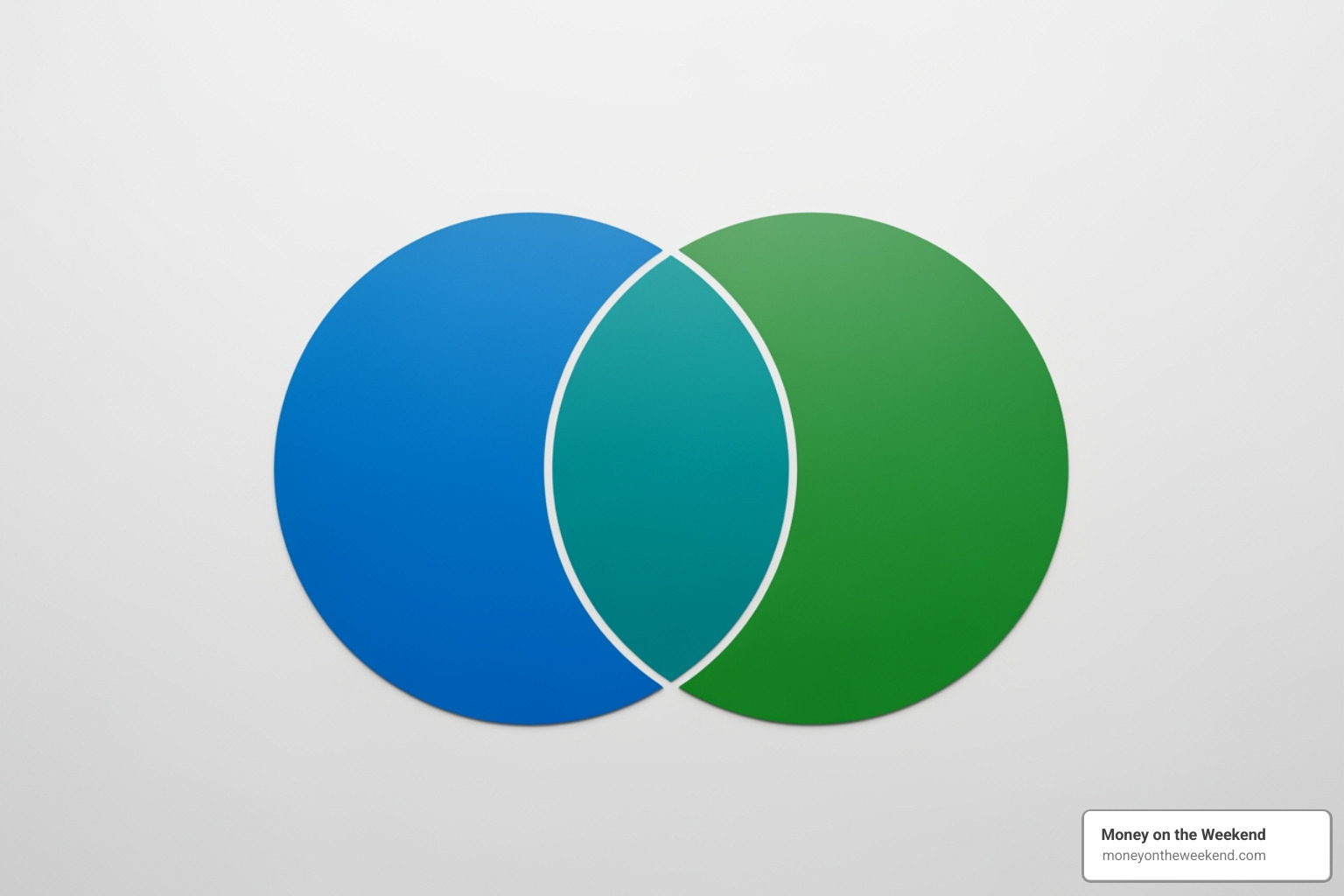
At first glance, content marketing and social media marketing can seem like two sides of the same coin, and indeed, they share a significant overlap. However, understanding their fundamental differences is key to crafting an effective content marketing social network strategy. One is the strategic what and why, while the other is the tactical how and where.
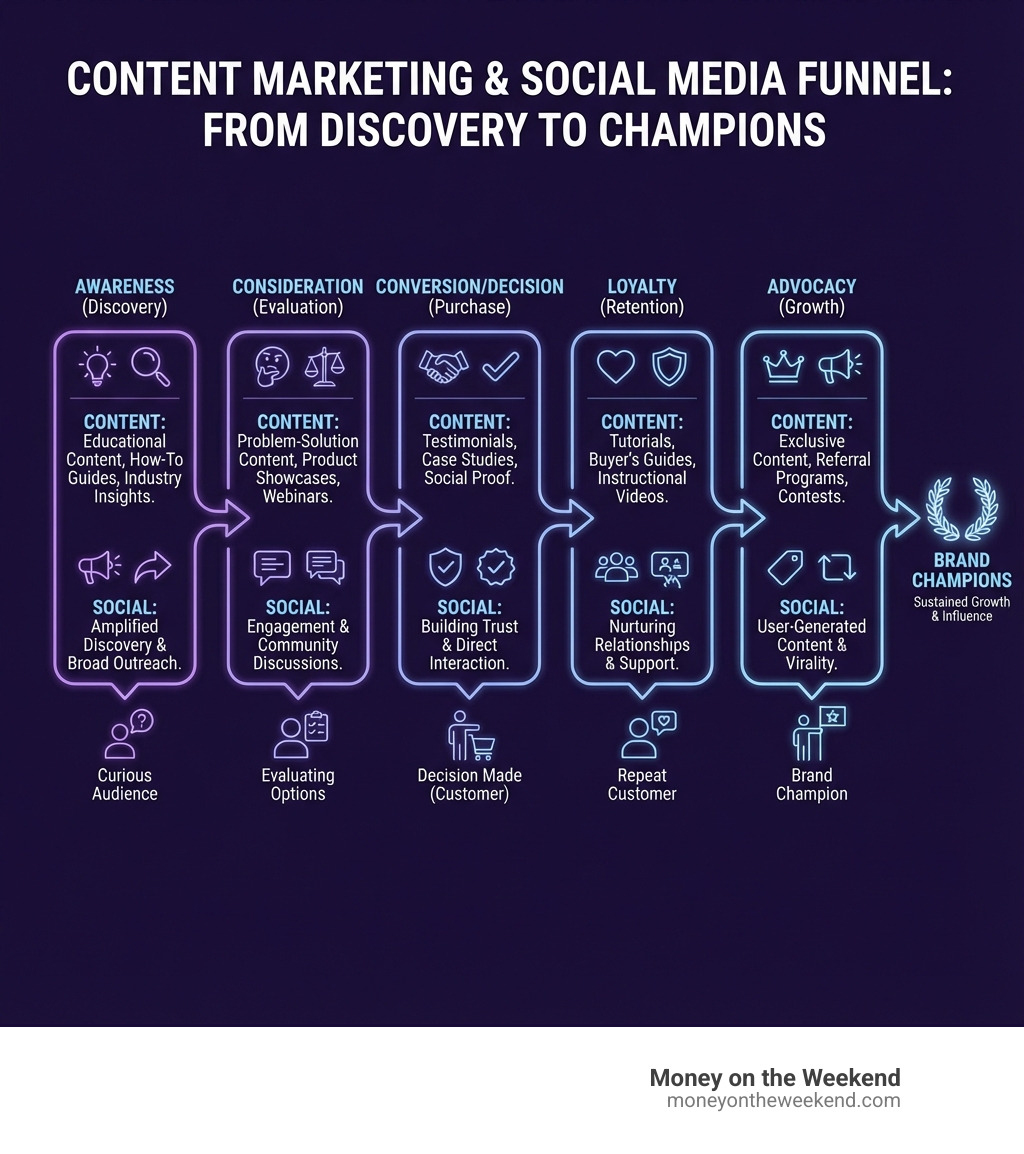
The journey a potential customer takes, often called the marketing funnel, is central to this distinction. Content marketing guides prospects through this funnel, from initial awareness to becoming a loyal advocate. Social media, on the other hand, acts as a dynamic megaphone and a conversational space, amplifying your content at each stage and fostering direct interactions.
What is Content Marketing?
Content marketing is the strategic approach of creating and distributing valuable, relevant, and consistent content to attract and retain a clearly defined audience—and, ultimately, to drive profitable customer action. It’s about publishing original content to draw new customers to your business, answering their questions, discussing topics of interest, and building trust.
Think of it as providing answers before questions are even asked. This includes a wide array of assets: blog posts, detailed guides, how-to videos, e-books, infographics, podcasts, and even email newsletters. The goal is to entertain, inspire, educate, or simply boost brand visibility, positioning your brand as a reliable resource. We’re talking about building a library of helpful resources that serve your audience over the long term. For more on creating these assets, explore our guide on Content Creation.
What is Social Media Marketing?
Social media marketing, in contrast, uses digital platforms like Instagram, TikTok, LinkedIn, and X as channels for communication. Its primary role is to communicate with consumers, share content, and foster conversations. It’s where your content comes alive through community building, direct customer interaction, and real-time engagement.
Social media allows your brand’s voice to resonate, nurturing relationships by delivering valuable information and fostering dialogue. While content marketing focuses on the strategic ‘what to say,’ social media marketing is all about the ‘how and where to say it’ for maximum impact and interaction. It’s the dynamic space where your audience can react, share, and engage directly with your brand and with each other.
| Feature | Content Marketing | Social Media Marketing |
|---|---|---|
| Primary Goal | Build assets, educate, build trust, long-term authority | Distribute content, engage, real-time interaction, community building |
| Focus | Strategy, value creation, problem-solving | Channel, conversation, relationship nurturing |
| Time Horizon | Long-term (evergreen content) | Real-time, immediate engagement |
| Key Output | Blog posts, e-books, videos, guides, podcasts | Posts, stories, Reels, tweets, comments, DMs |
| Measurement | Website traffic, lead generation, brand sentiment, SEO ranking | Reach, engagement rate, shares, comments, followers |
| Relationship to other | The “what” to be distributed | The “how” and “where” to distribute |
This table highlights the complementary nature of these two powerful strategies. As the NYTLicensing article aptly puts it, “Content marketing is a tactic focused on creating and distributing valuable content, while social media marketing is a channel used to communicate with consumers, share content, and foster conversations.”
Why This “Great Divide” Matters for Your Online Business
Understanding the distinction between content marketing and social media marketing isn’t just academic; it’s fundamental to your online business’s success, especially if you’re aiming for financial freedom through digital entrepreneurship. It’s about optimizing every piece of your digital presence to achieve specific goals: brand awareness, lead generation, building authority, cultivating customer loyalty, and ultimately, driving sales.
We know that 75% of internet users use social media for product research. This statistic alone underscores the critical role of the content marketing social network in reaching potential customers. If your content isn’t findable and engaging on social platforms, you’re missing out on a massive opportunity to connect with your target audience at a crucial stage of their buying journey.
For anyone looking to Start a Business, leveraging this synergy means working smarter, not just harder. You create valuable content once, then strategically distribute and engage with it across social networks, maximizing its reach and impact.
Building Trust and Authority
In the crowded digital landscape, trust is currency. Effective content marketing on social networks is your secret weapon for building this trust. By consistently providing value, educating your audience, and solving their problems, you position yourself as a go-to resource and an expert in your niche.
Think about it: when you regularly share insights, tips, or solutions through your content, people start to see you as knowledgeable and reliable. This isn’t about hard selling; it’s about helping. Whether it’s a blog post explaining complex concepts or a video tutorial simplifying a process, this valuable content shared on social media builds a strong foundation of credibility. This approach is vital for anyone pursuing Passive Income, as it creates a loyal audience that trusts your recommendations and offerings.
Driving Traffic and Generating Leads
Content marketing and social media marketing work hand-in-hand to guide users directly to your digital doorstep and convert them into valuable leads. Your social channels act as powerful conduits, directing interested individuals to your website, landing pages, or other conversion points where they can learn more or take action.
For example, a compelling infographic shared on LinkedIn might include a call to action to download a more detailed e-book (gated content) from your website. Or a short, engaging TikTok video could pique interest, leading viewers to a longer tutorial on your blog. This strategic flow helps nurture leads through the marketing funnel, increasing the likelihood of conversions. It’s especially effective for How to Start and Launch an Affiliate Marketing Website in Just 7 Days, where driving targeted traffic is paramount.
Building Your Blueprint: A Unified Content Marketing Social Network Strategy

Now that we understand the ‘why,’ let’s dive into the ‘how.’ Building a unified content marketing social network strategy is like crafting a blueprint for your online success. It moves us beyond random posting to a structured, results-driven approach. As Buffer’s guide on How to Create a Social Media Marketing Strategy in 7 Steps emphasizes, a clear strategy is your roadmap.
Step 1: Define Your Strategy and Goals
Before you create a single piece of content or schedule a post, you need a clear direction. This starts with defining your strategy and setting SMART goals: Specific, Measurable, Achievable, Relevant, and Time-bound. Do you want to increase brand awareness by 20% in the next six months? Generate 100 new leads per month? Boost website traffic from social by 15%? These goals should align with your broader business objectives.
Next, get to know your audience deeply. Create detailed target audience personas that go beyond demographics. What are their pain points? What platforms do they frequent? What kind of content do they love? Understanding your audience is the foundation of creating relatable and impactful content. As Elise Darma, an Instagram creator and consultant, recommends, “putting audience research front and center” is crucial.
Competitor analysis is also vital. What are others in your niche doing well? Where are their gaps? This helps you identify opportunities to differentiate yourself. Finally, establish your content pillars—3 to 5 broad topics that define your niche and what you’ll consistently talk about. These pillars provide focus and ensure your content remains relevant. A consistent brand voice across all platforms also ties everything together, ensuring your audience recognizes and connects with you. For guidance on defining these foundational elements, check out our How To resources.
Step 2: Create Engaging and Authentic Content
This is where your content marketing engine truly roars. With your strategy and goals defined, it’s time to create the valuable assets that will populate your content marketing social network. This isn’t just about churning out posts; it’s about crafting content that resonates.
Effective content comes in many formats. Video content, for instance, continues to be a top pick across platforms for social users. Whether it’s a quick tutorial, an engaging explainer, or a behind-the-scenes glimpse, video captures attention. Infographics can simplify complex ideas, while quizzes and polls (as highlighted by forms.app) are incredibly interactive tools that encourage active participation.
Storytelling is your superpower here. People connect with stories, not just facts. Share your journey, your challenges, and your successes. Authenticity is paramount—your audience can spot a forced trend or a fake voice from a mile away. Consistency in both quality and posting frequency builds momentum and keeps your audience engaged. Don’t forget to leverage tools that make this process easier. Our Content Creation Tools Ultimate Guide can help you find the right resources.
Step 3: Measure and Optimize Your Content Marketing Social Network Efforts
Creating great content and distributing it strategically is only half the battle. The other half, often overlooked, is measuring its impact and continuously optimizing your efforts. This is where data becomes your best friend.
We need to go beyond vanity metrics like likes and follows. Focus on key metrics that directly tie back to your SMART goals: reach, engagement rate, click-through rates, website traffic, and conversions. Tools like Google Analytics are invaluable for tracking how many visitors are coming from your social channels and what they do once they arrive.
Calculating your Return on Investment (ROI) is crucial. It’s not enough to just invest time and money; we need to see a tangible return. The basic formula for social media ROI is (Revenue from Social – Investment in Social) / Investment in Social. This includes the cost of your time, tools, and any paid promotions.
Regularly review your analytics to understand what’s working and what isn’t. Identify top-performing content, find trending tags, and use these insights for A/B testing new content formats or messaging. This optimization cycle is continuous. As the saying goes, “you can’t improve what you don’t measure.” Dive deeper into the tools that can help you with this on our Tag: Tools page.
The Right Content on the Right Network: A Platform-Specific Playbook
One of the biggest mistakes we can make in our content marketing social network strategy is treating all platforms the same. As the experts at Sprout Social point out in their guide What to post on each social media platform: Your guide to content success, “Posting the same content everywhere is an outdated strategy.” Each platform has a unique audience, distinct behaviors, and specific content preferences. What works on TikTok might fall flat on LinkedIn.
This isn’t about creating entirely unique content for every single platform, which can be exhausting. Instead, it’s about smart repurposing and tailoring. Take a core idea and adapt it to the “vibe” and format preferences of each network. This approach respects audience expectations and leverages platform algorithms for better reach.
Mastering Visuals and Short-Form Video (Instagram & TikTok)
These platforms are visual-first and thrive on engaging, easily digestible content. Instagram, with its mix of photos, videos, Stories, and Reels, and TikTok, the undisputed king of short-form video, are essential for reaching broad and often younger demographics.
On Instagram, we’ve seen that short videos (under 15 seconds) perform best, followed by static images and carousels. Brands like HubSpot effectively use visual storytelling, as seen in their engaging posts like this one. User-Generated Content (UGC) is gold here—it builds trust and authenticity because it comes from real people. Think about encouraging your audience to share their experiences with your product using a specific hashtag. Behind-the-scenes content also humanizes your brand, building a deeper connection.
TikTok, on the other hand, is a whirlwind of creativity and trends. While shorter videos once dominated, studies by Buffer have shown that longer TikTok videos (3+ minutes) now receive more than double the views of shorter ones. The key, however, remains an attention-grabbing hook in the first few seconds. Experiment with humor, trending audios, and educational content presented in a snappy, authentic way. Facebook is the most used platform for purchases (39%), followed by TikTok (36%) and then Instagram (29%), making these platforms critical for direct sales and product findy. And of course, video content continues to be a top pick across platforms for social users. For ideas on how to craft compelling visuals for your affiliate products, check out our Affiliate Marketing Content Ideas & Tips.
Building Professional Authority (LinkedIn & X)
When it comes to professional networking and thought leadership, LinkedIn and X (formerly Twitter) are your go-to platforms. The audience here is often looking for information, industry insights, and professional development.
LinkedIn is the field of thought leadership. This means sharing industry-relevant insights, offering your personal opinion on trends, and sharing your learnings. Videos get the most engagement on LinkedIn, but well-crafted text-based posts, infographics, and company news also perform well. It’s a fantastic place to build your professional brand and connect with peers and potential collaborators.
X (formerly Twitter), despite its changes, remains a powerful platform for real-time updates, concise insights, and engaging in industry conversations. 48% of social media users have an X profile, making it a significant channel for broad reach. A survey found that 55% of weekly X users want to see more informative content. While short-form video is gaining traction, text posts that explain complex concepts or comment on real-time news are still highly valued. Think of it as your digital water cooler for industry discussions. For more on creating effective content, visit our Tag: Content Creation section.
The Power of Community and Influencer Collaborations
Beyond specific content formats and platforms, the essence of a strong content marketing social network strategy lies in building genuine connections. This involves fostering conversations, actively engaging with your audience, and strategically collaborating with others.
User-generated content (UGC), as we mentioned earlier, is incredibly powerful for building trust. When customers share their experiences with your product or service, it acts as authentic social proof that resonates far more than traditional advertising. Encourage reviews, testimonials, and creative uses of your offerings.
Influencer marketing takes this a step further. Collaborating with influencers in your niche allows you to tap into their already engaged and trusting audience. It’s a shortcut to credibility and can introduce your brand to new potential customers who might otherwise be hard to reach. These aren’t just one-off promotions; successful collaborations are often long-term partnerships that build genuine brand advocates.
Behind-the-scenes content also plays a crucial role in building brand trust and connection. Showing the human side of your business—the people, the processes, the passion—creates a sense of authenticity and relatability. It allows your audience to feel like they’re part of your journey, fostering a loyal community. This human element is particularly valuable for those offering Online Freelance Services, where personal connection is often key to securing clients.
Frequently Asked Questions about Content and Social Media
What’s the main difference between content marketing and social media marketing?
Content marketing is the creation of valuable assets (blogs, videos) to build long-term authority. Social media marketing is the use of platforms to distribute that content, engage with an audience in real-time, and build community. One is the message, the other is the messenger. Content marketing focuses on the what and why you create, while social media marketing focuses on the where and how you share and interact.
Do I need a unique post for every social media platform?
Not necessarily. The key is to adapt, not just copy-paste. A long-form video for YouTube can be trimmed into a Reel for Instagram, and key quotes can become a text post on X. Understand each platform’s culture and format content accordingly. For instance, a detailed infographic for your blog could be broken down into a carousel post for Instagram, a series of quick tips for X, and a professional summary for LinkedIn. It’s about repurposing your core message for each unique audience.
How do I measure the ROI of my social media content?
Track metrics beyond likes and shares. Use tools like Google Analytics to monitor website traffic from social channels. Set up conversion goals for actions like email sign-ups or purchases. Calculate ROI by comparing the revenue or value generated against your investment in time and resources. Remember to include the cost of content creation, social media management tools, and any paid promotions in your investment. This holistic view helps you understand the true impact of your content marketing social network efforts.
Conclusion
The journey to financial freedom through online income generation and digital entrepreneurship is paved with strategic choices. Understanding the “great divide” between content marketing and social media marketing is not just one of those choices—it’s a foundational insight that empowers us to build a more effective, impactful, and sustainable online presence.
We’ve learned that content marketing is the strategic bedrock, the what and why behind the valuable assets we create to educate, inspire, and build trust with our audience. It’s the engine that fuels our expertise and positions us as a go-to resource in our niche. Social media marketing, then, is the dynamic distribution network, the how and where we amplify that content, engage in real-time conversations, and cultivate a thriving community.
The synergy of content marketing social network strategies is undeniable. By defining clear goals, understanding our audience deeply, creating authentic content, and tailoring it for each platform, we can transform our online efforts from a shot in the dark into a precision-guided missile aimed at our objectives. Measuring our progress and optimizing continually ensures we’re always learning and growing.
At Money on the Weekend, we believe in empowering individuals like you to find financial freedom in your spare time. Mastering the art of Content Creation and its strategic distribution across social networks is a powerful skill in your digital entrepreneurship toolkit. It’s how you build authority, generate leads, and ultimately, make money online.
Ready to dive deeper and explore more ways to leverage your digital skills? We invite you to explore View All Articles and continue your journey with us.