
What Is Affiliate Marketing Content and Why It’s Your Key to Online Income
Affiliate marketing content is any material you create to promote products or services through unique tracking links. When someone makes a purchase through your referral, you earn a commission. It’s the bridge between merchants and consumers, with you earning income in the middle.
Quick Answer: Top Affiliate Marketing Content Types
- Product Reviews – Honest assessments that build trust
- Comparison Posts – Side-by-side product evaluations
- Video Content – Tutorials, unboxings, and demos
- Listicles – “Best of” roundups and gift guides
- How-To Guides – Step-by-step problem-solving content
- E-books & Case Studies – In-depth expertise and real results
- Podcasts & Webinars – Audio content and live sessions
- Email Campaigns – Targeted promotional sequences
- Social Media Posts – Short-form engaging content
- SEO-Optimized Articles – Search-friendly blog posts
The affiliate marketing industry is booming, with US spending projected to reach $12 billion by 2025. This growth offers a real opportunity for flexible, passive income. You create content once, and it can generate commissions for years without you needing to handle inventory or customer service.
Your role is to create valuable content that helps people make informed buying decisions. Since nearly 70% of buyers read reviews before a purchase, your honest content fills a real need. While creating quality content requires consistent effort, the right strategy can turn your spare time into a reliable income stream.
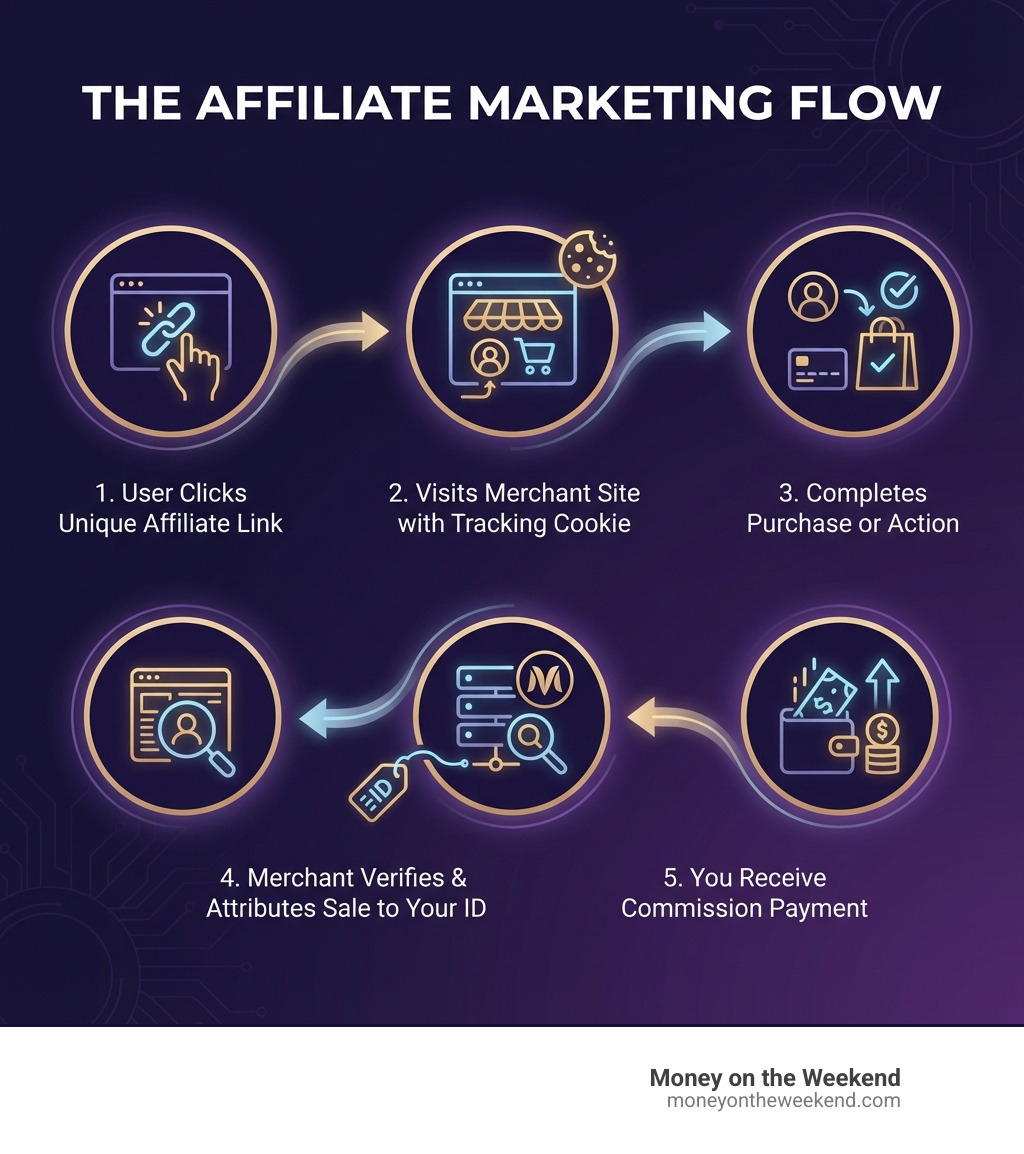
The Core Concept: How It Works
Affiliate marketing is a performance-based model involving three key players:
- The Seller (Merchant): The company that creates the product or service.
- The Affiliate (Publisher): You! You create affiliate marketing content to connect the product with the right audience.
- The Consumer: The person who makes the purchase based on your recommendation.
The process works via unique tracking links. When a consumer clicks your link, a “cookie” is placed on their device. This cookie tracks their activity and credits you with a commission if they make a purchase within a set timeframe. It’s a win for everyone involved. For a deeper dive, check out our guide on What is Affiliate Marketing?.
Understanding the Payout Models
Payouts aren’t just for sales. Understanding these models helps you choose the right programs.
- Pay Per Sale (PPS): The most common model. You earn a percentage of the sale. Rates vary, with digital products (20-50%) often paying more than physical ones (5-10%). High-ticket items can offer fixed commissions of $50-$500+. Learn more in our High Ticket Affiliate Programs 2026 guide.
- Pay Per Lead (PPL): You’re paid for generating a lead, such as a form submission or free trial signup. This is common for services with longer sales cycles.
- Pay Per Click (PPC): You earn a small amount for each click on your link. This is less common due to lower payouts and higher fraud risk for merchants.
- Pay Per Install (PPI): Used for software or mobile apps, you earn a commission for each installation via your link.
Payout terms like “net 30” (payment 30 days after the month of sale) and minimum withdrawal thresholds are also common. Always read the program’s terms.
10+ High-Impact Affiliate Marketing Content Formats
Now that we understand the mechanics, let’s dive into creating engaging affiliate marketing content. The right format can transform casual browsers into paying customers.
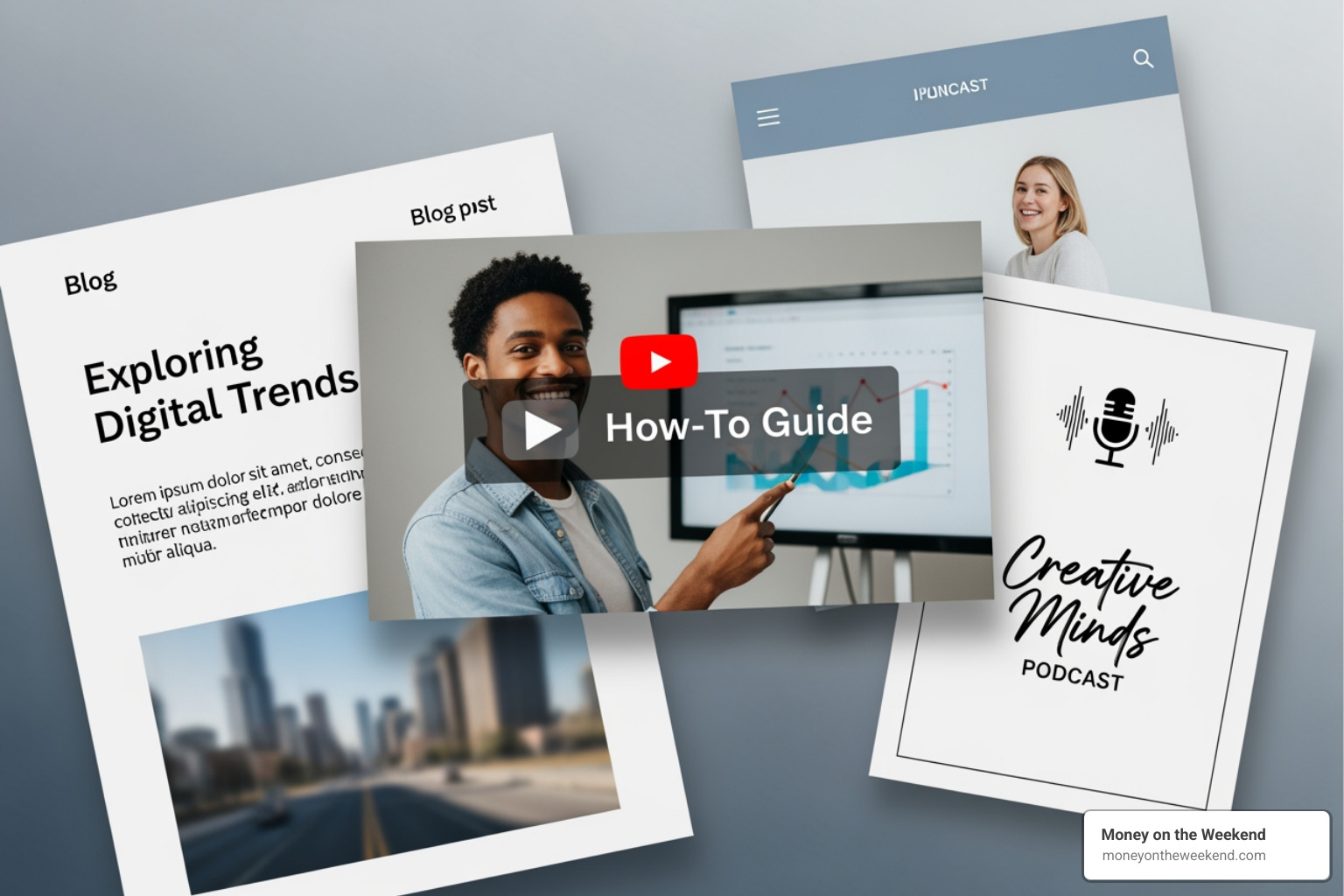
1. In-Depth Product Reviews
Product reviews are the cornerstone of affiliate marketing. With nearly 70% of buyers reading reviews before purchasing, people crave genuine insights. Your goal is to provide an honest, comprehensive assessment based on your personal experience.
- Highlight Pros and Cons: No product is perfect. Discussing both strengths and weaknesses builds immense trust.
- Focus on User Experience: Detail the setup process, daily use, and whether it solved the intended problem.
- Be Authentic: Write like you’re talking to a friend and use your own photos or videos.
- Solve a Problem: Frame the review around how the product addresses a specific pain point.
Balanced, authentic reviews position you as a trusted expert, which is invaluable for long-term success.
2. Detailed Comparison Posts
When a customer is choosing between a few options, comparison posts are incredibly effective. This affiliate marketing content puts products head-to-head to help your audience make a final decision.
A high-converting comparison post should:
- Directly compare features, pricing, and performance.
- Explain the value each product offers for different users or budgets.
- Offer a clear recommendation on who each product is best for (e.g., beginners vs. advanced users).
- Use comparison charts for easy scanning.
Here’s an example table structure:
| Feature | Product A | Product B |
|---|---|---|
| Price | $$$ | $$ |
| Key Benefit 1 | Excellent | Good |
| Key Benefit 2 | Good | Excellent |
| Target User | Professionals | Beginners |
| Our Recommendation | Ideal for Professionals | Best for Beginners |
Objective comparisons build authority and guide your audience toward a confident purchase.
3. Engaging Video Content
Video is a powerhouse for affiliate marketing, with YouTube boasting 2.7 billion monthly users. It allows you to demonstrate products and build a personal connection that increases conversions.

Effective video formats include:
- Unboxing Videos: Build anticipation and offer a first look at the product.
- Product Demonstrations: Show, don’t just tell. Demonstrate how a product works in action.
- Tutorials and How-To Guides: Walk viewers through using a product step-by-step.
- Reviews and Comparisons: Add a personal touch and convey enthusiasm more effectively than text.
- Social Media Reels/Shorts: Create short, punchy videos for platforms like TikTok and Instagram to drive traffic.
Always include clear calls to action and place affiliate links in the video description.
4. Strategic Listicles and “Best Of” Roundups
Listicles are popular because they’re scannable, digestible, and provide immediate value. Formats like “Top 10 Gadgets” or “Best Coffee Makers for Small Kitchens” help users quickly find recommendations.
Gift guides are especially powerful during holidays. This format allows you to feature multiple products, increasing the chance of a conversion. To make them effective, keep descriptions concise, use high-quality images, and include clear calls to action for each item. Their shareable nature also makes them great for social media.
5. Tutorials and How-To Guides
When someone is trying to solve a problem, they are highly motivated to find a solution—and a tool to help. Tutorials and how-to guides establish you as an authority by providing step-by-step instructions that genuinely help.
When you integrate an affiliate product as a necessary tool within the tutorial, your recommendation carries significant weight.
To create high-converting tutorials:
- Break down processes into simple, actionable steps.
- Use visual aids like screenshots or images.
- Introduce the affiliate product naturally as the solution.
- Focus on the benefit the product provides.
These guides are evergreen content that can generate commissions long after publication. Learn more in our Affiliate Marketing Beginners Guide.
6. Authoritative E-books and Case Studies
For audiences seeking in-depth knowledge, e-books and case studies are highly effective. These formats position you as an expert and are powerful for lead generation, especially in the B2B space.
- E-books: Offer a comprehensive guide on a topic in exchange for an email address to build your list. You can naturally embed affiliate links to recommended tools within the content. Our Ebook Affiliate Programs article provides more context.
- Case Studies: Showcase real-world examples of how a product or service helped someone achieve a specific result. This provides powerful social proof and is compelling for audiences who need to see a clear return on investment.
7. Personal Podcasts and Webinars
Audio and live video build a rapport that text cannot match.
- Podcasts: The intimate nature of audio creates a strong personal connection with listeners, making them receptive to your recommendations. You can mention tools you personally use and trust, making the promotion feel like a genuine endorsement.
- Webinars: Live online seminars are fantastic for demonstrating products, hosting Q&As, and addressing audience objections in real-time. You can collect emails during registration and repurpose the recording as evergreen content to generate leads and sales long after the live event.
Crafting Your Content Strategy for Maximum ROI
A robust content strategy acts like a roadmap, helping us:
- Understand the Content Funnel: Different content types serve different purposes. Some content builds awareness, some nurtures interest, and some drives conversion. We need a mix.
- Map the Audience Journey: What questions do our potential customers have at each stage of their buying process? Our content should answer those questions.
- Conduct Keyword Research: This helps us understand what our audience is searching for and allows us to create content that ranks in search engines.
- Plan with a Content Calendar: Consistency is key. A calendar helps us organize our publishing schedule and maintain a steady flow of valuable content.
- Develop a Promotion Plan: Creating content is only half the battle; we need to actively promote it to reach our target audience.
For a comprehensive guide on getting your affiliate marketing efforts off the ground, including setting up your platform and content, explore our article on How to Start and Launch an Affiliate Marketing Website in Just 7 Days.
Choosing a Profitable Niche and Audience
Before writing, you must choose your niche wisely. The sweet spot is where your interests intersect with market demand and viable affiliate programs.
- Passion vs. Profitability: Ensure there’s an audience and products to promote in your chosen area. Profitability is key for long-term success.
- Audience Research: Understand your audience’s interests and pain points. Use tools like AnswerThePublic.com to find what questions they’re asking.
- Competition Analysis: Assess how competitive a niche is. Look for opportunities to outrank smaller sites rather than taking on established authorities.
- Niche-Specific Problems: The best niches are those where you can solve specific problems, making your affiliate recommendations highly valued.
Finding and Joining the Right Affiliate Programs
Once you have a niche, find the right partners to get access to products and tracking links.
- Affiliate Networks: These platforms connect you with thousands of merchants in a centralized dashboard.
- In-House Programs: Many companies run their own programs, which you can find on their websites.
- Key Terms to Check:
- Commission Structures: Compare rates, as they vary significantly.
- Payout Terms: Understand the payment schedule (e.g., net 30) and minimum payout thresholds.
- Cookie Duration: This is how long your tracking cookie remains active. Longer is better.
- Brand Reputation: Only promote products you trust. Your credibility is your most valuable asset.
Our High Ticket Affiliate Programs 2026 guide can help you find opportunities.
The Key Elements of High-Converting Affiliate Marketing Content
Even the best content won’t convert without these core elements.
- Compelling Headlines: Your first and often only chance to grab attention. Make them irresistible by highlighting a benefit or sparking curiosity.
- Strong Introduction: Hook the reader by stating the problem they face and hinting at the solution your content provides.
- Clear Call-to-Action (CTA): Tell your audience exactly what to do next (e.g., “Click Here to Buy Now”). Make it prominent and action-oriented.
- High-Quality Visuals: Use images, videos, and infographics to break up text and make content more engaging.
- Mobile Optimization: Your content must be mobile-friendly, as most online shopping happens on phones.
Measuring the Success of Your Affiliate Marketing Content
Measuring success is crucial for understanding what works and where to improve.
Key metrics to track include:
- Click-Through Rate (CTR): The percentage of viewers who click your affiliate links.
- Conversion Rate: The percentage of clicks that result in a purchase or desired action.
- Earnings Per Click (EPC): The average amount you earn per click, which helps compare product profitability.
- Traffic Sources: Knowing where visitors come from (search, social media) helps you focus your efforts.
- Revenue Per Content Piece: Identify your top-performing content so you can create more of it.
Use analytics tools and A/B testing to continuously refine your strategy. Learn more in our guide on How Much Money Can You Make With Affiliate Marketing?.
Essential Best Practices: Building Trust and Avoiding Pitfalls
Successful affiliate marketing is built on trust. Without it, your affiliate marketing content will fail.
The Power of Authenticity and Trust
In a noisy online world, authenticity stands out. Your audience seeks genuine recommendations from people they trust.
- Honesty in Reviews: Always include both pros and cons. Your honesty builds credibility.
- Promoting Quality Products: Only recommend products you’ve used, researched, or genuinely believe in. Your reputation is on the line.
- Audience-First Approach: Focus on helping your audience solve a problem. Sales will follow naturally.
- Long-Term Relationships: A loyal audience built over time is more valuable than any single commission.
Legal and Ethical Must-Knows: FTC Disclosures
Transparency is a legal requirement. The Federal Trade Commission (FTC) mandates that you clearly disclose your affiliate relationships.
- Be Transparent: Explicitly state that you may earn a commission from your links.
- Use Clear Language: Use phrases like “Affiliate Disclosure” or hashtags like #ad or #sponsored.
- Place Disclosures Prominently: Put them at the beginning of blog posts, at the top of video descriptions, and within social media posts or emails containing affiliate links.
Ignoring these guidelines erodes trust and can lead to legal trouble. Always review the official FTC endorsement guidelines.
Common Mistakes New Affiliates Make
By being aware of common pitfalls, you can steer your journey more effectively.
- Ignoring SEO: If nobody sees your content, it won’t generate income. Learn the basics of Search Engine Optimization.
- Selling Instead of Helping: Focus on educating and informing your audience, not on a hard sell.
- Promoting Too Many Products: It’s better to be an expert in a specific category than a generalist.
- Not Tracking Performance: Use data (CTR, conversion rates) to identify what’s working and optimize your strategy.
- Failing to Build an Email List: An email list is a direct communication channel you own. It’s one of your most valuable assets.
- Relying Solely on Paid Ads: Paid ads require a solid strategy and budget to avoid burning through money. Our Paid Ads Affiliate Marketing Guide offers strategic insights.
Leveraging AI to Improve Your Efforts
Artificial Intelligence (AI) can augment your creativity and improve efficiency.
Here’s how AI can help:
- Content Ideation: Analyze trends and keywords to suggest fresh content topics.
- AI Writing Assistants: Help draft outlines, headlines, and paragraphs, while tools like Grammarly for writing assistance can polish your writing.
- Data Analysis: Identify patterns in consumer behavior and content performance to make data-driven decisions.
- Task Automation: Automate repetitive tasks like scheduling social media posts, freeing you up for high-level strategy.
While AI is a powerful tool, your unique voice and personal experience remain irreplaceable for building trust.
Conclusion: Start Creating and Earn Your Financial Freedom
We’ve covered the essentials of affiliate marketing, from core concepts and high-impact content formats to strategy and best practices. The most important takeaway is that success is built on the non-negotiable pillars of authenticity, trust, and ethical practices.
Affiliate marketing content offers an incredible opportunity to build a flexible income stream and achieve financial freedom by sharing your passion and helping others.
At Money on the Weekend, our mission is to empower you to find financial freedom in your spare time. The power lies in creating valuable, engaging, and trustworthy content. Don’t be afraid to experiment, learn from your results, and continuously refine your approach.
Your journey begins with the first piece of content. Start your content creation journey today and open up the potential for a more flexible future. For more resources, dive into our Tag: Affiliate Marketing section.