
Why Passive Income is the Key to Financial Freedom
The best passive ways to make money involve creating income streams that generate revenue with minimal ongoing effort. While the term “passive” suggests hands-off earnings, the reality is that all passive income requires significant upfront investment—either time, money, or both. Once established, however, these streams can provide financial freedom and flexibility that traditional employment rarely offers.
Here are the top passive income strategies for 2025:
For Those with Little to No Capital:
- Start a blog or YouTube channel (monetize with ads and sponsors)
- Leverage affiliate marketing (earn 3-7% commissions)
- Create and sell digital products (e-books, courses, templates)
- Rent out unused assets (car, parking space, household items)
For Those with Capital to Invest:
- Invest in dividend stocks and ETFs (S&P 500 averages ~10% annual return)
- Explore REITs and real estate crowdfunding (target returns of 7-12%)
- Try peer-to-peer lending (average returns of 5-10%)
- Use high-yield savings accounts and CDs (4-5% yields)
The concept of passive income has evolved beyond the IRS definition of “income from rental property or a business in which one does not actively participate.” Today, it encompasses any revenue stream that doesn’t require trading hours for dollars on an ongoing basis.
Here’s the truth: In 2012, a former investment banker walked away from his career with $3 million in net worth and roughly $80,000 per year in passive income. His friends thought he was crazy. What they didn’t see was the decade of behind-the-scenes work building these income streams.
The distinction between active and passive income is simple. Active income requires your continuous presence and effort—stop working, stop earning. Passive income, by contrast, continues to flow after the initial setup phase. You might spend six months building an online course or writing an e-book, but that product can generate sales for years.
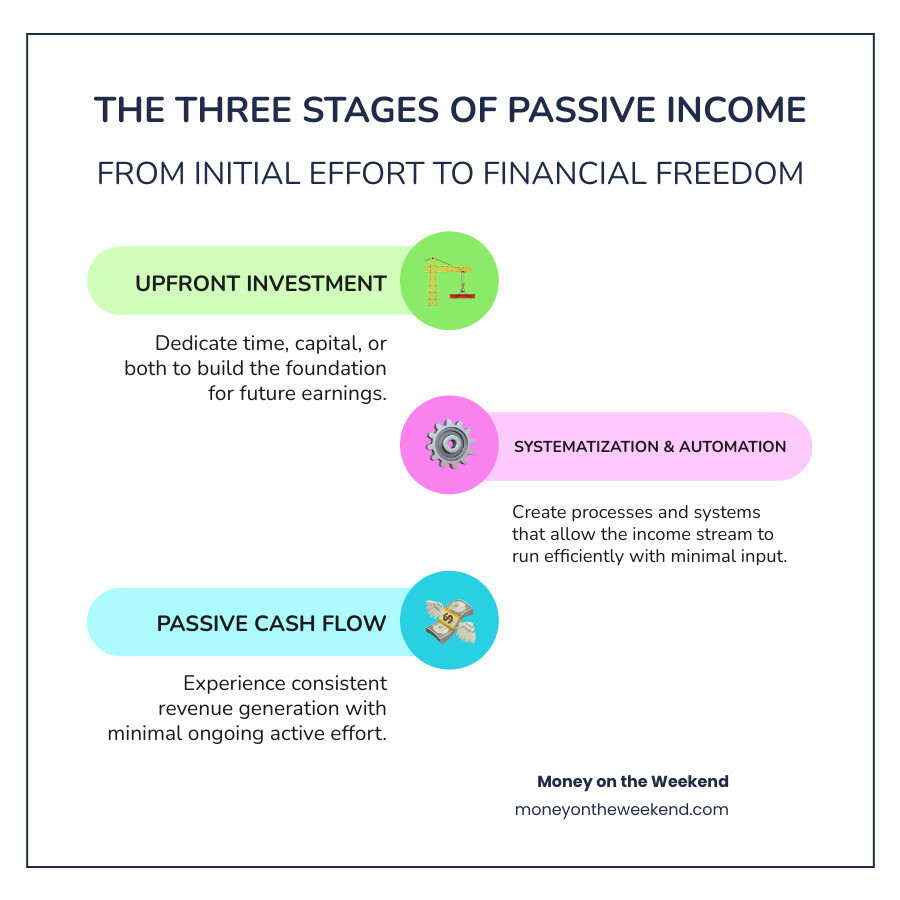
The reality of passive income involves three distinct stages: initial investment (where you put in time, money, or both), systematization and automation (where you build processes that run without you), and finally, passive cash flow (where money arrives with minimal ongoing work).
Financial freedom arrives when your passive income exceeds your living expenses. That’s the milestone where work becomes optional, not obligatory.
Quick best passive ways to make money definitions:
The Best Passive Ways to Make Money with Little to No Capital

Many of the best passive ways to make money don’t demand a hefty initial investment. Instead, they require leveraging your time, skills, and creativity upfront. This section focuses on turning your time and existing assets into consistent revenue streams. If you’re looking to Make Money Online without deep pockets, or exploring 10 Businesses You Can Start on a Budget in 2024, these strategies are for you.
Start a Blog or YouTube Channel
Creating content online is a classic example of front-loading your effort for long-term passive gains. The goal is to build an audience around a topic you’re passionate about.
Monetization Methods:
Once your content gains traction, you can monetize through ad revenue. Platforms like Google AdSense and YouTube’s Partner Program display ads on your content, and you typically earn about 50% of the profits. This income can continue for years, especially if you focus on “evergreen content” that remains relevant over time. Another significant income stream comes from sponsored posts, where brands pay you to promote their products or services.
Upfront Work & Audience Building:
While earning from old content sounds passive, the journey requires significant work. Building an audience for a blog or YouTube channel takes time. You’ll need to consistently create high-quality, SEO-optimized content and actively engage with your community. To speed up growth, many creators pair long-form content (blogs, YouTube videos) with short-form content on platforms like TikTok or YouTube Shorts to accelerate their reach.
Potential Earnings:
Earnings vary wildly. While the average YouTube ad view may only earn 1¢ to 3¢, the platform’s 2.7 billion monthly users mean successful channels can generate substantial income. Established blogs with consistent traffic can generate upward of $30,000 per month. For more detailed insights, explore our guides on Passive Income: Blogging and How to Start Making Money on YouTube Fast. We also have resources on Tag: Content Creation to help you get started.
Leverage Affiliate Marketing
Affiliate marketing is a powerful way to generate passive income by recommending products or services you genuinely use and believe in.
Earning Commissions:
The core idea is simple: you promote a product using a unique referral link, and when someone makes a purchase, you earn a commission. This method allows you to monetize recommendations without creating or shipping products yourself.
Niche Selection & Building Trust:
Success in affiliate marketing hinges on building trust. We recommend promoting products relevant to your niche that you can personally vouch for. This authenticity is key to converting recommendations into sales.
Commission Rates & Potential:
Commission rates typically range from 3% to 7%, though some programs offer more. While it requires significant traffic to see substantial returns, the potential is there. For instance, micro-influencers (1,000-10,000 followers) reportedly earn an average of $1,420 per month, while mega-influencers can average over $15,000 per month. To dive deeper, check out our articles like Passive Income: Affiliate Marketing, our Affiliate Marketing Beginners Guide, and How Much Money Can You Make With Affiliate Marketing?.
Create and Sell Digital Products
This is a favorite strategy because you create a product once and can sell it infinitely, generating high-margin income with minimal upkeep.
Types of Digital Products:
- E-books: Sharing your expertise in an e-book is a great way to earn royalties. While platforms like Amazon Kindle make distribution easy, the field is crowded, and Amazon takes a 30% cut of sales. Success varies, with some earning a few dollars per day and others much more.
- Online Courses: Package your knowledge into a structured learning experience on platforms like Teachable or Udemy. The average online course earns about $3,000, but top earners often diversify into coaching and other digital products.
- Templates: Spreadsheet templates, graphic design templates, or planners are popular because they save people time. One Etsy seller, for example, claims to have made over $200,000 in less than two years selling Excel and Google Sheet templates.
High Margins & Scalability:
Digital products are highly scalable. With no inventory or shipping costs, sales potential is virtually unlimited, leading to high profit margins. Reports suggest it’s possible to earn “more than $2,000 a month selling digital products” through online marketplaces.
Upfront Creation Effort:
Like all passive income streams, this requires significant upfront work. But once a high-quality product is created, it can generate income for years. To help you get started, explore our Content Creation Tools Ultimate Guide and our list of 8 Best Graphic Design Tools for Content Creators.
Rent Out Your Unused Assets
Renting out unused assets is a practical way to generate passive income from what you already own.
Renting a Car:
If your car sits unused, consider renting it out on platforms like Turo. Users report making “several hundred dollars per month.” Alternatively, companies like Wrapify or Carvertise will pay you “between $100 and $400 a month” to wrap your vehicle with ads.
Renting a Parking Space:
In urban areas, a spare parking space can be a goldmine. Platforms like Spacer and Neighbor let you list your spot, potentially earning “more than $300 per month” depending on location.
Renting Household Items:
While less lucrative, renting out items like camping gear, power tools, or musical instruments can provide a nice boost. The key is to offer items that are in demand but that people don’t want to buy outright.
These methods are excellent Weekend Income Opportunities that leverage existing resources with minimal ongoing effort.
Top Passive Income Strategies for Those with Capital

If you have some capital saved up, you’re in a fantastic position to make your money work for you. This section explores the best passive ways to make money by investing, changing your savings into a steady stream of income. It’s all about balancing investment risk with potential reward, and finding strategies that align with your financial goals.
Invest in Dividend Stocks & ETFs
Investing in companies that regularly pay out a portion of their profits to shareholders is a cornerstone of passive income for many investors.
Dividend Payments & Compounding Returns:
Dividend stocks provide regular cash payments, typically quarterly. The beauty of this strategy is the power of compounding: you can reinvest these dividends to buy more shares, which then generate even more dividends, creating an accelerating cycle of wealth accumulation.
S&P 500 & Dividend Aristocrats:
Historically, the S&P 500 index has had an average annual rate of return of around 10% over the past 20 years, a testament to the long-term growth potential of the stock market. While the S&P 500’s current dividend yield is under 1.3%, requiring over $700,000 invested to generate $10,000 a year purely from dividends, focusing on “Dividend Aristocrats” can offer higher, more consistent payouts. These are companies with a long history of increasing their dividends, often yielding between 4% to 6%. For example, to make $12,000 in dividends annually from a stock like Coca-Cola (KO), you would need to invest nearly $375,000.
Diversification with ETFs:
For a more hands-off approach and greater diversification, consider investing in dividend Exchange Traded Funds (ETFs). These funds hold a basket of dividend-paying stocks, offering broad market exposure and reducing the risk associated with individual company performance. Dividend stocks are also typically less volatile than growth stocks, providing a more stable income stream. You can track the performance of major indices like The S&P 500 index has been around 10% to inform your investment decisions.
Explore Real Estate (The Modern Way)
Real estate has long been a powerful vehicle for wealth creation, but traditional property ownership can be far from passive. Thankfully, modern solutions offer the benefits of real estate investment with significantly less hands-on management.
REITs (Real Estate Investment Trusts):
REITs are companies that own, operate, or finance income-generating real estate. They are publicly traded, much like stocks, and are required to distribute at least 90% of their taxable income to shareholders as dividends. This makes them an excellent way to get liquid real estate exposure. With a minimum investment of as little as $500, you can invest in a REIT platform like Fundrise. REITs typically yield between 4% and 10% in dividends, and have historically returned an average of about 12.6% (from 1972-2024), outperforming the S&P 500. A $10,000 investment in a REIT could generate $400 to $1,000 annually. Learn more about What is a real estate investment trust.
Real Estate Crowdfunding:
Platforms like Fundrise allow individuals to invest smaller amounts into diversified real estate projects, from commercial properties to residential developments. These platforms typically target returns of 7% to 12%, offering regular distributions and a hands-off approach to real estate investing. Minimum investment amounts can range from just ten dollars to tens of thousands, making it accessible to various budgets.
Here’s a quick comparison of modern real estate investing versus traditional ownership:
| Feature | Traditional Real Estate (e.g., Owning a Rental Property) | REITs / Crowdfunding Platforms |
|---|---|---|
| Initial Cost | High (down payment, closing costs) | Low ($10-$5,000 minimum) |
| Liquidity | Low (can take months to sell) | High (REITs trade like stocks) |
| Management | High (tenants, maintenance, repairs) | Very Low (hands-off) |
| Diversification | Low (single property exposure) | High (diversified portfolio) |
| Income | Rent, appreciation | Dividends, distributions |
Become the Bank: Lending & Low-Risk Investments
For those who prioritize capital preservation and stable returns, becoming a lender or opting for low-risk investments can be among the best passive ways to make money.
Peer-to-Peer (P2P) Lending:
P2P lending platforms like Prosper allow you to lend money directly to individuals or businesses, bypassing traditional banks. You can diversify your investments by funding small portions of many loans, mitigating risk. Typical returns for P2P investors average about 5% to 10% annually, with some platforms like Prosper reporting average historical returns of 5.3%. You can start with a minimum investment as low as $25 per loan.
High-Yield Savings Accounts (HYSAs):
While not designed for aggressive growth, HYSAs offer significantly higher interest rates than traditional savings accounts, often exceeding 4% APY. If you invested $10,000 in a savings account with a 4% interest rate, you would earn $400 in the first year. These accounts are FDIC-insured, making them a very low-risk option for parking your emergency fund or savings earmarked for short-term goals. The best high-yield savings rates currently available can even reach 5% APY.
Certificates of Deposit (CDs):
CDs offer guaranteed returns for a fixed period, typically yielding around 4%. They are also FDIC-insured, providing peace of mind. The best CD rates can reach 4.3%. While you commit your money for a set term, they are a predictable way to earn interest. Be mindful of early withdrawal penalties, though.
Bonds:
Bonds represent lending money to a government or corporation in exchange for regular interest payments. U.S. Treasury bonds and high-grade corporate bonds currently offer yields between 4% and 5%, meaning you could earn $400 to $500 per year for every $10,000 invested. Treasury income is also not taxed at the state level, which can be an added benefit. Bonds are generally considered a safer investment than stocks, though they typically offer lower returns.
Cryptocurrency Staking:
For those comfortable with the volatility of the crypto market, staking offers a way to earn passive income by holding specific cryptocurrencies to support network operations. Staked crypto generally yields between 3% and 10% returns, with some platforms like Coinbase offering up to 15% APY. For example, staking Ethereum on Coinbase might yield around 1.83% APY. It’s crucial to understand the risks involved in this emerging asset class.
To see how your savings can grow with compounding interest, use this compound interest calculator.
Your Blueprint for Passive Income Success
Building passive income requires a strategic blueprint. This means understanding the risks, managing them effectively, and cultivating a long-term vision that extends beyond mere financial gain.
Understanding the Risks and Required Effort
The allure of passive income often comes with the misconception of “getting rich quick.” The reality is that it still involves work—you just do most of it upfront.
No Get-Rich-Quick Scheme:
Every passive income project demands an initial investment of time, energy, or capital. It’s easy to get discouraged when results aren’t immediate, which is why many people give up before their efforts can take root. We encourage you to be patient and realistic.
Market Volatility & Due Diligence:
Market conditions, consumer interest, and economic factors can impact your earnings. This unpredictability is a risk inherent in many passive ventures. That’s why thorough due diligence is paramount. Before putting your money into any investment or business, we urge you to “ask yourself these questions” about the products and people you’re planning to fund. We must always “conduct thorough due diligence before investing in any passive income venture.” You can find a helpful guide on Questions to ask before investing.
How to Diversify Your Streams for Maximum Security
Diversification is a critical strategy for building a resilient financial portfolio, especially with passive income.
Mitigating Risk:
The old adage, “Don’t put all your eggs in one basket,” holds true. Relying on a single passive income stream leaves you vulnerable. By diversifying, we spread our risk so that if one stream underperforms, others can cushion the blow.
Combining Capital-Based and Skill-Based Streams:
We recommend a blend of different types of passive income, such as combining dividend stocks with digital products. This ensures your income isn’t solely tied to market performance or creative output. A wise approach is to invest in non-correlated assets—investments that behave differently under the same market conditions. When one zigs, the other zags.
Creating a Resilient Financial Portfolio:
Multiple income streams improve financial security. If the goal is to make $1,000 a month or more in passive income, diversification is key to creating a robust financial safety net.
The True Reward: Long-Term Benefits Beyond Financial Gain
The long-term benefits of passive income extend far beyond just money in the bank.
Financial Freedom & Flexibility:
The ultimate goal is financial freedom—the point where passive income exceeds living expenses. This milestone transforms work from an obligation into an option. As one individual shared, passive income allowed them “the freedom to write on my personal finance blog, spend time raising my kids, travel… and invest in higher-risk opportunities that I never would have considered if I were dependent on a paycheck.” This flexibility is invaluable.
More Time for Passions & Reduced Financial Stress:
Imagine having more time for hobbies, family, or personal growth. Passive income can significantly reduce financial stress, offering a cushion against unexpected expenses and shifting our focus from merely surviving to thriving.
Building Generational Wealth:
Perhaps the most profound benefit is the ability to build generational wealth. By establishing sustainable passive income streams, we can create a legacy that benefits our families for years to come.
Frequently Asked Questions about the Best Passive Ways to Make Money
Is passive income truly passive?
The term “passive” can be misleading. It’s not a “get-rich-quick” scheme, as it almost always requires significant upfront work or capital. In many cases, you must put in a lot of effort to create a product or earn the money to invest. Once established, the goal is minimal ongoing effort. Think of it as front-loading the work: you build the system, and then it generates income with only light monitoring.
How much money do I need to start generating passive income?
The amount varies widely by strategy.
- With $0: It is possible to start with no money by leveraging your time and skills. You can create content (blogs, YouTube), digital products (e-books, templates), or pursue affiliate marketing. As an expert noted, “Many income streams can be done with zero dollar investment, such as creating a social media account or an account on Amazon KDP.”
- With Capital: If you have capital, investment-based options become accessible. You don’t need a fortune; peer-to-peer lending can start with as little as $25 per loan. Fractional shares or real estate crowdfunding also allow you to start with modest amounts. Generally, larger initial investments lead to more lucrative passive income streams over time.
Can passive income replace my full-time job?
Yes, replacing your full-time job with passive income is possible, but it requires strategic planning and time.
The key milestone is when your passive income exceeds your expenses. This means diligently building multiple, substantial income streams that collectively cover your living costs. It’s not about one magical source but combining several diversified streams.
For example, the former investment banker mentioned earlier retired at 34 with $80,000 per year in passive income. This level of success typically involves years of building and optimizing various income generators. While it demands significant initial effort, the long-term reward is true financial independence.
Conclusion: Start Building Your Financial Freedom Today
We’ve explored some of the best passive ways to make money, from leveraging our skills to creating digital products and investing wisely. The common thread among all these strategies is the need for an initial investment—whether it’s our time, our money, or both. Passive income is not a shortcut to riches, but a strategic path to financial freedom.
It’s a journey of building, systematizing, and diversifying, ultimately leading to a life where our money works for us, freeing up our time for what truly matters. Our mission at Money on the Weekend is to guide you towards this financial independence, empowering you to build wealth in your spare time.
Ready to take control of your financial future? Start exploring more Passive Income strategies today and begin your journey towards a life where money never sleeps.