
Why Understanding Affiliate Marketing Traffic Sources Is Your First Step to Earning Online
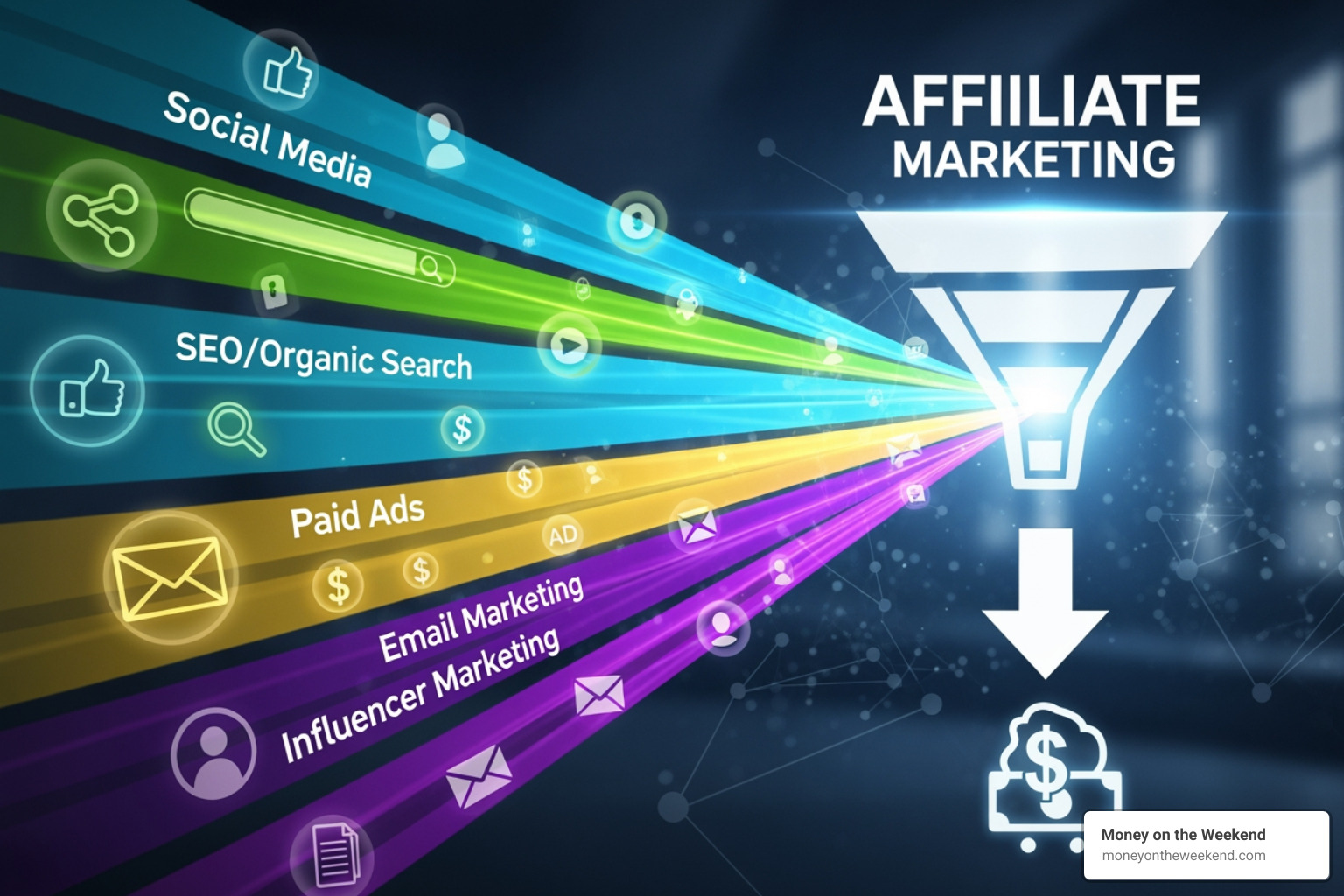
Affiliate marketing traffic sources are the channels and methods you use to drive potential customers to your offers. Without traffic, you have no business. It’s that simple.
Quick Answer: The Main Types of Affiliate Marketing Traffic Sources
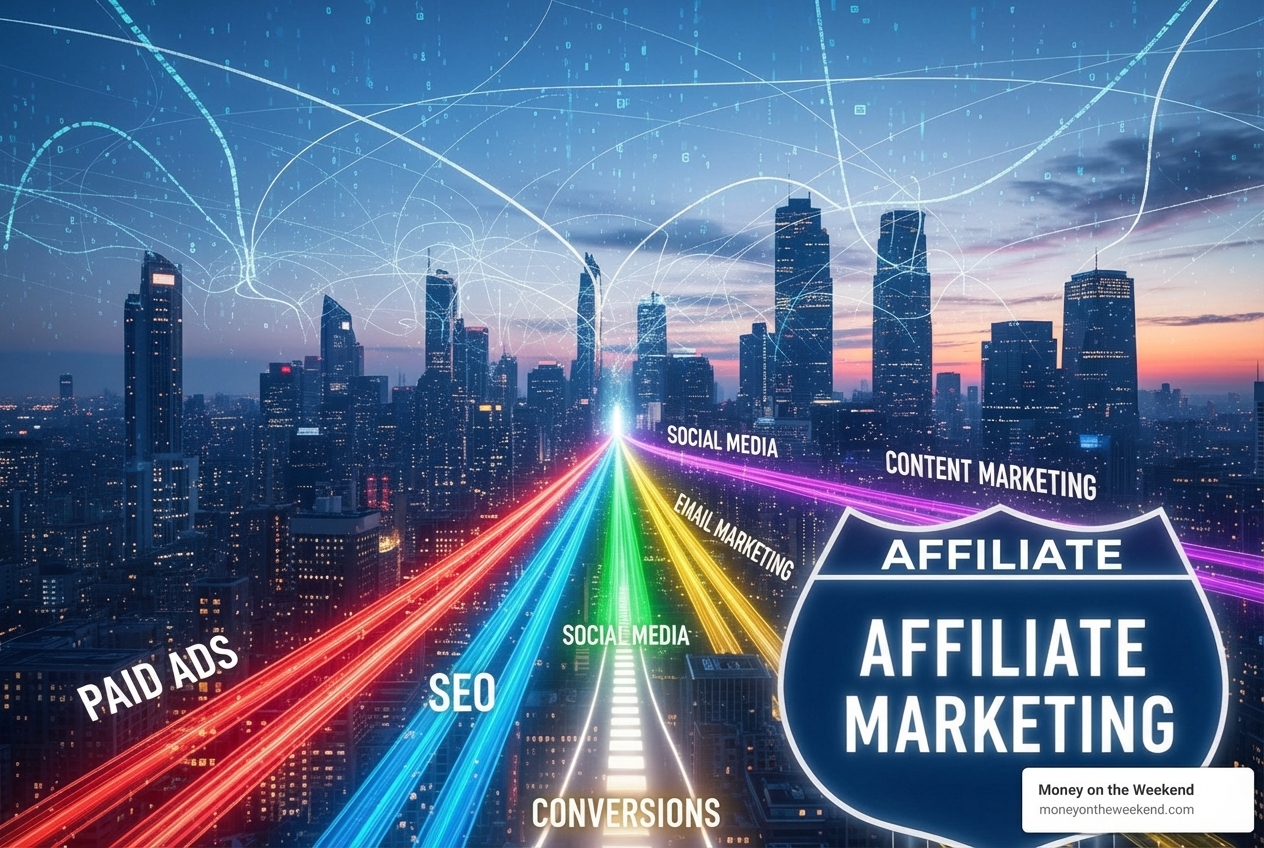
- Organic Traffic – Free visitors from search engines (SEO), social media, email lists, and content you create
- Paid Traffic – Visitors you pay for through ads on Google, Facebook, native networks, or influencer partnerships
- Hybrid Traffic – Combinations like retargeting, influencer collaborations, or boosted organic content
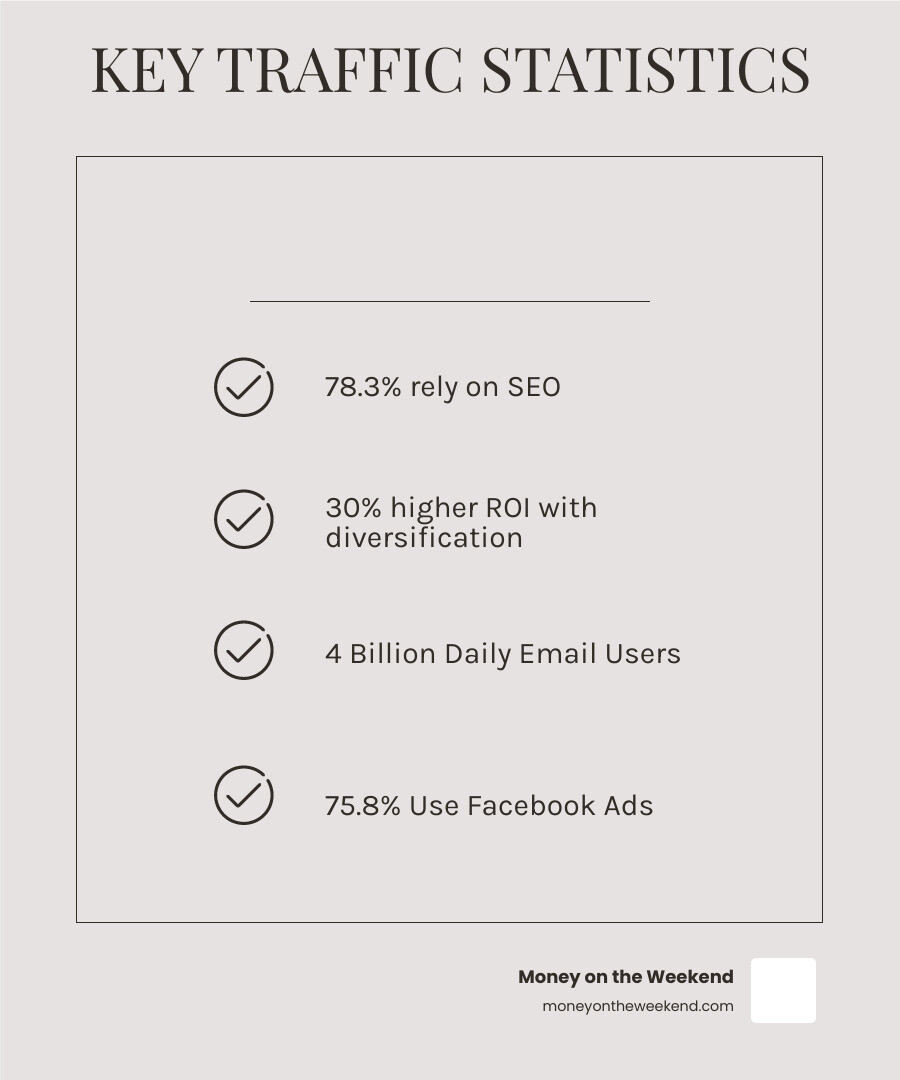
Here’s what matters most: 78.3% of affiliate marketers rely on SEO as their primary traffic source, but the most successful affiliates don’t put all their eggs in one basket. Research shows that affiliates who diversify their traffic sources see an average of 30% higher ROI compared to those relying on a single channel.
Traffic is the lifeblood of any online business. As one industry expert puts it: “Strategically choosing traffic sources is one of the best ways to find success with affiliate marketing.” But choosing the right traffic sources depends on your niche, budget, skills, and time commitment.
The good news? You don’t need a marketing degree to figure this out. Whether you’re working with zero budget or ready to invest in paid ads, there’s a traffic source that fits your situation. Some methods deliver results in days. Others take months but can generate passive income for years without additional spending.
In this guide, we’ll break down the most effective affiliate marketing traffic sources for 2025, show you how to choose the right ones for your niche, and give you practical steps to start driving visitors to your offers today.
How to Choose the Right Traffic Source for Your Niche
Choosing the right affiliate marketing traffic sources is like selecting the right tool for a job – you wouldn’t use a hammer to drive a screw! Each traffic source has its own characteristics, and matching them to your specific affiliate niche, budget, and goals is crucial for success.
When we’re evaluating potential traffic sources, we consider several key factors:
- Cost vs. ROI: This is perhaps the most critical consideration. Paid traffic offers immediate results but requires a budget, while organic traffic is “free” in terms of direct ad spend but demands a significant time investment. We always look for the best return on investment (ROI), understanding that sometimes a higher initial cost can lead to greater long-term profit. As one statistic highlights, affiliate marketers who diversify their traffic sources see an average of 30% higher ROI.
- Target Audience Analysis: Who are you trying to reach? Where do they hang out online? What are their interests and pain points? Your audience’s demographics and online behavior will heavily influence which platforms are most effective. For instance, visual niches might thrive on Pinterest, while B2B products might find more success on LinkedIn or through targeted SEO content.
- Niche Alignment: Your product niche directly influences your choice. A fashion blogger selling clothing might find Instagram and Pinterest highly effective, while someone promoting financial software would likely prioritize SEO and professional networking sites. Matching your content to the platform where your audience is actively seeking information or products in your niche is key. We need to consider the buyer’s journey for our specific niche.
- Time Commitment: Some sources, like SEO, require consistent effort over months to see results, but can then generate traffic for years. Others, like paid ads, can deliver traffic almost instantly but demand constant monitoring and optimization.
- Scalability: How easily can you increase or decrease your traffic volume? Paid sources are generally more scalable in the short term, allowing you to ramp up campaigns quickly. Organic sources scale over time as your authority grows.
- Diversification Benefits: Relying on a single traffic source is risky. Algorithm changes, policy updates, or increased competition can cripple your business overnight. Diversifying your affiliate marketing traffic sources builds resilience and can significantly boost your overall ROI.
Understanding how much money you can potentially make from different strategies can help inform these decisions. Learn more about How Much Money Can You Make With Affiliate Marketing?.
Here’s a quick comparison of some key considerations:
| Factor | SEO (Organic) | Social Media (Organic) | PPC Ads (Paid) |
|---|---|---|---|
| Cost | Time, content creation, tools | Time, content creation, engagement | Direct ad spend |
| Speed | Slow (months to years for significant results) | Variable (can be quick with viral content, but often takes time to build audience) | Fast (immediate traffic) |
| Scalability | Medium (grows with content/authority) | Medium (grows with audience/engagement) | High (can increase budget for more traffic) |
| Longevity | High (evergreen traffic) | Medium (content can have short shelf-life, but community is long-term asset) | Low (traffic stops when budget runs out) |
The Power of Organic: Free Affiliate Marketing Traffic Sources
Organic affiliate marketing traffic sources are the unsung heroes of long-term affiliate success. They might take more time and effort to cultivate, but once established, they can provide a steady stream of highly qualified leads for years without additional ad spend. This makes them ideal for building truly passive income: affiliate marketing. We often think of organic traffic as building assets – content, community, and trust – that continue to pay dividends over time.
Organic traffic typically brings in the “best traffic” because users are actively searching for solutions or information, leading to higher buyer intent. This trust is invaluable; when your product happens to be sitting atop the SERPs for a specific keyword, the chances of conversion are 7 times higher than if you’d gotten someone coming straight from a paid ad.
Leveraging SEO: The Ultimate Organic Affiliate Marketing Traffic Source
Search Engine Optimization (SEO) is the undisputed champion of organic affiliate marketing traffic sources. In fact, 78.3% of affiliate marketers rely on SEO as their primary traffic acquisition channel. Why? Because when people need something, they turn to search engines. With 3.5 billion searches per day and 53.3% of all website traffic coming from organic search, the potential audience is immense.
Leveraging SEO effectively means:
- Keyword Research: We start by identifying what our potential customers are searching for. Tools like Semrush or Ahrefs help us find high-volume, relevant keywords with commercial intent (e.g., “best [product] for [problem],” “[product] review”).
- Content is King: Once we know the keywords, we create high-quality, well-targeted, well-timed, and well-written content that truly helps our audience. This means in-depth reviews, comparison guides, how-to articles, and educational pieces that provide value. As the Content Marketing Institute emphasizes, “You need well-targeted, well-timed, and well-written content to persuade potential referrals to take action.”
- Link Building: Earning backlinks from other reputable websites signals to search engines that our content is valuable and trustworthy, boosting our rankings.
- User Experience (UX): Google prioritizes websites that offer a great user experience. This means ensuring our sites are fast, mobile-friendly (over 50% of affiliate traffic now comes from mobile devices), and easy to steer.
- Mobile Optimization: This isn’t just a recommendation; it’s essential. With over 50% of affiliate traffic now coming from mobile devices, our websites must be perfectly optimized for mobile viewing.
SEO is like the slow-cooking method of affiliate marketing—it takes time, but the results are incredibly rewarding, generating leads for years without additional ad spend. Marketers who place a high priority on blogging are 13 times more likely to have a positive ROI on their campaigns. If you’re ready to start building your long-term traffic asset, we recommend you check out How to Start and Launch an Affiliate Marketing Website in Just 7 Days.
Social Media Marketing
Social media is a busy marketplace of ideas, trends, and products, making it a powerful organic affiliate marketing traffic source. Social platforms generate 25% of all affiliate traffic. The key here is not just broadcasting, but building a community and engaging with your audience.
- Community Building & Engagement: We focus on creating engaging content, mixing promotional posts with value-added information, and actively responding to comments and messages. 71% of consumers who have a positive experience with a brand on social media are likely to recommend it to others.
- Content Creation: This involves crafting posts, videos, stories, and reels that resonate with our target audience, leveraging platform-specific features to maximize reach.
- Platform Selection: We choose platforms where our target audience is most active and receptive to our niche.
Here are some of the top social platforms for affiliates:
- Facebook: With over 3 billion monthly active users, Facebook remains a powerhouse. We can build dedicated pages or groups to cultivate communities around our niche, sharing valuable content and subtly integrating affiliate offers. 75.8% of marketers use Facebook to drive affiliate sales.
- Instagram: Visually driven, Instagram is excellent for niches like fashion, beauty, food, and travel. We use high-quality images and videos, leverage Reels and Stories for product showcases, and engage with followers through comments and DMs. We can use tools like Linktree in our bio to share multiple affiliate links.
- Pinterest: Often underrated, Pinterest is a visual search engine where users go for inspiration and to plan purchases. With 445 million monthly active users, 60% of whom are women with higher incomes, it’s ideal for visually appealing products. We create compelling “pins” that link directly to our affiliate content or product pages.
- TikTok: This platform’s explosive growth, especially among younger demographics, offers immense potential. Users spend over 1.5 hours daily on TikTok. We create entertaining short-form videos that showcase products or services, driving traffic to our bio link.
- X (formerly Twitter): With 330 million active users, X is great for short-form text content and real-time engagement. We craft engaging tweets, use relevant hashtags, and participate in conversations, occasionally linking to our affiliate offers or content.
- LinkedIn: For B2B or professional niches, LinkedIn allows us to establish authority and network with industry peers. We share valuable articles, tips, and case studies, subtly integrating solutions that include our affiliate products.
Email Marketing
Despite the rise of social media, email marketing remains one of the most effective organic affiliate marketing traffic sources. With half the world using email and 4 billion daily email users (99% checking their inbox every day), it’s a direct and personal channel to connect with our audience.
Our strategy for successful email marketing involves:
- List Building: The first step is to offer a valuable lead magnet (like a free ebook or guide) to encourage sign-ups. We never buy email lists; we build them organically with interested subscribers.
- Personalization & Segmentation: We segment our email list based on interests, past purchases, or engagement levels. Personalized emails drive higher engagement and conversion rates.
- Nurture Sequences: We create automated email sequences that welcome new subscribers, provide valuable content, and gradually introduce relevant affiliate offers.
- Value Provision: Our emails aren’t just promotions. We provide genuine value, offering tips, insights, and solutions to our subscribers’ problems, with strategically placed CTAs.
- A/B Testing: We continuously test different subject lines, email content, and send times to optimize our campaigns for the best possible engagement and conversion rates.
Email marketing allows us to build a strong relationship with our audience, fostering trust that translates into sales. It’s an excellent channel for promoting specialized products like those found in Ebook Affiliate Programs.
The Fast Track: Paid Affiliate Marketing Traffic Sources
Paid affiliate marketing traffic sources offer an express lane to reach your target audience. Unlike organic methods that require time to build momentum, paid advertising can deliver immediate results and highly targeted traffic. This makes it ideal for rapid growth and testing offers, especially for those interested in paid ads affiliate marketing guide.
The benefits of paid traffic include:
- Immediate Results: We can launch campaigns and start seeing traffic within hours or days.
- Scalability: If a campaign is profitable, we can quickly scale up our ad spend to reach a larger audience and generate more sales.
- Precise Targeting: Paid platforms offer sophisticated targeting options, allowing us to reach specific demographics, interests, and behaviors, ensuring our ads are seen by the most relevant audience.
- Budget Management: We have full control over our spending, setting daily or lifetime budgets.
However, paid traffic also comes with its challenges: it requires a budget, constant monitoring, and optimization to ensure profitability. Paid channels tend to have higher refund rates compared to email or organic traffic, likely due to the audience’s less developed relationship with the brand.
Navigating Paid Affiliate Marketing Traffic Sources for Rapid Growth
When diving into paid traffic, we focus on platforms that offer robust targeting and analytics.
- PPC Advertising (Pay-Per-Click): This includes search engine ads (like Google Ads and Bing Ads) and social media ads.
- Search Engine Ads: We bid on keywords with high commercial intent (e.g., “buy [product name],” “[service] discount”). When users search for these terms, our ads appear at the top of the search results. Google Ads is considered the most popular paid traffic generator.
- Social Media Ads: Platforms like Facebook Ads (far and away the most popular and high-grossing source for top affiliates on ClickBank), Instagram Ads, and LinkedIn Ads allow us to target users based on incredibly detailed demographics, interests, and behaviors. We optimize our ad copy and landing pages to match the audience’s intent.
- Retargeting Strategies: This is a highly effective tactic where we show ads to users who have previously visited our website or engaged with our content but didn’t convert. It’s like giving warm leads a gentle nudge to complete their purchase. Retargeting can significantly improve conversion rates as it targets an already interested audience.
Mobile advertising is also a critical component. Over 50% of affiliate traffic now comes from mobile devices, making mobile optimization no longer optional but essential for success. Mobile video advertising, in particular, is dominating the mobile advertising sector. This is especially relevant for promoting products in High Ticket Affiliate Programs 2026, where multiple touchpoints and a seamless mobile experience can be crucial for conversion.
Native and Display Advertising
Native advertising is the chameleon of paid affiliate marketing traffic sources. It blends seamlessly with the surrounding content, making it less intrusive than traditional banner ads. This subtle approach leads to higher engagement; the engagement of users in the case of native ads is 40% higher than with conventional banners. Some projections even suggested native ads would be responsible for 74% of all ad revenue by 2021.
- Native Ads: We create ads that match the look, feel, and function of the media format in which they appear. This could be an article on a news site, a recommended video, or a sponsored post in a content feed. The goal is to provide value and capture attention without causing “banner blindness.” Networks like MGID, Taboola, Outbrain, and Revcontent specialize in native advertising.
- Display Advertising: While traditional display ads (banners) can suffer from banner blindness, they still play a role, especially for brand awareness and retargeting. We use visually appealing banners placed on partner websites that are contextually relevant to our affiliate products.
Here are some popular native ad networks:
- MGID
- Taboola
- Outbrain
- Revcontent
Influencer Marketing
Influencer marketing leverages the trust and rapport that content creators have built with their audience, making it a powerful affiliate marketing traffic source. This traffic feels organic and genuine, coming from a familiar face rather than a faceless brand.
- Micro vs. Macro-Influencers: We often find that micro-influencers (those with 5k-100k followers) are the best choice for aspiring affiliate marketers. They typically have highly engaged, niche-specific audiences and are more cost-effective than macro-influencers or celebrities.
- Audience Trust: When an influencer genuinely recommends a product, their followers are more likely to trust that recommendation.
- Authentic Campaigns: We encourage influencers to create authentic content that aligns with their personal brand and audience, rather than scripted advertisements. This includes product reviews, tutorials, or unboxing videos.
- Niche Relevance: We partner with influencers whose audience perfectly aligns with our affiliate product’s niche. For instance, a travel influencer would be ideal for promoting Affiliate Marketing Travel Ultimate Guide products.
- Performance Tracking: We use unique tracking links or promo codes to accurately measure the success and ROI of each influencer collaboration.
The shift towards micro-influencers and user-generated content (UGC) in paid social is a growing trend, reflecting consumers’ desire for authenticity.
Future-Proofing Your Strategy: Emerging Trends
The landscape of affiliate marketing traffic sources is constantly evolving. To stay ahead, we keep a close eye on emerging trends and technologies that can offer new opportunities for reaching our audience.
- AI in Marketing: Artificial intelligence is revolutionizing affiliate marketing. AI enables brands to target audiences better, personalize ads, and automate marketing campaigns, saving time and money. We’re seeing AI-powered SEO tools help generate optimized content clusters for long-tail keywords, making content creation more efficient.
- Social Commerce: Shopping on social media platforms is becoming increasingly seamless, with integrated checkout features. Platforms like Instagram and TikTok are embedding shoppable features, turning social browsing into direct purchasing opportunities. This trend highlights the importance of a strong social media presence.
- Mobile-First Optimization: This isn’t a trend; it’s the reality. Over 50% of affiliate traffic now comes from mobile devices, making mobile optimization essential. All our content, ads, and landing pages are designed with a mobile-first approach.
- Video Content: The dominance of video continues, particularly with the growth of short-form video platforms. YouTube and TikTok are powerful channels for product reviews, demonstrations, and engaging content that drives traffic and builds trust. We see creators using short-form videos to bridge to longer content or email capture.
- Specialized Traffic Sources: Beyond the mainstream, new platforms and ad networks constantly emerge. These can offer lower competition and highly engaged audiences. Examples include niche content platforms like NewsBreak, video platforms like Rumble, or specialized ad networks.
- Podcasts and OTT/CTV: Podcasts and host-read affiliate placements are gaining traction due to the intimate connection between hosts and listeners. Over-The-Top (OTT) and Connected TV (CTV) advertising, using QR codes and vanity URLs, is another area to watch for broader reach, though often with higher entry costs.
- Push Notifications and In-App Pops: These are fast, cheap clicks in mobile-heavy categories, ideal for quick wins and limited-time offers, requiring urgent creatives and ultra-light, relevant landing pages.
Embracing these trends and continually adapting our strategies is key to a comprehensive and successful Affiliate Marketing Complete Guide.
Frequently Asked Questions about Affiliate Traffic
What are the primary categories of traffic sources?
The two main categories are organic (free) traffic and paid traffic. Organic traffic is earned through methods like SEO, content creation, social media engagement, and email marketing. Paid traffic is acquired through advertising on platforms such as search engines, social media, native ad networks, or influencer collaborations, where you pay for each click, impression, or action.
How does my product niche affect my choice of traffic source?
Your niche profoundly determines where your target audience spends their time and how they prefer to consume information. For example, visual niches like fashion or home decor often thrive on platforms with strong visual content like Instagram or Pinterest. Tech reviews or B2B products may perform better with professional networking on LinkedIn, detailed blog content driven by SEO, or targeted paid search ads. Understanding your niche helps us select the most effective and efficient affiliate marketing traffic sources.
Is it better to use paid or free traffic for affiliate marketing?
Neither is universally “better”; it depends on your goals, budget, and timeline. Free traffic (like SEO or organic social media) is highly cost-effective and builds long-term authority and trust, generating sustainable income for years. However, it is slow to start, requiring significant time investment. Paid traffic delivers fast, scalable results and allows for precise targeting, but it requires a budget and constant optimization to maintain profitability. A diversified strategy that leverages the long-term benefits of organic traffic and the immediate scalability of paid traffic is often the most effective approach for affiliate marketers.
Conclusion
Navigating affiliate marketing traffic sources can seem daunting at first, but with a clear strategy, it becomes a powerful engine for your online earnings. We’ve explored the vast landscape, from the slow-and-steady power of organic methods like SEO and email marketing to the rapid, targeted reach of paid advertising and the exciting potential of emerging trends.
The core takeaway is clear: diversify your traffic. Relying on a single source, no matter how effective it seems, leaves you vulnerable. Testing and measuring the performance of each channel is crucial to understanding what works best for your specific niche and audience. Aligning your chosen traffic sources with your goals, budget, and time commitment ensures you’re investing your resources wisely.
At Money on the Weekend, our goal is to empower you to find financial freedom through online income generation. A central content hub, such as a blog, is the cornerstone of a sustainable online business. It acts as your home base for organic traffic, a place to nurture leads from social media, and the destination for many of your paid campaigns. By building this foundation, you create a compounding asset that generates passive income: affiliate marketing for years to come.
Ready to start building your foundation for traffic with a blog today? Learn how to start your blog for passive income and begin your journey to online earning success.