Why Your Affiliate Success Depends on a Landing Page
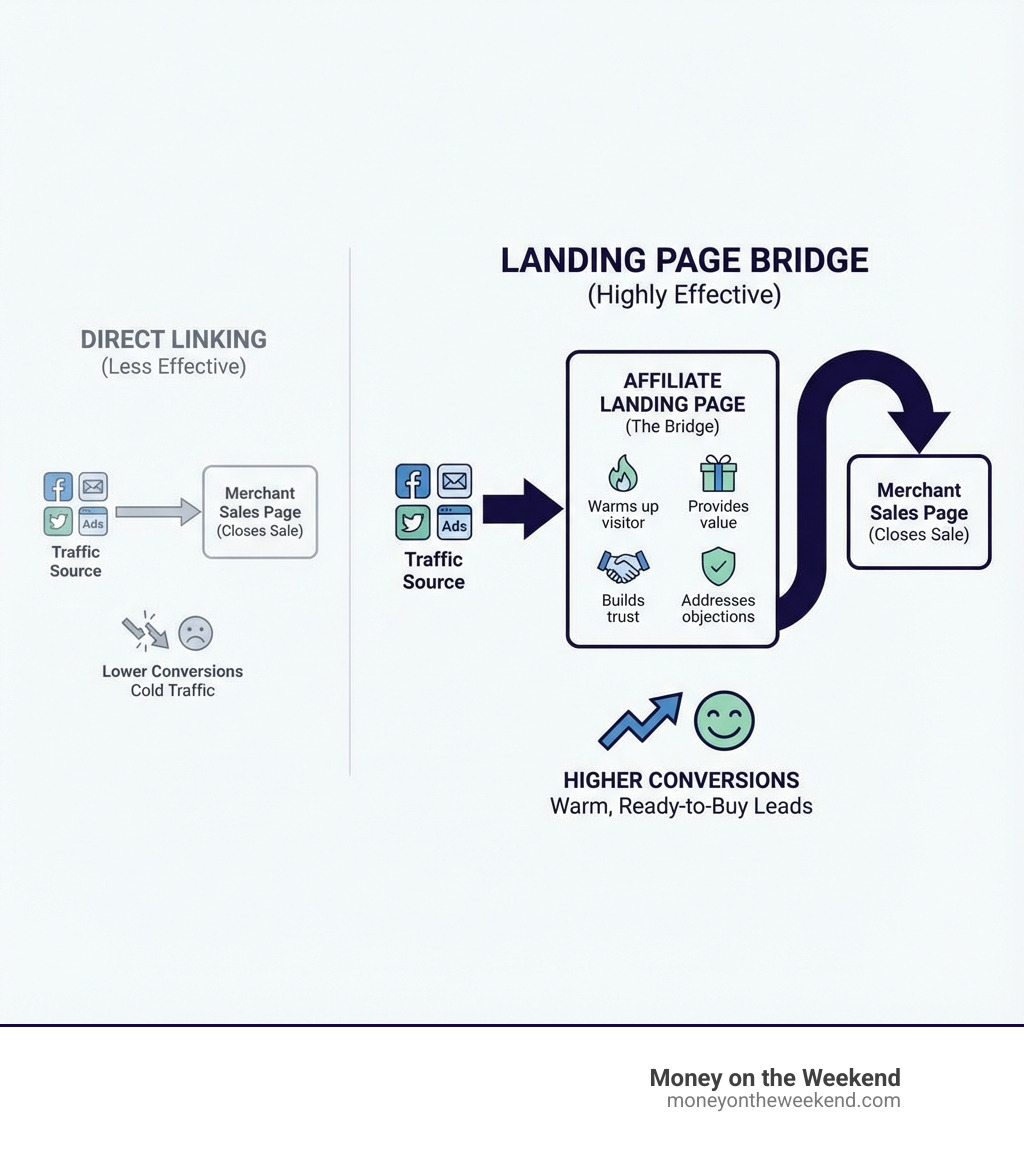
An affiliate marketing landing page is a dedicated web page designed to convince visitors to click your affiliate link. It acts as a bridge between your traffic source (social media, email, ads) and the merchant’s sales page, pre-selling the offer by providing value and building trust.
Key Components of an Effective Affiliate Landing Page:
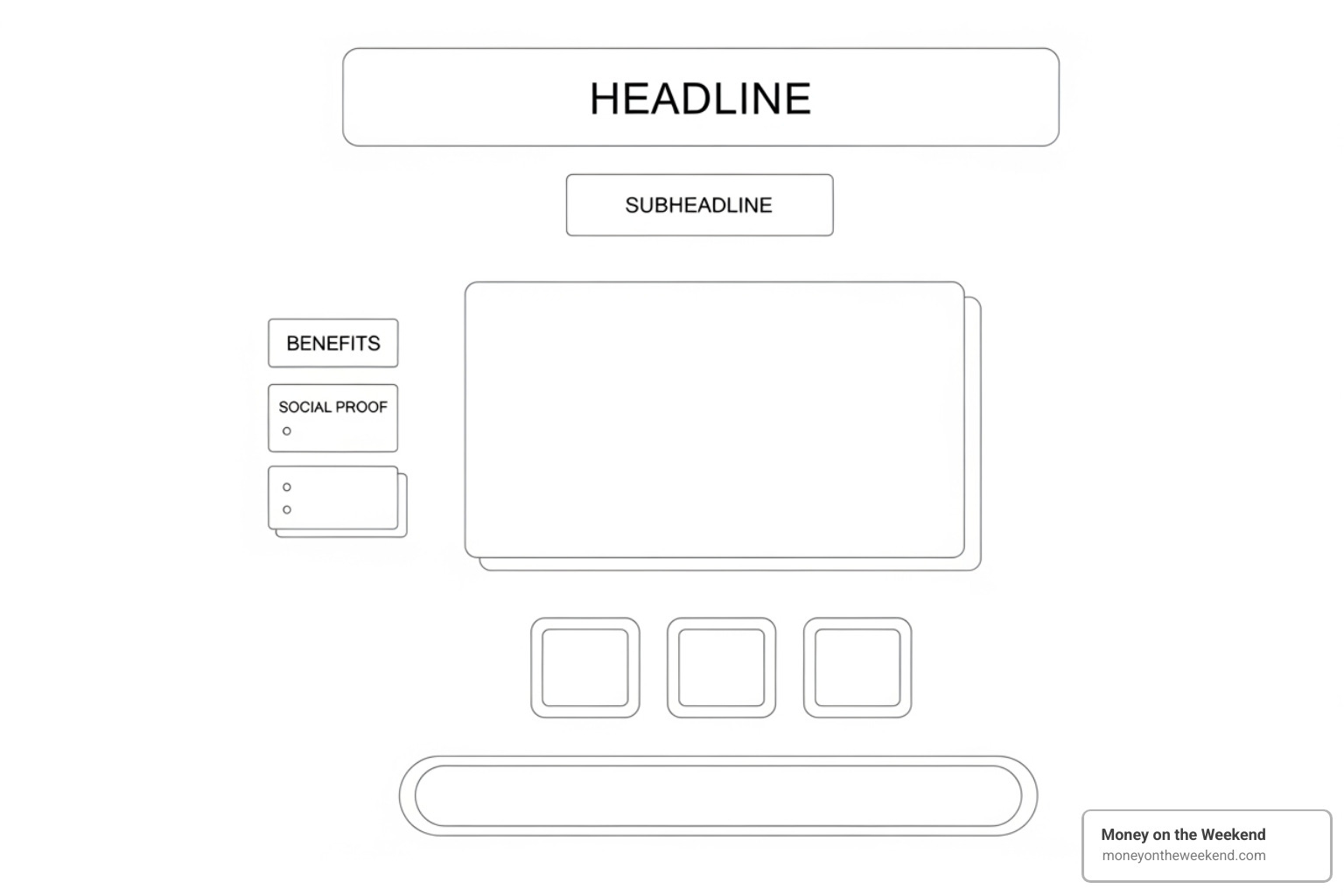
- Attention-Grabbing Headline – Communicates value and solves a problem.
- Benefit-Focused Copy – Explains what’s in it for the visitor.
- Compelling Visuals – High-quality images or videos supporting your message.
- Clear Call-to-Action – A single button telling visitors what to do next.
- Social Proof – Testimonials or reviews that build credibility.
- Affiliate Disclosure – A legal requirement that builds trust.
Many new affiliates send traffic directly to a merchant’s sales page, which rarely works. Visitors form an impression of your page in just 2.6 seconds. Without a landing page to warm up that cold traffic, you’re leaving money on the table.
Think of it as a relay race: your job is to pass the merchant a warm baton–a visitor who understands the offer’s value. That’s what a landing page does. As one marketer said, “Sending people to a homepage or blog post rarely works for affiliate marketing.” You need a focused page with a single goal.
Data shows that landing pages with multiple offers get 266% fewer leads than single-offer pages, and removing navigation can increase conversions by 2% to 28%.
If you’re serious about affiliate marketing, creating effective landing pages is essential.
The Anatomy of a High-Converting Affiliate Marketing Landing Page
Creating a high-converting affiliate marketing landing page is a strategic process. At its core, an effective landing page follows the AIDA principle: Attention, Interest, Desire, and Action.
- Attention: Grab your visitor’s attention in seconds with a powerful headline and compelling visuals.
- Interest: Pique their interest with copy that expands on the headline and connects with their pain points.
- Desire: Cultivate desire by showing how the product can transform their lives, focusing on benefits over features.
- Action: Guide them to take action with a clear, unambiguous call-to-action (CTA).
The Unmissable Headline
Your headline is the most critical element on your affiliate marketing landing page. It’s the first thing visitors see and determines if they’ll stay. A great headline conveys value, solves a problem, or piques curiosity.
For example, instead of “Product X for Sale,” try “Open up Financial Freedom This Weekend with Our Proven Side Hustle Guide.” The latter promises a solution and a benefit.
Tips for crafting headlines that convert:
- Be Benefit-Driven: Focus on what the user gains.
- Solve a Problem: Directly address a pain point.
- Pique Curiosity: Make visitors want to learn more.
- Keep it Concise: Get straight to the point.
Experiment with different angles to make it clear what’s included and why it matters to the visitor.
Compelling Copy and Benefit-Oriented Content
Once your headline has captured attention, your copy builds interest and desire. This is where the distinction between features and benefits is crucial. A feature is what a product has (e.g., “12-hour battery life”). A benefit is what it does for the user (e.g., “Stay connected all day without worry”). People buy benefits.
Clarity is king. Unclear product descriptions can cause a 20% decrease in conversions. Use simple, direct language focused on helping people. Address their pain points, explain how the product helps, and paint a picture of the positive outcome. Using bullet points for key benefits makes your message digestible.
Storytelling can also be a powerful tool to create an emotional connection and make benefits more tangible.
Finally, proofreading is non-negotiable. A single error can erode trust. Use tools like Grammarly to catch mistakes, and always have someone else review your copy if possible.
Persuasive Visuals and Media
The right visuals can significantly improve the persuasiveness of your affiliate marketing landing page. High-quality images, product demos, and videos can grab attention, explain concepts quickly, and build trust.
- High-Quality Images: Use crisp, relevant images that show the product in use or illustrate a positive outcome. Custom graphics are particularly effective.
- Product Demos and Videos: A short video can be more engaging than text alone, conveying authenticity and building a stronger connection.
- Relevance is Key: Every visual should serve a purpose and reinforce your message. Avoid generic stock photos.
- Image Optimization: Always resize and compress your images to ensure fast loading times, a critical factor for user experience.
The Irresistible Call-to-Action (CTA)
The CTA is the moment of truth on your affiliate marketing landing page. It tells visitors exactly what to do next–usually, clicking through to the merchant’s sales page.
Effective CTAs have a single, focused goal. Studies show landing pages with multiple offers get 266% fewer leads. Use strong, action-oriented verbs like “Get Instant Access,” “Learn More Now,” or “Start Your Free Trial.”
Make your CTA button impossible to miss with a prominent design:
- Contrasting Colors: Choose a color that pops against the background.
- Size and Placement: Make it large and place it strategically, often above the fold and repeated further down the page.
The goal is to guide your visitor smoothly from interest to action.
Trust Signals: Social Proof and Disclosures
In the online world, trust is currency. Visitors need to feel confident in your offer. This is where social proof and proper disclosures come in.
-
Leveraging Social Proof: Show that others have benefited from the product. This can include testimonials, reviews, case studies, trust badges from reputable companies, statistics (“10,000+ satisfied users”), or before-and-after photos. Modern consumers trust reviews more than ads, so showcasing genuine experiences is powerful.
-
Legal and Ethical Considerations: Affiliate Disclosure: Transparency is paramount. The Federal Trade Commission (FTC) requires affiliates to disclose their relationship with the seller via its endorsement guides. This disclosure must be clear and conspicuous.
A typical disclosure might be: “This page contains affiliate links, meaning we may earn a commission if you make a purchase through our links, at no extra cost to you.”
Failing to disclose carries legal risks and erodes trust. An honest disclosure actually improves your credibility. Place it prominently near the top of the page or your first CTA.
Best Practices for Design and Strategy
Designing an affiliate marketing landing page is about creating a streamlined user experience that guides visitors toward a single goal: clicking your affiliate link. A well-designed page feels intuitive and trustworthy.
Key Design Principles
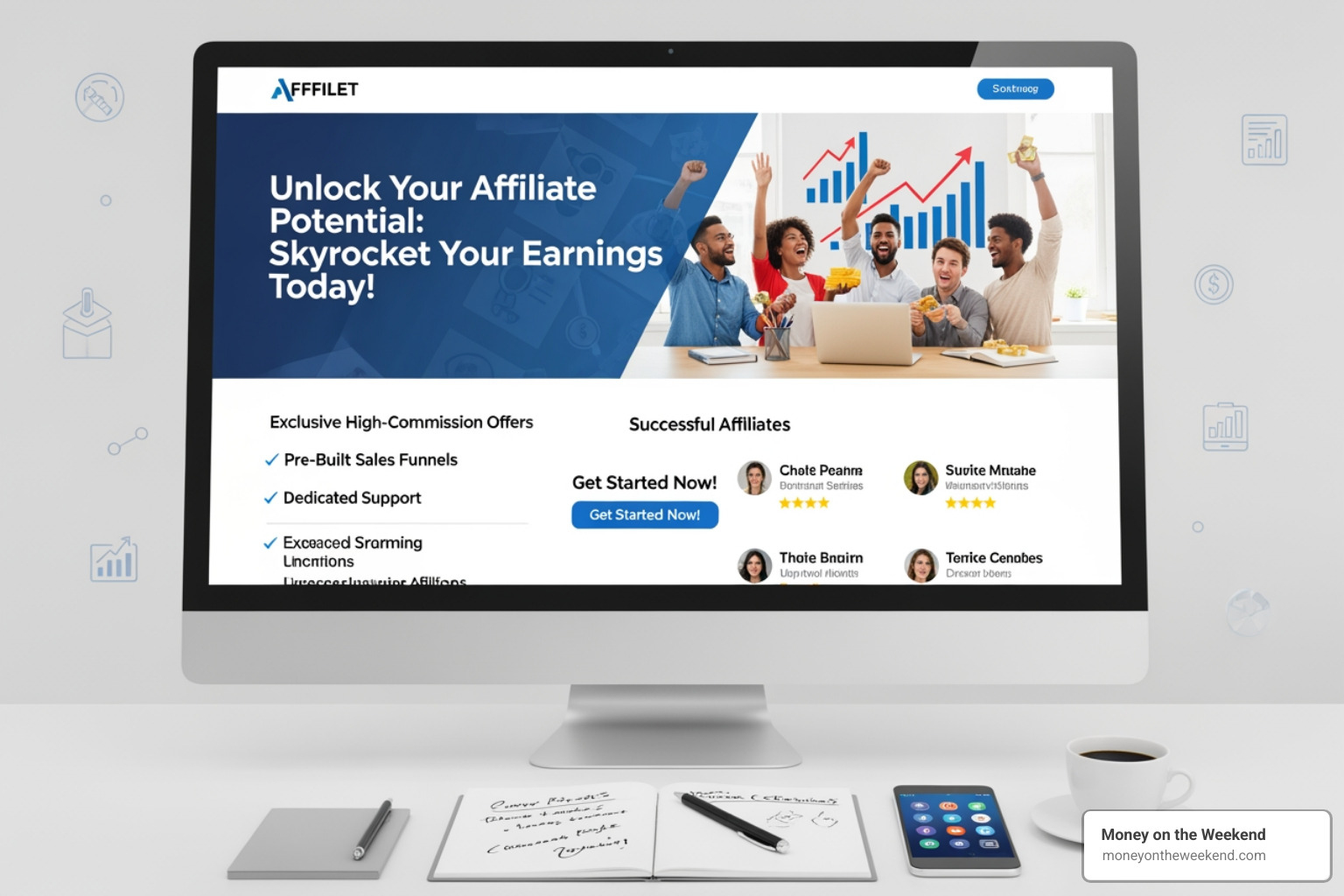
Design for an affiliate marketing landing page focuses on user experience (UX) and conversion rate optimization.
- Simple, Clean Layout: Less is more. A busy design is distracting. Keep your layout clean with plenty of white space, easy-to-read typography, and a complementary color palette.
- Mobile Responsiveness: A significant portion of traffic is mobile. Your landing page must look and function perfectly on all devices, with elements adjusting seamlessly to different screen sizes.
- Fast Loading Speed: A slow page is a conversion killer. Nearly 70% of consumers admit that page speed influences their likelihood to buy. Optimize images and use reliable hosting to ensure your page loads in a flash.
- Eliminating Distractions: The goal is to get a click on your affiliate link. Remove anything that diverts attention, including navigation menus. One study found that removing navigation links can increase conversions by 2% to 28%. Focus on a single solution, as too many options make it harder for visitors to choose.
Tailoring Your Affiliate Marketing Landing Page to the Offer
Not all affiliate offers are the same, and your affiliate marketing landing page shouldn’t be either. Tailor your page to the type of product you’re promoting.
- Physical Products: Use high-quality images and videos to let visitors visualize using the item. Focus on sensory benefits and consider unboxing videos or lifestyle shots.
- Digital Products (e.g., software, courses): Since the product is intangible, your page must explain the value and change it offers. Use screenshots, testimonials, and a clear explanation of what’s included. For Ebook Affiliate Programs, show the cover and describe the skills readers will gain.
- Services: Trust and credibility are paramount. Emphasize the provider’s expertise, present compelling case studies, and clearly outline the results clients can expect.
- High-Ticket vs. Low-Ticket Offers:
- Low-Ticket Items: These often benefit from shorter, impulse-driven landing pages with a strong headline, key benefits, and a clear CTA.
- High-Ticket Items: These require more information and reassurance. Your page might be longer, with detailed FAQs, extensive testimonials, and a thorough value proposition. Building a relationship with a lead magnet is often a smart strategy for High Ticket Affiliate Programs 2026.
Understand your audience and the offer. Proactively address their questions and objections to guide them to the merchant’s sales page.
Choosing the Right Tools to Build Your Page
Building an effective affiliate marketing landing page no longer requires advanced coding skills. Numerous tools empower affiliates to create professional, high-converting pages. The best tool depends on your budget, technical comfort, and needs.
Look for these essential features in a page builder:
- Drag-and-Drop Editor: Visually design your page without code.
- Templates: Use pre-designed, performance-minded templates as a starting point.
- A/B Testing Capability: Crucial for optimization. Test different versions of your page to see which performs better.
- Mobile Responsiveness: Ensure the tool automatically makes pages mobile-friendly.
- Fast Loading Speed: Choose a platform optimized for speed.
- Lead Collection & Integrations: If you capture emails, ensure the builder has forms that integrate with your email marketing service.
- Analytics: Monitor your page’s performance with built-in or integrated tracking.
Understanding these features will help you evaluate any tool. Many platforms offer free trials, giving you the freedom to create and optimize pages yourself. For a broader look at Tools for content creators, check out our dedicated guide.
Driving Traffic and Optimizing for Success
Even the best affiliate marketing landing page won’t generate commissions without visitors. Driving targeted traffic and continuously optimizing your page are the twin engines of affiliate success.
Effective Traffic Generation Strategies
The goal is to get the right eyes on your offer. Here are some effective strategies for driving traffic to your affiliate marketing landing page:
- Paid Advertising: Platforms like Google Ads and Facebook Ads allow you to target specific demographics and interests. A good landing page can lower your ad costs and improve visibility, as it’s part of Google’s ‘quality score’. For a deeper dive, explore our Paid Ads Affiliate Marketing Guide.
- Social Media Marketing: Organic posts, stories, and reels can drive traffic from an engaged audience. A landing page is often essential on platforms like Quora or Reddit that restrict direct affiliate links.
- Email Marketing: Campaigns to your email list can be incredibly effective, as subscribers already know and trust you.
- Content Marketing: Creating valuable blog posts or videos that lead to your offer is a great long-term strategy. This includes SEO-optimized content that provides helpful information before presenting the affiliate link.
The best approach often combines these strategies.
SEO for Your Affiliate Marketing Landing Page
While many affiliates use paid traffic, optimizing your affiliate marketing landing page for search engines (SEO) can bring a steady stream of free, organic traffic.
- Keyword Research: Identify the terms your audience uses when searching for solutions and use them naturally on your page.
- On-Page Optimization: Optimize key elements like title tags, meta descriptions, headings (H1, H2), and image alt text with your keywords.
- Content Quality: Provide helpful and unique content that genuinely informs visitors. Google explicitly rewards useful, original information on landing pages.
- Google’s Quality Score: If you run Google Ads, good SEO and user experience contribute to a higher Quality Score, which can lead to lower ad costs and better ad positioning.
Optimizing for SEO means creating a page that is valuable to both search engines and human visitors.
Optimizing Your Page with A/B Testing
An affiliate marketing landing page is not a “set it and forget it” asset. To maximize conversions, continuous optimization through A/B testing is essential.
- What is A/B Testing? Also called split testing, it involves creating two versions of an element (e.g., two headlines) and showing each to a portion of your traffic to see which performs better.
- Why It’s Crucial: A/B testing takes the guesswork out of optimization, using data to make informed decisions. Small improvements in conversion rates can lead to significant increases in commissions over time.
- What to Test: You can test headlines, CTAs (phrasing, color, size), images, copy, and page layout.
- Process for Testing:
- Identify one element to test.
- Create two versions (A and B) with only that one element changed.
- Split your traffic evenly between the versions.
- Run the test long enough to gather significant data.
- Analyze the results using your analytics tools. For platforms like ClickBank, check your ClickBank sales analytics to ensure data is accurate.
- Implement the winner and repeat the process with another element.
This iterative process ensures your affiliate marketing landing page is always performing at its peak.
Frequently Asked Questions about Affiliate Landing Pages
We understand that diving into affiliate marketing landing pages can bring up questions. Here, we address some of the most common queries.
What’s the difference between a landing page and a bridge page?
The terms are often used interchangeably, but there’s a subtle distinction:
- Landing Page: Any web page a visitor “lands” on from a link, designed to prompt a specific action.
- Bridge Page: A specific type of landing page used in affiliate marketing to “bridge” the gap between your traffic source and the merchant’s offer. It warms up traffic, provides context, and builds trust before sending the visitor to the sales page.
Essentially, all affiliate bridge pages are landing pages, but not all landing pages serve a bridging function. When we discuss an affiliate marketing landing page, we are often referring to this “bridge” function.
Can I do affiliate marketing without a landing page?
While technically possible in some contexts (like certain email campaigns or Pinterest strategies), we strongly advise against it. Many popular platforms, including social media sites like Quora or Reddit, prohibit direct affiliate links. By skipping the landing page, you lose out on significant advantages:
- Warming Up Cold Traffic: Sending cold traffic directly to a sales page rarely works. A landing page builds necessary rapport.
- Platform Compliance: A landing page helps you comply with rules on platforms that ban direct affiliate links.
- Control and Optimization: You can’t control the user experience or A/B test different elements to improve conversions.
- Missed Lead Generation: A landing page can capture emails, helping you build a list for long-term affiliate marketing passive income.
In short, doing affiliate marketing without a landing page severely limits your potential for high conversions and long-term success.
What are the most common mistakes to avoid?
Avoiding these common pitfalls when creating your affiliate marketing landing page can save you time and money:
- Too Many Offers/Distractions: Focus on one goal. Pages with multiple offers get 266% fewer leads. Remove navigation and other external links.
- Unclear Call-to-Action (CTA): Your CTA should be prominent, action-oriented, and unambiguous.
- Slow Page Speed: A slow page will cause visitors to leave. Nearly 70% of consumers are influenced by page speed in their buying decisions.
- No Mobile Optimization: Your page must be responsive and look great on a phone.
- Forgetting Affiliate Disclosure: Failing to disclose your affiliate relationship violates FTC guidelines and damages credibility.
- Focusing on Features, Not Benefits: Visitors care about how a product solves their problem. Translate features into tangible benefits.
- Unclear or Jargony Copy: Use simple, clear language. Unclear descriptions can decrease conversions by 20%.
- Lack of Social Proof: Use testimonials, reviews, or other trust signals to build credibility.
- No A/B Testing: Always be testing elements to improve your conversion rates.
- Not Providing Value: Your page should offer value, not just be a sales pitch. Google encourages providing helpful and unique content on landing pages.
By avoiding these errors, you can significantly increase the effectiveness of your affiliate marketing landing pages.
Conclusion: Start Building Your Conversion Machine
We’ve covered why an affiliate marketing landing page is indispensable, from its core components to design, traffic, and optimization strategies. The message is clear: for serious affiliates, a dedicated landing page is a necessity.
Your landing page is your opportunity to:
- Warm up cold traffic and pre-sell the product.
- Build trust and credibility.
- Filter out unqualified leads.
- Gain control over your conversion funnel.
At Money on the Weekend, our mission is to guide you toward financial freedom through online income. Building high-converting affiliate marketing landing pages is a critical skill on this journey, empowering you to earn by connecting people with valuable solutions.
By focusing on genuine value, crafting compelling messages, and continuously optimizing, you’re not just chasing clicks; you’re building a sustainable affiliate business. This is about creating the kind of passive income that gives you freedom and control over your schedule.
Take these insights, and start building your conversion machine.
Start your journey to passive income through blogging today!