
Introduction: Your Entry into Performance-Based Earnings
What is an affiliate marketer?
- An affiliate marketer is an individual or company.
- They promote products or services created by other businesses.
- They earn a commission when their marketing efforts lead to a sale, lead, or click.
- It’s a performance-based marketing strategy.
- They act as a bridge between consumers and products.
What if you could make money at any time, from anywhere — even while you sleep? This is the dream that often leads people to ask what is an affiliate marketer and how this unique business model works.
At its core, an affiliate marketer acts as a digital salesperson. They connect customers with products or services they need. They don’t own the products. They simply earn a cut when they make a connection that leads to a desired action.
This approach offers a low-risk way to start an online business. It lets you tap into existing markets without creating your own products. For anyone looking to generate extra income or achieve financial freedom, understanding this role is a key first step. This guide will walk you through everything you need to know.
What is an Affiliate Marketer and What Do They Do?
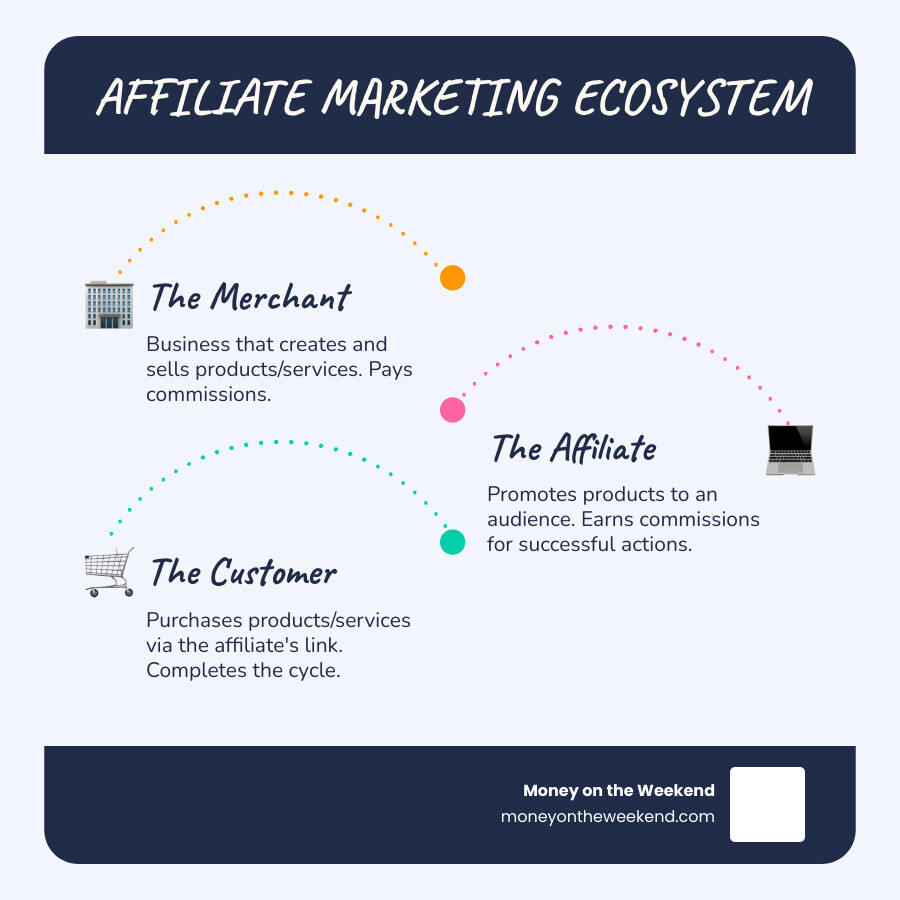
So, what is an affiliate marketer, exactly? An affiliate marketer is an individual or company that partners with businesses (merchants) to promote their products or services. In return for guiding customers to make a purchase or complete an action, the affiliate earns a commission. It’s a prime example of performance-based marketing—you get paid when you deliver results. Businesses gain new customers without large upfront advertising costs, and affiliates earn income by sharing products with their audience.
The affiliate marketing world has a few key players:
- The Merchant (Seller/Brand): The company that creates the product or service. They rely on affiliates to reach a broader audience.
- The Affiliate (Publisher/Content Creator): That’s us! We promote the merchant’s products through our websites, blogs, social media, or email lists.
- The Consumer: The person who buys the product. Their trust in our recommendations is key.
- The Affiliate Network (Intermediary): Often, a network connects merchants and affiliates. These platforms handle tracking, payments, and reporting, making it easier to manage partnerships. You can find more info about affiliate networks and how they work.
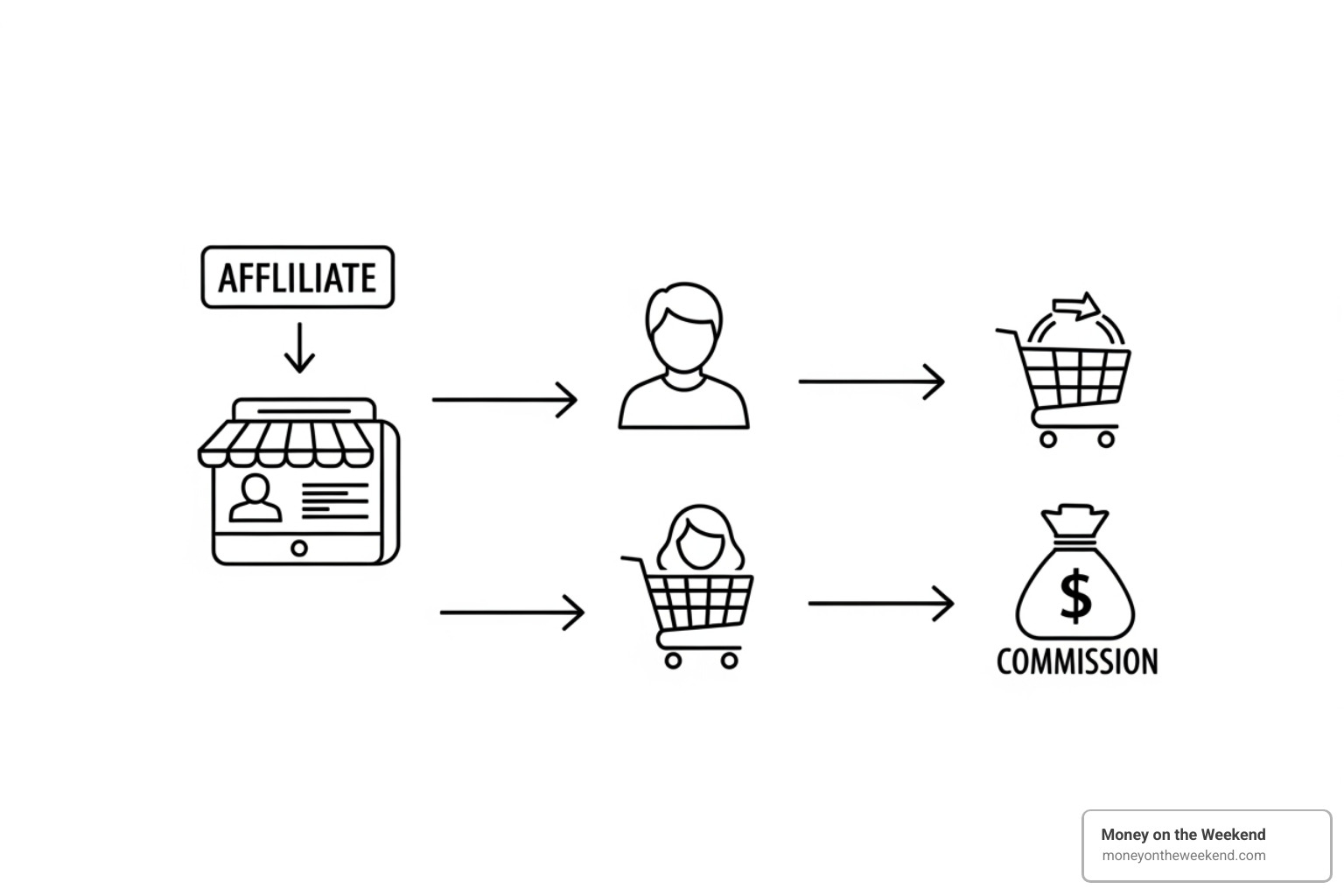
Sales are tracked using unique affiliate links and cookie tracking. When you join a program, you get a special link with your ID. When someone clicks it, a small file (a “cookie”) is placed on their device. If they buy something within a set time (e.g., 30 days), the sale is credited to you, and you earn a commission. This model is a major force in e-commerce, accounting for a significant portion of online sales and being a vital part of over 80% of advertising strategies.
The Core Responsibilities: What is an affiliate marketer’s day-to-day?
An affiliate marketer’s daily tasks blend creativity with strategy. The main responsibilities include:
- Content Creation: Creating engaging content like blog posts, product reviews, videos, or social media updates that naturally incorporate the products you’re promoting.
- Audience Building: Growing your community of readers, viewers, or followers through methods like search engine optimization (SEO) and social media engagement.
- Promoting Products: Strategically placing affiliate links within your content to feel like helpful suggestions, not aggressive ads.
- Driving Targeted Traffic: Attracting people who are genuinely interested in your niche through SEO, targeted ads, or community participation.
- Maintaining Audience Trust: Being transparent and authentic is crucial. Your audience’s trust is your most valuable asset for long-term success.
The Different Types of Affiliate Marketers
Affiliate marketing can be broken down into three main styles based on the promoter’s relationship with the product:
- Unattached Affiliate Marketing: This is a hands-off approach where affiliates promote products without a personal connection or authority in the niche, often using paid ads to drive traffic directly to an offer.
- Related Affiliate Marketing: In this style, affiliates have expertise in a niche and recommend related products, even if they haven’t used them personally. Their authority and existing audience are their main assets.
- Involved Affiliate Marketing: This is the most authentic method. Involved affiliates have personally used and genuinely believe in the products they promote. They build strong trust by sharing their own experiences and honest reviews, much like dedicated review sites such as Gear Patrol or Wirecutter.
Beyond these categories, affiliates often specialize in different channels:
- Influencers: Use social platforms like Instagram, TikTok, and YouTube to showcase products to their followers.
- Bloggers: Create in-depth written content, such as reviews and guides, that ranks well on search engines.
- Email Marketers: Build email lists to send product recommendations and offers directly to subscribers.
- Review Sites: Focus entirely on detailed analysis and comparisons of products in a specific category.
The Benefits and Earning Potential of Affiliate Marketing
Now that we’ve covered what is an affiliate marketer, let’s dive into why so many people are drawn to this path. Affiliate marketing offers fantastic benefits that align with our mission at Money on the Weekend to help you find financial freedom.
One of the biggest perks is the potential for passive income. Unlike a traditional job, your affiliate content can earn money for you 24/7, even while you sleep or travel. You do the work once, and it can generate returns long after. It’s a perfect way to build a Passive Income: Affiliate Marketing stream.
Another huge advantage is the low startup costs. You don’t need to create your own products, manage inventory, or handle shipping. This makes it an ideal choice if you’re looking for 10 Businesses You Can Start on a Budget in 2024. Plus, the flexibility to work from anywhere with an internet connection offers incredible freedom.
Finally, having no product creation needed lets you focus on what you do best: creating content and connecting with an audience, rather than dealing with the complexities of manufacturing and customer service.
How Affiliate Marketers Get Paid
Affiliates get paid based on different commission structures. The most common models include:
- Pay-Per-Sale (PPS): You earn a percentage of the sale price or a flat fee each time someone makes a purchase through your affiliate link. This is often the most lucrative model.
- Pay-Per-Lead (PPL): You get paid when a visitor completes a specific action, like signing up for a newsletter, filling out a form, or starting a free trial. It’s often easier to generate a lead than a sale.
- Pay-Per-Click (PPC): You earn a small commission for each click on your affiliate link, regardless of whether it leads to a sale. This model is less common in high-quality programs due to very low payouts.
CPA (Cost Per Action) is a broader term that can refer to either PPS or PPL, as both involve a customer taking a specific action.
Here’s a simple comparison:
| Commission Model | What it is | Good for Affiliates because… | Tricky for Affiliates because… |
|---|---|---|---|
| Pay-Per-Sale (PPS) | You earn a percentage of each product sale. | Big potential earnings for each conversion. | Customers must buy, which can be harder to achieve. |
| Pay-Per-Lead (PPL) | You earn for getting a “lead” (e.g., sign-up, form fill). | Often easier to get leads than sales. | Earnings per action are usually lower than for sales. |
| Pay-Per-Click (PPC) | You earn for each click on your link. | Easiest to get; just needs traffic. | Very low pay per click; not common in good programs. |
How Much Can You Realistically Earn?
This is the big question: “How much money can I really make?” The exciting answer is that there’s no cap on your income. While it’s not a get-rich-quick scheme, the earning potential is very real. For example, Payscale reports that the average annual income for affiliate marketers is $56,141 in 2025, with top earners making significantly more.
Your income depends on your niche, traffic volume, content quality, and conversion rate. Success stories are common. One affiliate on Reddit shared how they grew their site from $267 to over $21,000 per month in under two years by focusing on high-quality content. Other case studies show new niche sites going from zero to $1,000 per month within 18 months. These examples prove that consistent effort pays off.
However, it’s crucial to have realistic expectations. Most successful affiliates spend six to 12 months building their platform before seeing major returns. A goal of $100 per day is achievable but often takes several months, or even a few years, of steady work. For a deeper dive, check out our guide on How Much Money Can You Make With Affiliate Marketing?.
How to Become an Affiliate Marketer: A 4-Step Guide
Ready to become an affiliate marketer? It’s a manageable process when taken one step at a time. Think of it as launching a side hustle with minimal risk and maximum flexibility. You can even Start a Business without the massive overhead of traditional entrepreneurship. Our guide on How to Start and Launch an Affiliate Marketing Website in Just 7 Days shows how quickly you can begin.

Step 1: Choose Your Niche and Platform
First, pick your niche and platform. A good niche balances what you’re passionate about with what people are searching for. Instead of a broad topic like “food,” specialize in something like “budget meal prep for families.” This helps you stand out. Use free tools like Google Trends to research topics and confirm there’s demand.
The sweet spot is where your genuine interest meets market opportunity. Ensure there are products to promote with decent commissions. Next, choose your platform. A blog or website is great for SEO and long-term traffic. YouTube is ideal for visual demonstrations, while social media platforms like Instagram and TikTok are perfect for building a community with visual content.
Step 2: Find and Join Affiliate Programs
Next, partner with brands by joining affiliate programs. Affiliate networks are marketplaces that connect you with thousands of merchants, handling tracking and payments. Some of the most popular networks include Awin, ClickBank, Amazon Associates, Rakuten Advertising, Etsy Affiliates, eBay Partner Network, and the Coursera Affiliate Program.
Many brands also run their own direct-to-brand programs, which can sometimes offer better rates. Before joining, evaluate each program carefully. Look at commission rates (percentages or flat fees) and cookie duration—the time after a click that you can still earn a commission. A longer cookie duration (30+ days) is better. Most importantly, ensure the product relevance and brand reputation align with your audience’s needs and your standards.
Step 3: Create Valuable, Trust-Building Content
This is where you provide genuine value. Effective content types for affiliate marketing include:
- Product reviews: Share honest experiences, including pros and cons.
- Tutorials and how-to guides: Show how a product solves a problem.
- Comparison posts: Help readers choose between similar products.
- Curated lists/roundups: Offer recommendations like “Top 10 Gadgets for…”
The goal is to build authority and become a trusted resource in your niche. This comes from consistently creating helpful content. Basic content marketing and SEO are vital. Research keywords your audience uses and structure your content around them to attract organic traffic from search engines. Create detailed, articulate content that thoroughly answers questions to convert visitors into buyers.
Essential Skills: What is an affiliate marketer expected to know?
Successful affiliate marketing draws on several skills, which you can learn over time.
- SEO: Crucial for attracting consistent, free traffic from search engines.
- Content Creation: The ability to produce high-quality blog posts, videos, or social media updates that your audience finds valuable.
- Data Analysis: Using tools like Google Analytics to understand what’s working. Track performance with UTM parameters to see which links and campaigns drive results.
- Email Marketing: Building an email list gives you a direct line to your audience, independent of algorithms.
- Social Media Marketing: Understanding how to create content that resonates on different platforms.
- Communication: Writing persuasive copy and engaging authentically with your audience and partners.
- Research: Staying curious and continuously learning about your niche, new products, and market trends.
Common Mistakes & Legal Responsibilities
As you start your affiliate marketing journey, avoiding common pitfalls can save you time and effort. Here is a quick checklist of what to watch out for.
- Choosing the wrong niche: Picking a niche that is too broad makes it hard to stand out, while one that is too narrow may lack products to promote.
- Promoting too many products: This can confuse your audience. Focus on a few high-quality, relevant products you can genuinely recommend.
- Ignoring SEO: If your content isn’t optimized for search engines, your target audience won’t find it. This means less traffic and fewer conversions.
- Lacking authenticity: Your audience relies on your honest opinion. Promoting products you don’t believe in will quickly erode trust, which is your most valuable asset.
- Not tracking performance: Without monitoring clicks, conversions, and earnings, you can’t know what’s working. Tracking is essential for adapting and growing your strategy.
Legal and Ethical Considerations
Beyond marketing mistakes, understanding your legal and ethical duties is critical for building a sustainable business. This is about doing right by your audience.
The most important rule is transparency through disclosure. The Federal Trade Commission (FTC) requires clear disclosures of affiliate relationships. You must always state that your content contains affiliate links and that you may earn a commission. This builds trust and ensures compliance.
Privacy regulations like GDPR in Europe and CCPA in California also impact how tracking works, so it’s important to stay informed.
Building audience trust comes down to honesty. Only promote products you believe will benefit your audience. Misleading claims or pushing low-quality items will destroy your reputation. Finally, always avoid spammy tactics like unsolicited emails or keyword stuffing. Providing real value is the key to long-term success.
Frequently Asked Questions about Affiliate Marketers
Let’s address some common questions people have when they ask, “what is an affiliate marketer?”
Is affiliate marketing a get-rich-quick scheme?
No, affiliate marketing is not a get-rich-quick scheme. While the potential for passive income is real, success requires time, consistent effort, and dedication. Most successful affiliates spend six to 12 months building their platform and creating content before seeing significant returns. It’s a marathon, not a sprint, but the rewards are worth the patience.
Do I need a huge following to start affiliate marketing?
Absolutely not. You don’t need a massive following to start. What’s more important is having an engaged and trusting audience. A smaller, highly engaged community in a specific niche often converts better than a large, disengaged one. Focus on building a passionate community, no matter the size, and your efforts will be more effective.
Can I do affiliate marketing without a website?
Yes, you can. While a website is a popular and effective strategy, it’s not the only option. Many successful affiliates use other platforms to promote products. For example, you can use social media (like YouTube, Instagram, or TikTok) for reviews and tutorials, build an email list to send offers directly to subscribers, or use a podcast to recommend products in your show notes. The key is to find a platform where you can consistently provide value and build trust.
Conclusion: Start Your Journey to Financial Freedom
We’ve explored what is an affiliate marketer, how the business model works, and the steps to get started. Affiliate marketing is a legitimate, performance-based strategy that offers flexibility, low startup costs, and the potential for passive income. You can leverage your interests and voice to create value for an audience while earning commissions for making meaningful connections between people and products.
At Money on the Weekend, our mission is to guide you toward financial freedom through online income. Affiliate marketing is at the heart of this mission. It’s an empowering side hustle that can grow into a significant source of income, all on your own terms.
If the idea of earning money by recommending products you believe in excites you, there’s no better time to start. The digital world is full of opportunities. With the right strategy, consistent effort, and a commitment to authenticity, you can build a thriving affiliate marketing business.
Your journey starts with a single step: choosing your niche and committing to providing real value. Ready to take control of your financial future? Start building your affiliate marketing passive income stream today. We’re here to help you along the way.