Introduction: Your Journey into Affiliate Marketing
Want to be an affiliate marketer and open up new income streams? This guide is for you. Affiliate marketing is a smart way to earn money online. You promote products you love, and get paid when someone buys through your unique link.
Here’s the fast track to getting started:
- Choose a Niche: Pick a topic you know and love.
- Build Your Platform: Start a blog, YouTube channel, or social media presence.
- Find Programs: Join affiliate networks or directly apply to brands.
- Create Content: Make helpful reviews, guides, or recommendations.
- Drive Traffic: Get people to see your content and click your links.
This isn’t a get-rich-quick scheme. It’s a performance-based marketing method. But it offers a real path to passive income. Brands are investing heavily, with estimates of $12 billion in creator partnerships by 2025. This shows how big and valuable the industry is.
This extensive guide will show you exactly how to become an affiliate marketing superstar.
What is Affiliate Marketing and Why Should You Care?
Picture this: You tell a friend about a great product, they buy it, and the company sends you a thank-you check. That’s affiliate marketing. It’s not a complex business model—it’s getting rewarded for recommending things you believe in.
When you be an affiliate marketer, you partner with businesses to share their products. Every time someone buys through your unique link, you earn a commission. The best part? Companies only pay for actual sales. This makes it appealing for businesses and creates a genuine opportunity for you to earn money.

How Affiliate Marketing Works
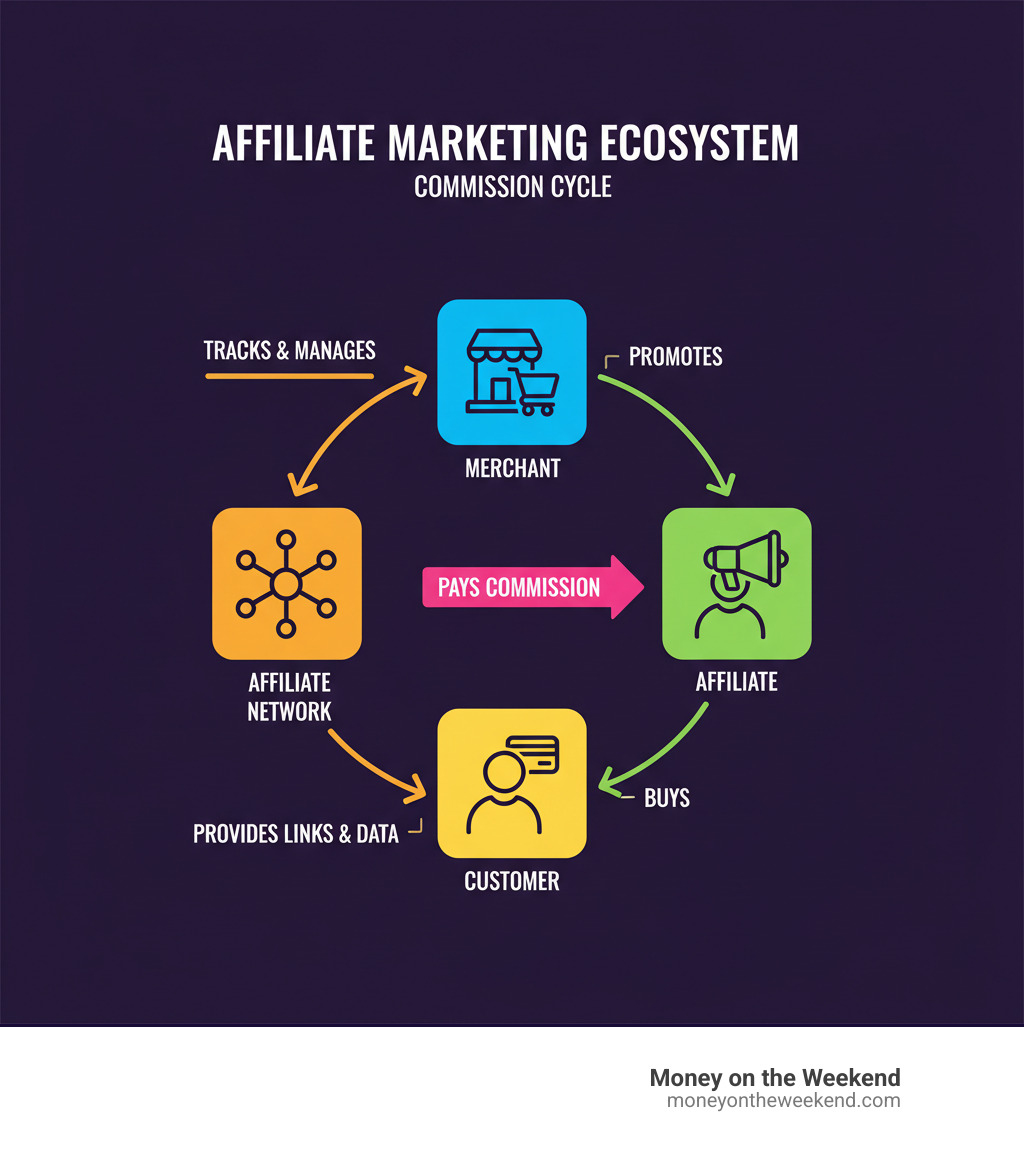
Behind every affiliate sale is a simple system. The key players are the merchant (the company selling the product), the affiliate (you, the promoter), and the customer (the buyer). Often, an affiliate network acts as an intermediary, connecting merchants and affiliates and handling tracking and payments.
The process relies on unique affiliate links and cookie tracking. When you join a program, you get a special link that identifies you. When a customer clicks it, a small file (a cookie) is stored on their device. If they make a purchase within a set time (the cookie duration), the sale is credited to you, and you earn a commission. It’s a smart system that ensures you get paid for your referrals.
How Affiliate Marketers Get Paid
Payment models vary, so it’s good to know the common types:
- Pay-Per-Sale (PPS): This is the most common model. You earn a percentage of the sale price. Commissions typically range from 5% to 30%, but digital products can offer 40% or more since they have no manufacturing costs.
- Pay-Per-Lead (PPL): You get paid a fixed fee when someone completes a specific action, like signing up for a free trial or filling out a form.
- Pay-Per-Click (PPC): You earn a small amount for each click on your link. This model is less common now due to potential fraud but is sometimes used in paid ad campaigns.
- Recurring Commissions: For subscription services, you can earn a commission every month as long as your referral remains a customer. This is a powerful way to build passive income.
Some programs also offer tiered commissions, where your rate increases as you generate more sales, rewarding top performers.
The Pros and Cons of Affiliate Marketing
Like any business, affiliate marketing has its upsides and downsides.
The Pros:
- Low Startup Cost: You don’t need inventory or employees. Your main investment is time and a platform to share your content.
- Flexibility: Work from anywhere, set your own hours, and choose products you’re passionate about.
- Passive Income Potential: Your content can earn money 24/7, long after you’ve published it.
- Scalability: There’s no cap on your earnings. You can always create more content or enter new niches.
- No Customer Support: Handling returns or complaints is the merchant’s responsibility, not yours.
The Cons:
- Time Investment: It can take six to twelve months of consistent work to see significant income. Patience is essential.
- No Control Over Programs: Merchants can change commission rates or end their programs at any time.
- Fierce Competition: The industry is large and growing, so you need to find a way to stand out and offer unique value.
- Tracking Issues: Evolving privacy regulations like GDPR and browser changes can sometimes prevent referrals from being tracked correctly.
Affiliate marketing offers a real opportunity, but it rewards patience, consistency, and a genuine desire to help your audience.
Your Step-by-Step Guide to Be an Affiliate Marketer
Ready to be an affiliate marketer? This roadmap will guide you through the essential steps to turn your efforts into income.

Step 1: Choose Your Niche and Platform
First, lay your foundation. Don’t try to appeal to everyone. By focusing on a specific niche, you can build authority with a dedicated audience.
Your ideal niche should be a topic you’re passionate about, has an audience searching for information (check Google Trends), and has affiliate programs available. Profitability and personal interest are both key.
Next, choose your platform. A blog or website offers full control and is great for detailed reviews and guides. A YouTube channel is powerful for visual demonstrations and tutorials. Social media (Instagram, TikTok) is perfect for visual products and direct engagement. Finally, an email list provides a direct line to your most engaged followers. Pick one that suits your style and where your audience spends time.
Step 2: Find and Join Affiliate Programs
Now it’s time to find products to promote. You can find programs directly on a company’s website (often in the footer under “Affiliates” or “Partners”).
The easier path for beginners is joining affiliate networks, which connect you with thousands of merchants. Popular networks include Amazon Associates, ClickBank (for digital products), ShareASale, CJ Affiliate, Impact, Awin, and Rakuten Advertising.
When evaluating programs, consider the commission rate, the cookie duration (how long you get credit for a sale after a click), and the brand’s reputation. Most importantly, ensure the products align with your audience’s needs and your values. Your credibility is your greatest asset, so only promote products you genuinely believe in.
Step 3: Create High-Value, Authentic Content
Your role is to be a trusted advisor, not a pushy salesperson. Create content that helps people make informed decisions.
Effective content types include:
- Product Reviews: Share your honest experience, including pros and cons.
- How-To Guides: Show how a product can solve a specific problem.
- Comparison Posts: Compare similar products to help your audience choose the best one for them.
- Resource Pages: Create a go-to list of your favorite tools and products.
Always put valuable content first and promotion second. Build trust by being authentic. Only recommend products you have experience with. Your audience will appreciate your honesty, which leads to higher conversions and a sustainable business.
Step 4: Drive Traffic to Your Content
Great content is useless if no one sees it. Here’s how to get eyes on your work:
- Search Engine Optimization (SEO): Optimize your content with relevant keywords to rank in search engines. This provides a steady stream of free, long-term traffic.
- Email List: Offer a freebie (like a checklist or guide) to get subscribers. An email list gives you a direct way to share content and promotions with a loyal audience.
- Social Media: Use platforms like TikTok, Instagram, and YouTube to engage your audience and share recommendations. Many now have built-in shopping features.
- Paid Advertising: If you have a budget, ads on Google or Facebook can drive targeted traffic quickly, but this requires testing and optimization.
Step 5: Disclose Your Affiliate Relationship
Transparency is non-negotiable. It’s a legal requirement and the right thing to do for your audience.
The Federal Trade Commission (FTC) requires you to clearly disclose your affiliate relationships. This builds credibility and trust.
Your disclosure must be clear, conspicuous, and placed before the affiliate link. For blog posts, add a statement at the top. For videos and social media, use verbal callouts and clear text like #ad or #affiliatelink. Being upfront shows you respect your audience.
Strategies, Earnings, and Essential Skills
To excel as an affiliate marketer, you need the right strategy, realistic earning expectations, and a specific set of skills.
Choosing the Right Affiliate Strategy
Not all affiliate approaches are the same. Your relationship with the products you promote matters. Common strategies include:
- Unattached: Promoting products you have no direct connection to, often through paid ads. This is less personal and doesn’t require building an audience.
- Related: Using your influence in a niche to promote products, even if you haven’t used them personally. This relies on your existing authority.
- Involved: Only promoting products you’ve personally used and genuinely recommend. This is the most authentic approach and typically leads to the highest conversion rates because your audience trusts your experience. This aligns perfectly with our mission at Money on the Weekend to help people find financial freedom through trusted recommendations.
A sustainable strategy is to focus on creating valuable content first, then integrating promotions naturally. Also, experienced affiliates diversify their income by working with multiple programs, which minimizes risk.
How Much Can You Realistically Earn?
There’s no income cap in affiliate marketing; your earnings reflect your effort and strategy.
- Typical Income Ranges: While some affiliates make a few hundred dollars per month, others earn six or seven figures annually. The average annual income for affiliate marketers is around $56,141 in 2025. Top earners can reach $77,000 or more, while beginners might be in the $41,000 range.
- Factors Influencing Earnings: Your niche, audience engagement, content quality, traffic sources, and commission rates all impact your income.
- Success Stories: The potential is real. For example, one affiliate marketer on Reddit documented growing their site from $267 to over $21,000 per month in 19 months by focusing on SEO content in a specific niche.
Set realistic expectations. Significant income typically requires several months to a year of consistent effort. It’s a business, not a get-rich-quick scheme.
Key Skills You Need to Be an Affiliate Marketer
To succeed, you need to cultivate a diverse skillset:
- Content Creation: The ability to write compelling posts, produce engaging videos, or create eye-catching graphics.
- Search Engine Optimization (SEO): Understanding how to get your content finded through search engines is critical for organic traffic.
- Copywriting: Writing persuasive text that encourages your audience to click and buy.
- Data Analysis: Using analytics to track your performance (clicks, conversions) and optimize your strategy.
- Social Media Marketing: Knowing how to build and engage an audience on relevant platforms.
- Relationship Building: Fostering trust with your audience and networking with affiliate managers.
- Patience and Persistence: Success doesn’t happen overnight. A long-term mindset is crucial.
- Adaptability: The digital world is always changing. Successful affiliates adapt their strategies to new platforms, algorithms, and regulations.
Frequently Asked Questions about Affiliate Marketing
It’s normal to have questions when starting something new. Here are answers to some of the most common ones we hear from people wanting to be an affiliate marketer.
How long does it take to make money with affiliate marketing?
The timeline varies widely. While some may see a sale in the first few months, most successful affiliates report it takes six to 12 months of consistent effort to see substantial income. Factors like your niche, content quality, and traffic strategy all play a role. The key is patience and persistence; treat it like building a real business.
Can I do affiliate marketing without a website?
Yes, absolutely! While a website offers control and SEO benefits, it’s not required. Many successful affiliates use other platforms:
- Social Media: Use Instagram, TikTok, or Facebook to share recommendations and affiliate links.
- YouTube: Create product reviews or tutorials and place your links in the video description.
- Email Marketing: Build an email list and send promotions directly to an engaged audience.
- Podcasts: Recommend products verbally and add links to your show notes.
The core principle is the same on any platform: provide value to an audience you’ve built.
Who is best suited to be an affiliate marketer?
Many different types of people can succeed, but certain traits are beneficial. Affiliate marketing is often a great fit for:
- Content creators who enjoy writing, making videos, or designing.
- Niche experts who have deep knowledge and passion for a specific topic.
- Influencers with an established social media following.
- Entrepreneurs who are self-motivated and willing to learn.
- Patient and persistent individuals who understand it’s a long-term game.
- Problem solvers who focus on recommending helpful solutions.
Anyone willing to put in the effort to build an audience and provide real value can be an affiliate marketer and find success.
Conclusion: Start Your Affiliate Journey Today
You now have a solid roadmap to be an affiliate marketer. We’ve covered how it works, the pros and cons, and the five crucial steps to get started: choosing a niche, finding programs, creating valuable content, driving traffic, and being transparent.
The core of success is building trust. Focus on providing real value by recommending products you genuinely believe in. Be honest and help your audience solve their problems.
This journey is a marathon, not a sprint. It requires time, consistent effort, and patience. But the potential rewards—passive income and financial freedom—are immense.
Here at Money on the Weekend, our mission is to empower you to find new paths to financial freedom in your spare time. Affiliate marketing is a powerful way to achieve that. Your journey starts now!
Find more ways to build online income