
Why Understanding the Affiliate Marketing Business Model Matters
The affiliate marketing business model is a performance-based strategy where you earn commissions by promoting other companies’ products. Instead of creating your own products, you simply connect buyers with sellers and earn a percentage of each sale, without handling inventory or customer service.
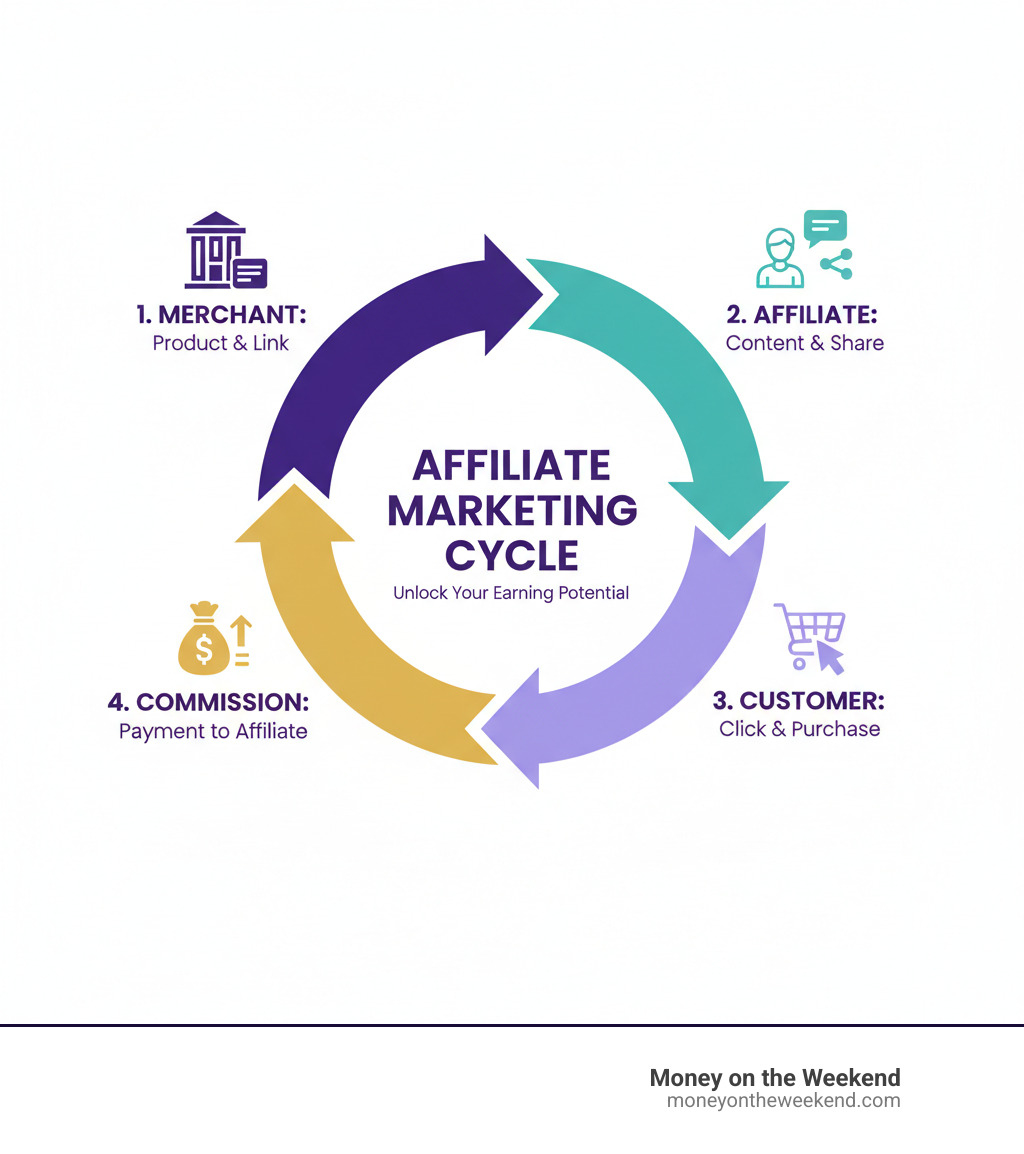
Here’s how the affiliate marketing business model works:
- Merchant creates a product and offers a commission to promote it.
- Affiliate (you) promotes the product through your content.
- Customer clicks your unique tracking link and makes a purchase.
- Commission is paid to you for the sale.
This model is popular for those seeking extra income because it has minimal startup costs and can generate passive income. Industry data shows affiliate marketing spending in the U.S. reached $9.56 billion in 2023 and is projected to grow to $12 billion by 2025.
What makes this business model attractive is its low-risk nature. Merchants only pay for results—a sale, lead, or specific action. For affiliates, you can start with just a laptop and an internet connection.
The beauty of affiliate marketing lies in its simplicity. You find products you believe in, share them with an audience, and earn money when people buy through your recommendations. Whether you want to supplement your income or build financial freedom, understanding this model is your first step.
The Core of the Affiliate Marketing Business Model
Think of the affiliate marketing business model as a partnership where everyone wins. It’s built on a simple promise: results first, payment second. This performance-based approach means businesses only pay when they see actual results, creating a low-risk way to grow without a massive upfront marketing budget.
This model is powerful because it relies on trust. A recommendation from someone you follow carries more weight than traditional advertising, building brand credibility through social proof.

The Key Players in the Ecosystem
The affiliate marketing business model operates with four main players. The merchant (or seller) creates the product and agrees to share profits. The affiliate (or publisher) is you—the one who connects products with the right people through a blog, YouTube channel, or social media. The customer makes the purchase, driving the entire model. Finally, the optional network acts as an intermediary, connecting merchants and affiliates and handling tracking, reporting, and payments.
How the Affiliate Marketing Business Model Works in Practice
When you join an affiliate program, you receive a unique affiliate link that tracks referrals back to you. You then integrate this link into your content, such as a product review or tutorial.
When someone clicks your link, a small file called a cookie is stored on their device. This cookie identifies you as the referrer. Even if the purchase isn’t made immediately, you can still get credit if they buy within the cookie’s lifespan (often 24 hours to 30 days).
Once the customer completes a purchase, the merchant’s tracking system identifies your affiliate ID from the cookie and records the sale. You then earn your commission. This automated process is what makes affiliate marketing so scalable.
Types of Affiliate Marketing Relationships
Not all affiliate marketing is the same. Your relationship with the products you promote can be categorized into three approaches.
Unattached affiliate marketing is a hands-off approach where you promote products you don’t personally use. This method is low commitment but also builds low trust with an audience.
Related affiliate marketing involves promoting products that fit your niche, even if you haven’t used them. For example, a fitness blogger promoting workout equipment they haven’t tested. You have an interested audience, but you lack personal experience.
Involved affiliate marketing is the most effective approach. Here, you only promote products you have used and genuinely believe in. You share your real experiences, building trust and authority. This authenticity is essential for long-term success, as it leads to higher conversion rates and a sustainable income stream. The affiliate marketing business model rewards those who are genuine and transparent with their audience.
How to Start Your Affiliate Marketing Business in 5 Steps
Starting an affiliate marketing business model doesn’t require a massive investment. You can begin with a laptop, an internet connection, and a desire to help people. The key is to focus on building an audience and providing genuine value. If you’re ready to dive deeper, we have a detailed guide on How to Start and Launch an Affiliate Marketing Website in Just 7 Days. For now, let’s walk through the five essential steps to Start a Business in this space.

Step 1: Choose Your Niche and Platform
Your niche is the foundation of your business, ideally at the intersection of your passion and what people need. Think about topics you enjoy, problems you’ve solved, or subjects your friends ask you about. Use tools like Google Trends to see if there’s an active audience searching for information in that area. You want a target audience that’s engaged and looking for solutions.
Next, choose your platform. A blog or website offers full control and is great for detailed reviews and guides. YouTube is perfect for visual demonstrations. Social media platforms like Instagram or TikTok are ideal for quick tips and community building. Email newsletters create a direct line to your most engaged followers. The best platform is the one you’ll use consistently.
Step 2: Find and Join Affiliate Programs
With your niche and platform decided, it’s time to find products. Many brands have in-house affiliate programs listed on their websites—check the footer for a “Partners” or “Affiliates” link. These direct relationships can offer better commissions.
Affiliate networks act as marketplaces connecting merchants with affiliates. They handle tracking, payments, and reporting, allowing you to manage multiple programs from one dashboard. When evaluating a program, look at the commission rates and cookie duration (how long you get credit for a sale after a click). Most importantly, ensure the products are high-quality and relevant to your niche to maintain your credibility.
Step 3: Create Valuable, High-Quality Content
Your content is the bridge between your audience’s problems and the solutions you recommend. Focus on helping, not just selling.
- Product reviews work best when they’re honest, sharing both the pros and cons of your experience.
- Tutorials and how-to guides show people how to use a product or achieve a result, answering common questions.
- Comparison posts help your audience choose between similar options by highlighting key differences.
Creating high-quality content that educates and engages takes effort, but it pays off. Quality content ranks better in search engines, gets shared more, and converts visitors into buyers. Your goal is to help, and the sales will follow.
Step 4: Promote Your Affiliate Links
Strategic link placement is crucial for conversions. Links should feel natural and improve the user experience. Place them where they logically fit, such as next to a product recommendation or in a list of resources.
Use clear calls to action (CTAs) that tell people what to do next, like “Check current pricing” or “Learn more here.” This is more effective than a bare URL.
Most importantly, you must provide a disclosure. The Federal Trade Commission (FTC) requires you to clearly state that you may earn a commission from your links. This transparency is not just a legal requirement; it’s essential for building trust with your audience.
Step 5: Track, Analyze, and Optimize
Launching your content is just the start. Growth comes from analyzing what works and optimizing your strategy. Most affiliate dashboards show clicks, conversions, and earnings, revealing what resonates with your audience.
Use Urchin tracking module (UTM) parameters to see where your traffic comes from, helping you understand which channels are most effective. Earnings per click (EPC) shows the average earning per click, helping you identify high-performing products.
Tools like Google Analytics offer deeper insights into audience behavior. Check your metrics regularly to spot patterns. If one type of content drives more sales, create more of it. If a product doesn’t convert, consider replacing it. Consistent optimization is key to long-term growth.
Monetization: Revenue Models and Earning Potential
The affiliate marketing business model offers diverse ways to earn income. The industry is booming, with spending in the US reaching $9.56 billion in 2023 and projected to hit $12 billion by 2025. This growth signals immense potential for affiliates.
Primary Affiliate Payment Models
Understanding how you get paid helps you choose the right programs. Here are the most common models:
- Pay-Per-Sale (PPS): The most common model, where you earn a commission when your referral leads to a sale. Merchants only pay for a confirmed conversion.
- Pay-Per-Lead (PPL): You are paid for generating qualified leads, such as a user filling out a form or signing up for a trial. A purchase is not required.
- Pay-Per-Click (PPC): You earn a small commission for each click your affiliate link generates, regardless of whether it leads to a sale. This model is less common today.
- Pay-Per-Install (PPI): Common in the software industry, this model pays you for each successful installation of an app or software from your referral.
Choosing the Right Affiliate Marketing Business Model for You
Your success depends on selecting the right program structure. Consider if a program offers recurring commissions (common with subscriptions) for a stable income stream, versus one-time payments. Also, weigh promoting high-ticket products (larger commissions, fewer sales) against low-ticket products (smaller commissions, higher volume). Some programs offer hybrid models (e.g., a fee per lead plus a commission on the sale) or tiered commissions that increase as your performance grows. Align your strategy with your content, audience, and financial goals.
How Much Can You Realistically Earn?
The income potential of the affiliate marketing business model is significant, but earnings depend on your niche, content quality, traffic, and conversion rates.
- Beginner Earnings: Most beginners start with modest earnings, often a few hundred dollars per month, as building an audience takes time.
- Super-Affiliate Income: Experienced affiliates who have mastered their niche can earn six figures or more annually.
- Case Studies: Real-world examples show a wide range of possibilities. Some marketers have documented growing their sites from a few hundred dollars to over $20,000 per month in under two years.
- Achievable Goals: Earning $100 per day (around $3,000 per month) is a realistic medium-term goal for many affiliates, though it requires consistent effort and significant traffic or high-ticket promotions.
The more time you invest in creating value, the greater your earning potential.
Common Mistakes to Avoid
The affiliate marketing business model offers incredible potential, but common pitfalls can derail your progress. Avoiding these mistakes is crucial for building a sustainable, long-term business and maintaining credibility with your audience. For more insights, check out our dedicated Tag: Affiliate Marketing section.
Prioritizing Sales Over Audience Trust
This is the biggest misstep an affiliate can make. Your audience trusts your judgment to find solutions. If you push low-quality products just for a commission, that trust will quickly erode. Your golden rule should be to help your audience first. Provide valuable information and honest opinions. Promote products you genuinely believe in and would recommend to a friend. Building a strong relationship is the foundation of long-term success in the affiliate marketing business model.
Neglecting Legal and SEO Best Practices
Ignoring digital rules can lead to penalties and lost income. It’s a critical part of the business.
First, FTC disclosures are non-negotiable. The Federal Trade Commission (FTC) requires you to clearly disclose your affiliate relationships. This is about transparency and trust.
Next, be aware of privacy regulations like GDPR in Europe, as they can impact how affiliate links track conversions. Browser updates can also shorten “cookie duration” windows, affecting your credit for sales.
Good SEO is also vital. If your content isn’t optimized for search engines, potential customers won’t find you. Invest time in keyword research and on-page optimization. Finally, optimize for mobile. With over 60% of web traffic coming from mobile devices, a non-mobile-friendly site turns away a huge portion of your audience.
Relying on a Single Traffic Source or Program
Putting all your eggs in one basket is risky. If an affiliate program changes its terms or a traffic source’s algorithm shifts, your income could disappear overnight.
Diversifying your income streams is essential. Promote a range of relevant products from multiple affiliate programs to spread your risk and create a more stable income. Similarly, build your audience across multiple channels. Don’t just rely on SEO; explore social media, build an email list, and consider paid ads. A multi-channel approach creates a more resilient business that can withstand unexpected changes in any single platform.
Frequently Asked Questions about the Affiliate Marketing Business Model
What is the difference between affiliate marketing and referral marketing?
Though often confused, these two approaches are quite different. The affiliate marketing business model involves third-party promoters who earn commissions for driving sales or leads through tracked links. It’s a formal, performance-based arrangement.
Referral marketing, however, relies on existing customers sharing positive experiences with their personal network. They are typically rewarded with discounts or credits, not cash commissions. Affiliate marketing aims for broad customer acquisition, while referral marketing leverages trust within existing relationships.
| Feature | Affiliate Marketing | Referral Marketing |
|---|---|---|
| Promoter | Third-party individuals or companies (affiliates) | Existing customers or brand advocates |
| Motivation | Earn commission (performance-based) | Share a positive experience, receive rewards/discounts |
| Relationship | Formal, often contractual, with tracking links | Personal, word-of-mouth, relies on trust |
| Reach | Broader, aims to acquire new customers | Typically within existing networks (friends, family) |
| Payment Structure | Commission per sale/lead/click | Discounts, credits, gifts for successful referrals |
What industries are best for affiliate marketing?
The affiliate marketing business model is versatile, but some industries are particularly well-suited due to high consumer demand and strong online presences.
Lucrative sectors include Technology (SaaS, web hosting, electronics), Health and Wellness (supplements, fitness equipment), and Finance (credit cards, investment platforms). Fashion and Beauty are popular on visual platforms like Instagram, while Digital Products (online courses, e-books) offer high commissions with no inventory costs.
Don’t overlook niche markets like specific hobbies (e.g., gardening, gaming gear, pet products). These areas often have passionate audiences and less competition, making it easier to build authority.
Is affiliate marketing a legitimate way to make money?
Yes, absolutely. The affiliate marketing business model is a legitimate and widely used marketing strategy employed by major corporations like Amazon and thousands of other reputable brands. It is a legal business model regulated by government agencies.
The key is to follow ethical practices and legal requirements, such as the Federal Trade Commission (FTC) requires disclosure of affiliate relationships. As long as you are transparent with your audience and promote products honestly, you are operating a legitimate business.
However, legitimacy does not guarantee success. Building a profitable affiliate marketing business requires consistent effort, dedication, and a strategic approach. It’s not a get-rich-quick scheme, but a proven path to generating passive income for those willing to put in the work to create valuable content and earn their audience’s trust.
Conclusion
You’ve just learned how the affiliate marketing business model works and why it’s one of the most accessible ways to earn income online. It’s a real business model that lets you earn commissions by connecting people with products they need.
What makes this model so powerful? You don’t need to create your own products, handle inventory, or manage customer service. The barrier to entry is remarkably low—you can start from anywhere with just a laptop and an internet connection, building toward financial freedom without a huge upfront risk.
However, your success depends entirely on the trust you build with your audience. The most successful affiliates prioritize helping people over making a quick commission. When you provide genuine value and recommend products you believe in, the income follows.
At Money on the Weekend, we believe everyone deserves the chance to achieve financial freedom through Passive Income and digital entrepreneurship. The affiliate marketing business model is a proven way to get there. Your journey starts with choosing a niche, creating valuable content, and staying consistent.
The knowledge you’ve gained is your foundation. Now it’s time to build on it. Start small, stay authentic, and remember that every successful affiliate marketer started exactly where you are now.
Learn more about Affiliate Marketing and find additional strategies to grow your income on the side.